My best friend is a long-time admirer of Ya’acov Oryah’s work, and she once brought over a bottle of Soulmate—my first encounter with his private label. I remember being immediately impressed.
Soon enough, I tasted Pinto wines at Yeyna in Arsuf and again at the Sommelier Festival in Tel Aviv, where I learned that Ya’acov was the chief winemaker. At that point, it felt inevitable to go visit Yeruham.
The Journey to Pinto
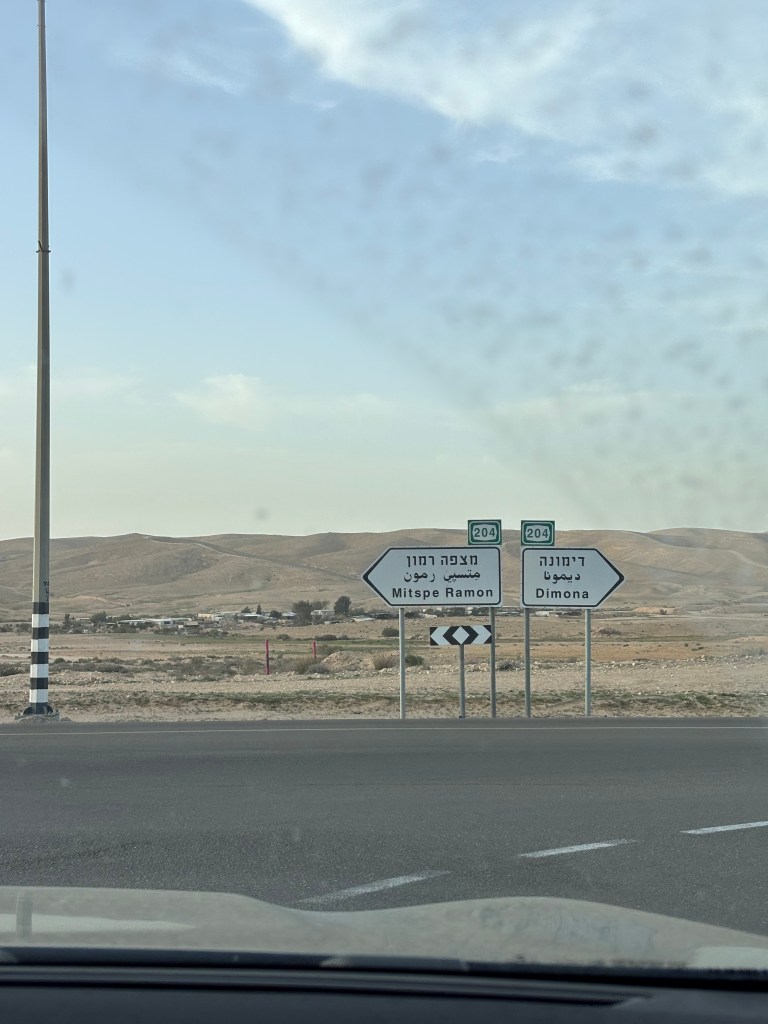
From Herzliya/ Tel Aviv, it is about a 2 hour and 20 minute drive to Yeruham, which is just a little further south than Be’ersheva, and about a 2 hour drive from from Jerusalem. It can be a good stop if you are heading to Mitzpe Ramon or Eilat.
Pinto’s founding
Pinto didn’t begin as a winery. The Pinto family first launched the Darka Project, a philanthropic initiative focused on strengthening Israel’s periphery—especially Yeruham—through long-term investment in education and tourism. Their initial agricultural experiment was with argan trees (used for argan hair oils), before gradually turning to vines, driven by a belief that the highest quality and real added value can come from desert agriculture in the Negev.
That vision eventually led to the founding of Pinto Negev Winery. In partnership with local growers, vineyards were planted beside Yeruham in Wadi Shu’alim (Valley of the Foxes, which is why there is a fox on the wine label), with varieties suited to desert terroir.
Negev Terroir
Pinto Winery is built on a clear belief: that the Negev is not a limitation, but a terroir worth decoding. With extreme dryness, intense sunlight, minimal rainfall, and sharp day–night temperature shifts, this is one of the most demanding places to grow vines. But those same conditions—low disease pressure, strong diurnal range, and vine stress—can produce wines of freshness, spice, and tension.
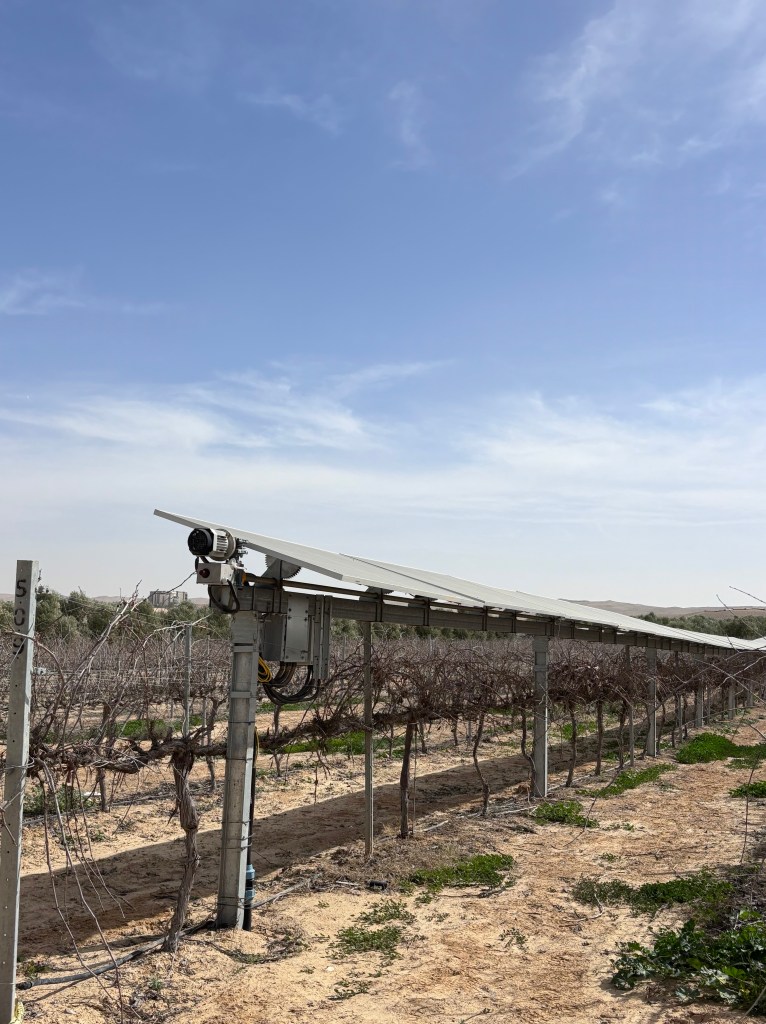
The core challenge is timing. Early harvesting preserves acidity and aromatic lift, but risks losing depth, complexity, and aging potential. What we tasted was the result of constant experimentation, “a kind of tango between terroir and human intervention,” says Oryah. It begins with smart grape selection for desert conditions, continues through careful vineyard work, and ends with restrained, thoughtful winemaking.
Visitor Center
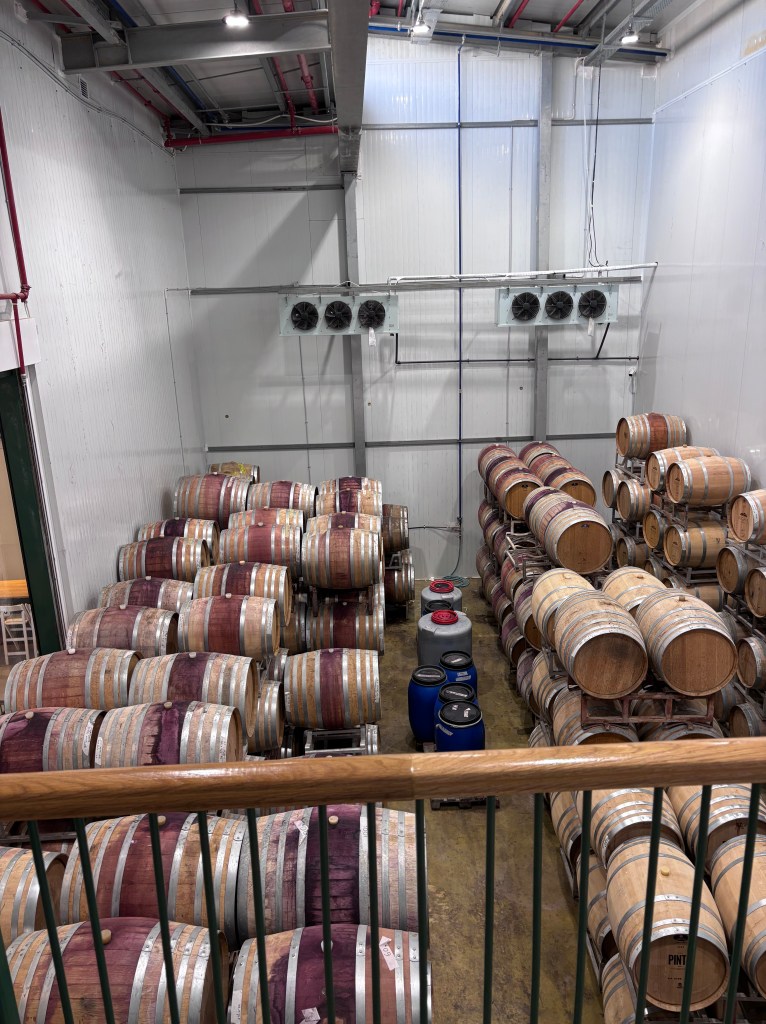
The visitor center features a new, spacious tasting room, with the view from upstairs overlooking the barrel hall. The building was completed just last year, so everything feels fresh, thoughtful, and well designed.
What impressed me most, unexpectedly, was the ladies’ room. Spotlessly clean, brand new, and stocked with cotton hand towels—a small detail, but one that signals care in places most people overlook.

Our tasting was complimentary, but for visitors, Pinto offers several tasting options: ₪59 for three wines, ₪85 for four wines, and ₪170 for an extended tasting of five wines. A cheese platter for two (₪95) includes a selection of cheeses, spreads, bread, and olive oil from the vineyard.
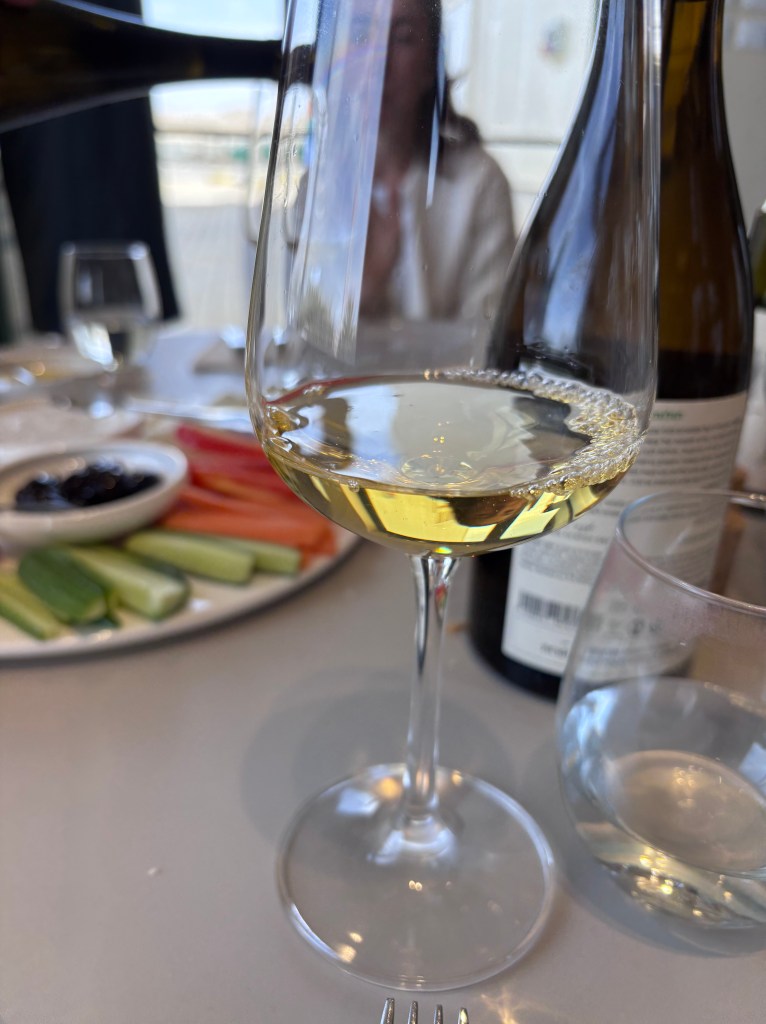
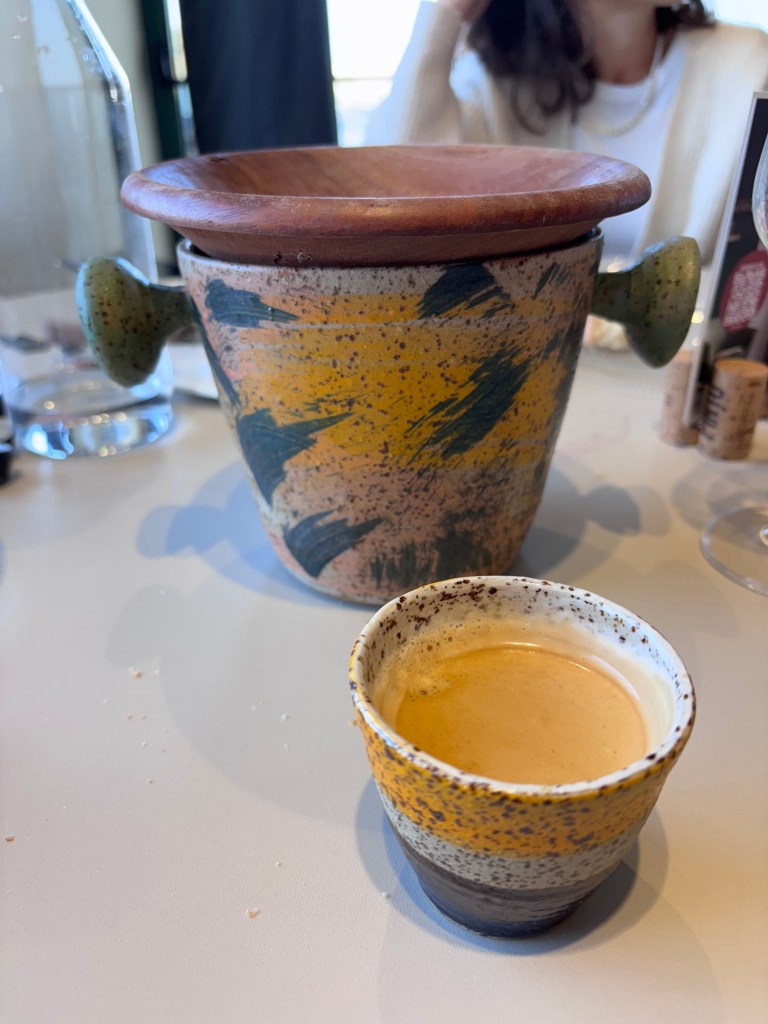
Each guest is also served mineral water, soda, and espresso, a thoughtful touch that rounds out the experience nicely.
Kosher Certification
Not Mevushal, OU, Tartikover Rav, Badatz Beit Yosef
Wines We Tasted
Pinto Winery
Pinto, Chardonnay, 2024
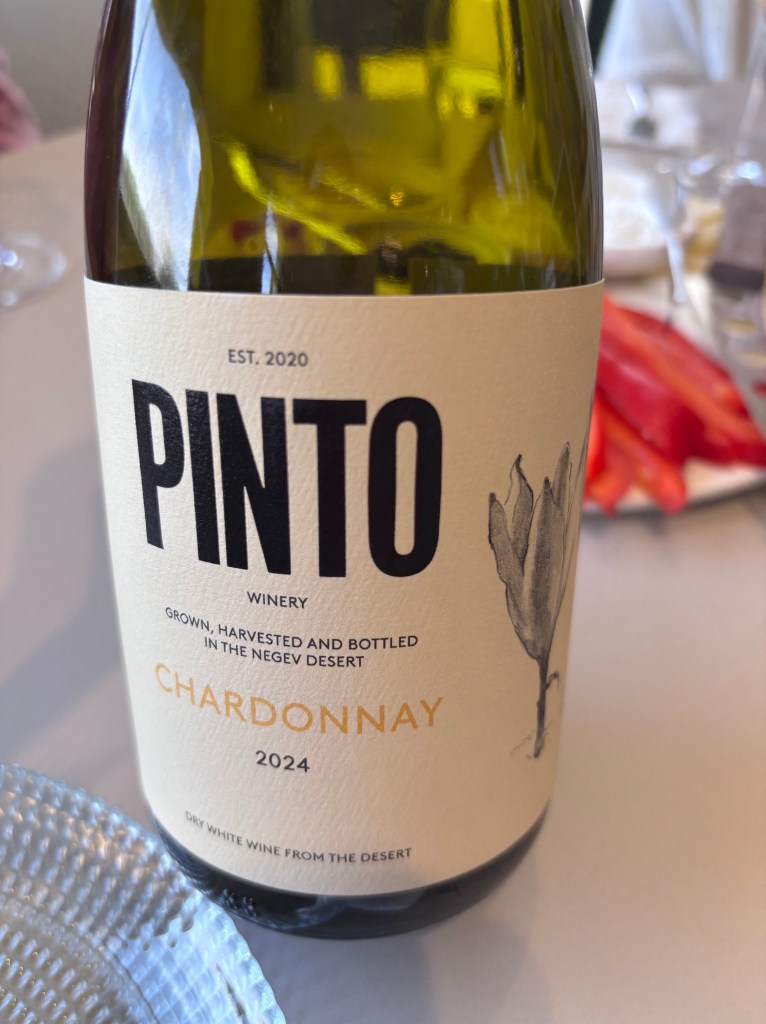
Not your typical “big boy” Chardonnay. Light on its feet, not heavy, not dominated by oak, but with just a gentle nutty hint. Aromatic, with apple, lemon, pineapple, gunpowder, and warm exotic spices. Round texture, bright acidity, and a long finish. A Chardonnay that manages to be fresh and complex. ABV 12.5%.
(This is a bottle for export but I learned there is no fox on the label because the fox is not a kosher animal.)
Pinto, Holot White, 2023
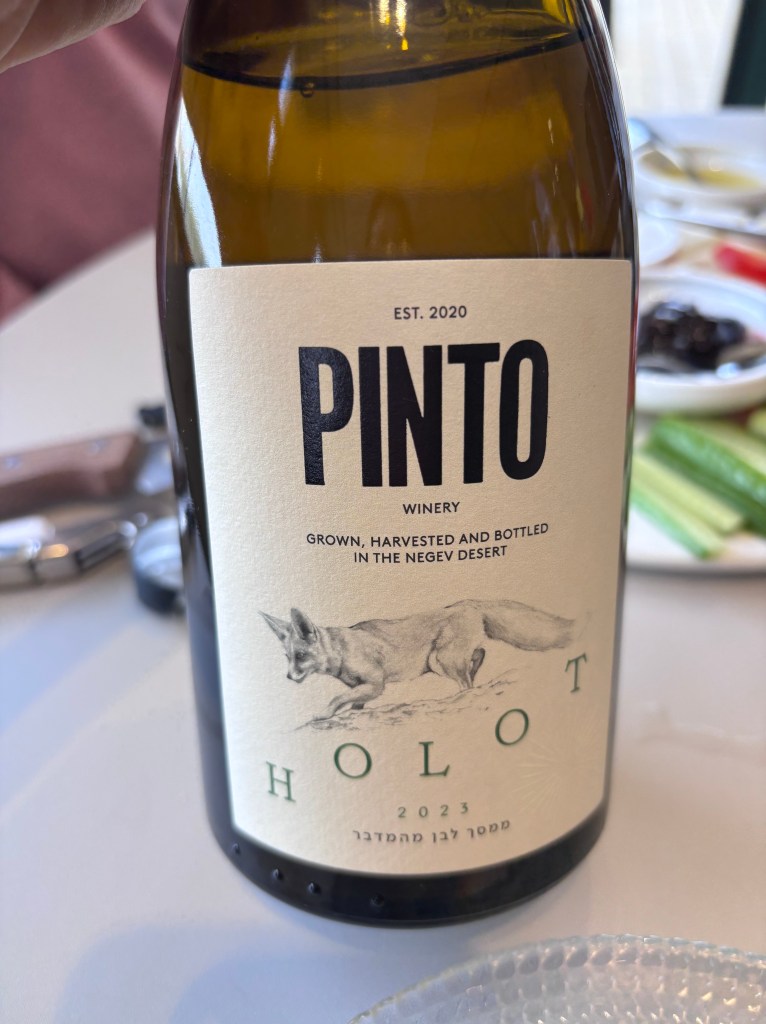
Blend of 92% Roussanne, 8% Chenin Blanc. Deeply aromatic and constantly evolving in the glass: florals, tropical fruit, green tea, citrus. Rich, mineral, and full-bodied with a very long finish. The Roussanne is fermented and aged sur lie in new oak, which brings depth and weight, while Chenin adds finesse and balance. ABV 12.5%.
Pinto, Malbec, 2024
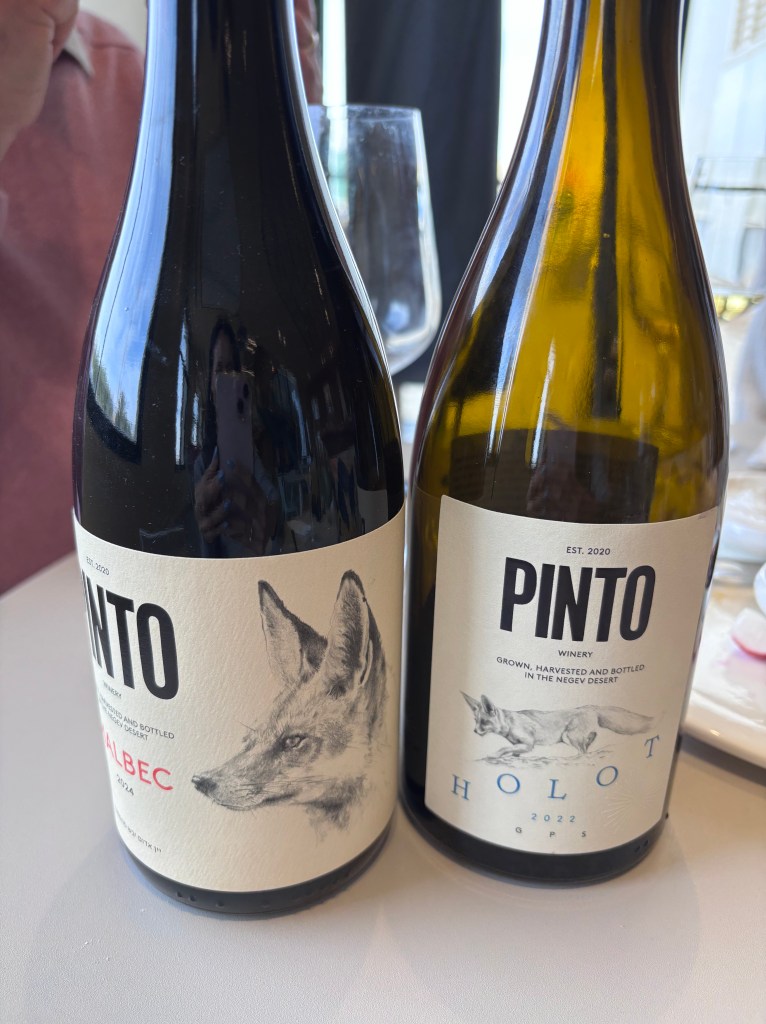
Inky dark purple and concentrated. Aromas of red fruit, blueberries, black pepper, leather—and, amusingly, a note that reminded me of the cattle farms I pass on the way to Hofit (my best friend’s place). Like a Shabbat dinner en route to wine country. Rich and fruity on the palate, with soft tannins, and notable acidity. As someone who grew up with Argentine Malbec, tasting Malbec from the Negev was genuinely intriguing. 13.5% ABV.
Pinto, Holot, GPS, 2022
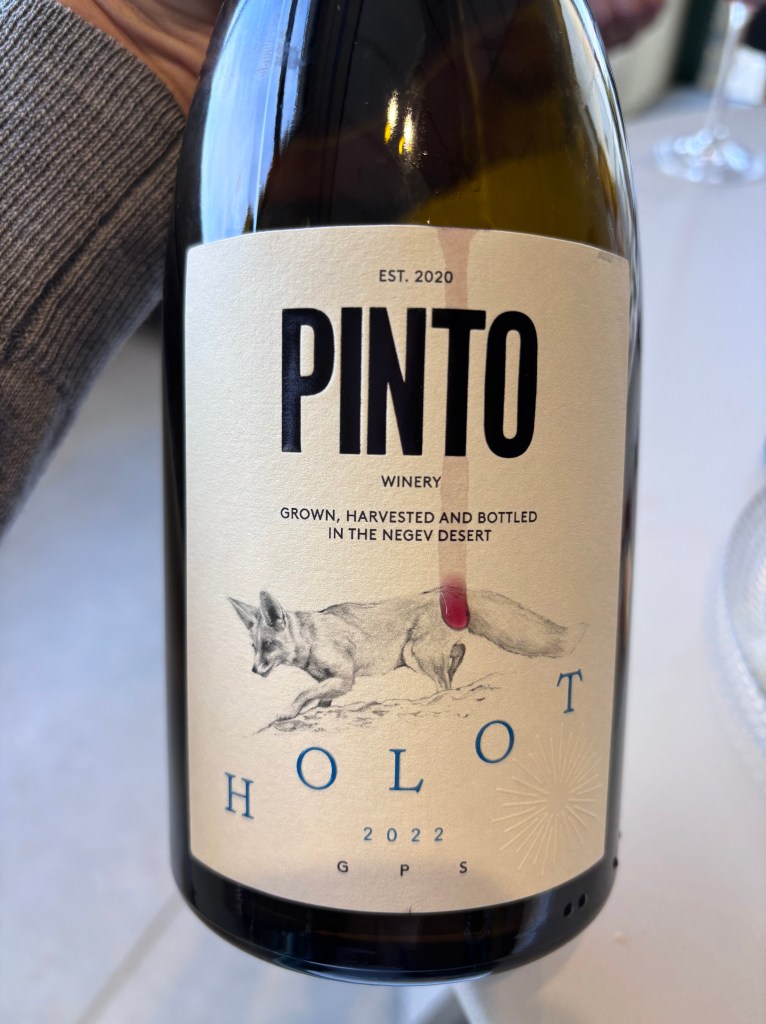
A blend of Grenache, Petit Syrah, and Syrah. Elegant yet powerful. Black fruit, cranberries, cherries, subtle oak, coffee, and vanilla. Full-bodied and complex, with excellent balance and a long, silky finish. There’s a saline note—oysters, sea breeze, bisque—that made it feel unmistakably Mediterranean. A desert wine that somehow speaks of the sea (maybe once upon a time it was). ABV 14.5%.
Meeting with Ya’acov Oryah
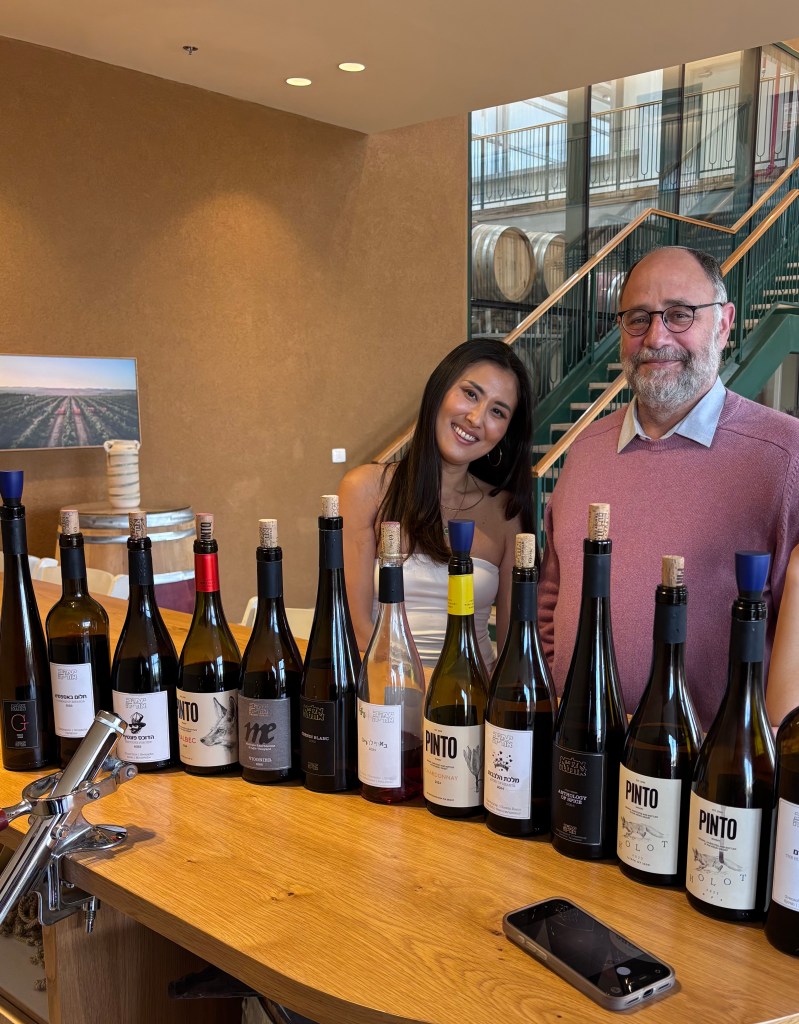
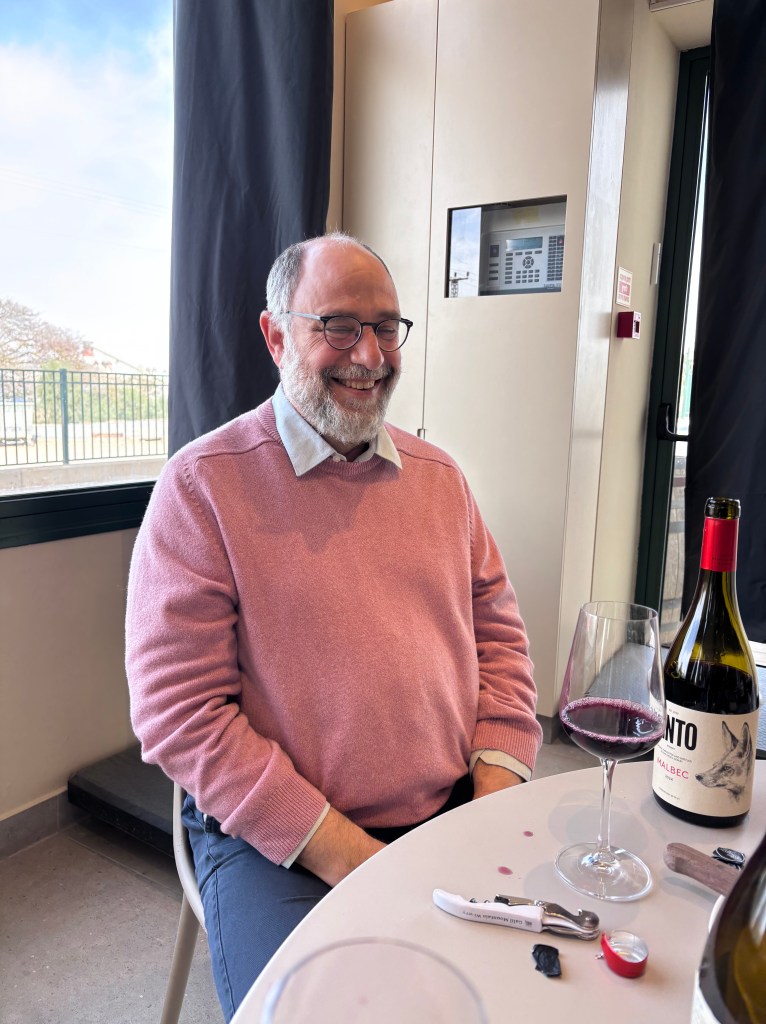
Through a reader (Elk Wine) of Kosherfoodanddrink.com, I got Ya’acov’s contact and sent him a simple WhatsApp message. When I told my friend—then traveling in Japan—she couldn’t wait to come home. Ya’acov didn’t just say yes, he generously hosted us and stayed with us throughout the entire tasting of 4 hours!
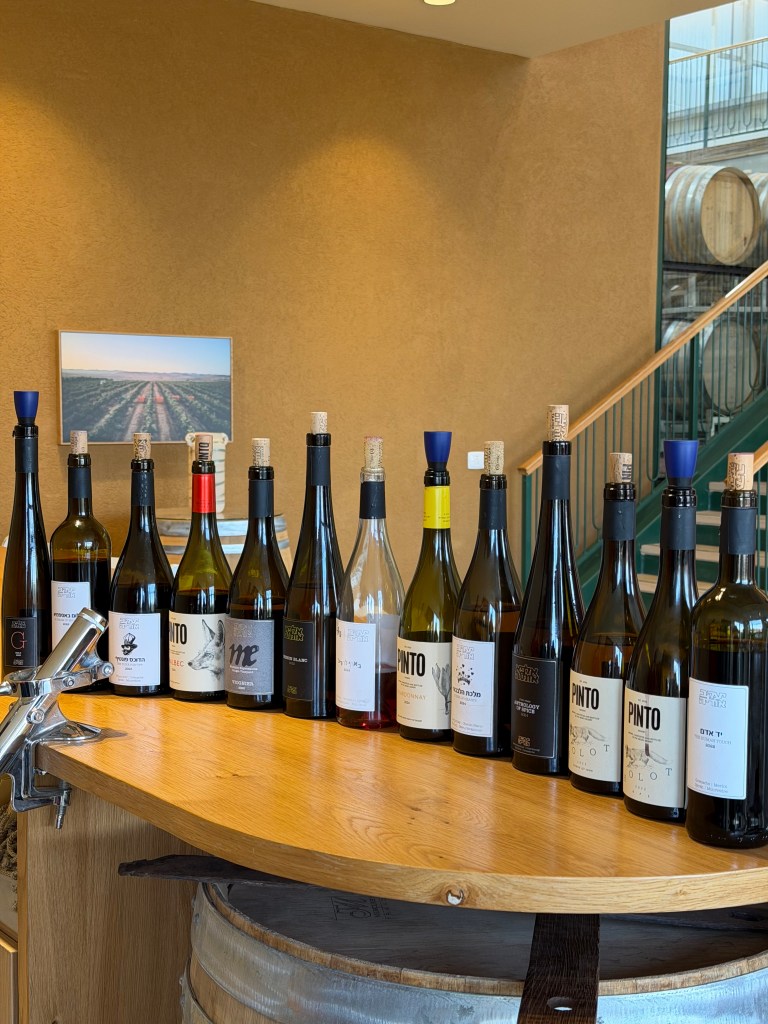
We tasted 13+ wines, slowly and thoughtfully. It wasn’t a rushed visit or a commercial presentation, but an open conversation. The kind that makes you feel quietly privileged to be there. Truly a special experience.
Ya’acov Oryah’s Own Label
One thing that deserves special mention is the playful pun behind the names of Ya’acov’s wines. Each label carries a pun or layered reference—historical, romantic, or simply mischievous.
Ya’acov Oryah, Chenin Blanc, 2022
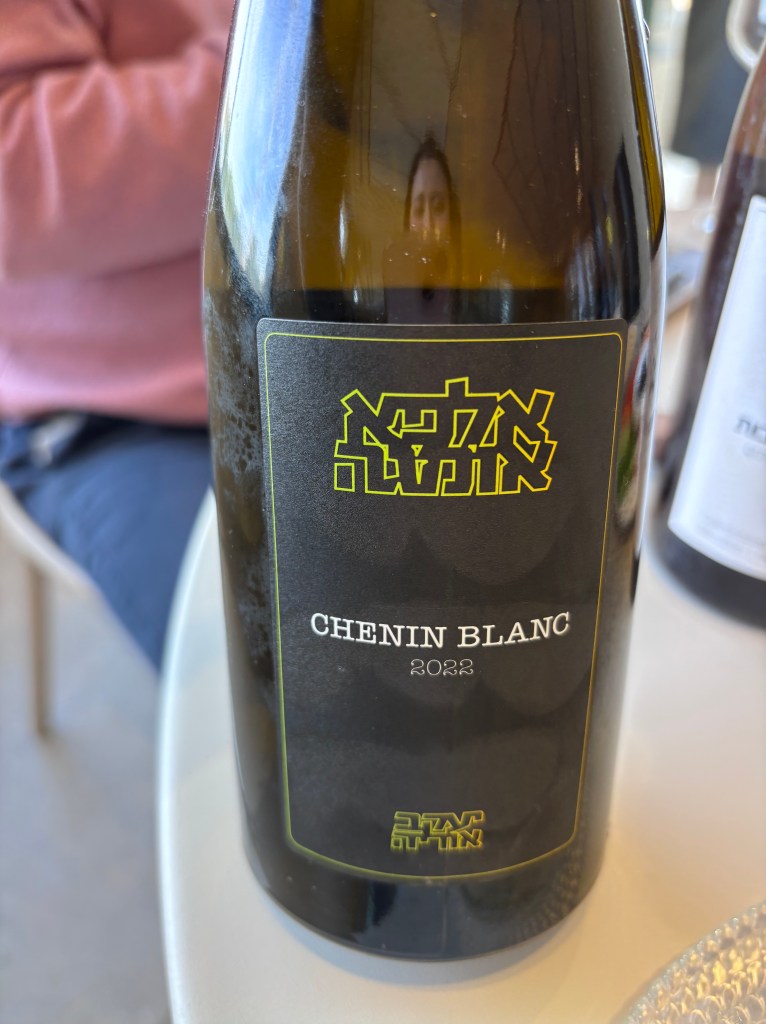
Skin macerated (SM) Chenin Blanc, fermented and macerated on skins without oak. Aromatically expressive, textured, and deeply characterful. Ya’acov shared that long before “orange wine” became a thing, he questioned why white wines shouldn’t be treated like reds (genius!). I am not a big fan of natural wines because of funky scent, but Ya’acov controls the use of sulfites to keep it precise. It is beautifully concentrated.
Ya’acov Oryah, Bati L’harim, 2024
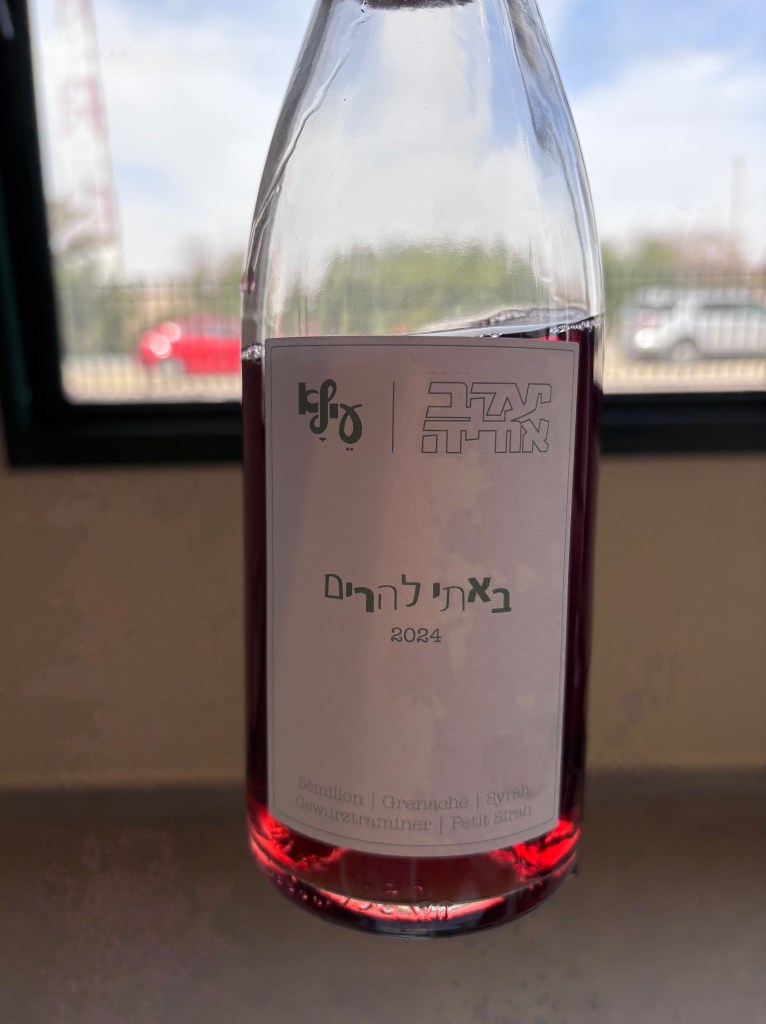
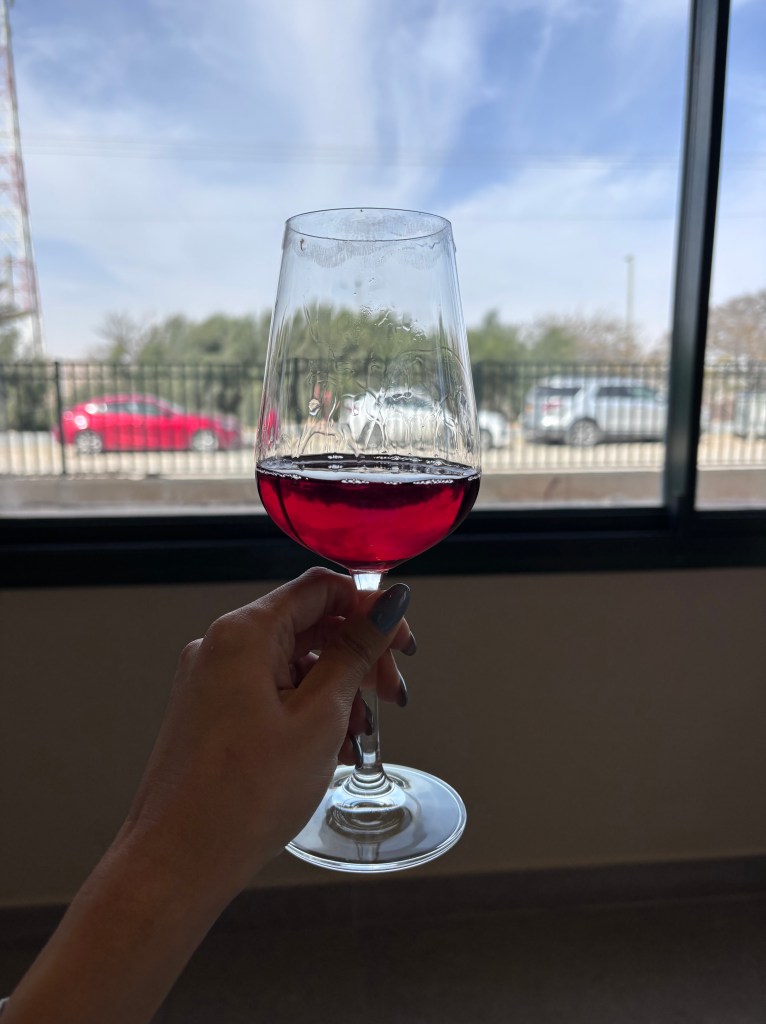
Bati L’harim literally means “it elevates,” but in everyday Hebrew, it’s closer to “the party doesn’t start until I walk in.”
A true curiosity-driven wine: half white, half red—and very intentionally not a rosé. It’s a product of experimentation and openness, the kind of wine that asks questions rather than giving easy answers.
My best friend shared how this bottle completely opened her eyes to what wine could be, during a tasting at Hagefen Wine Courtyard in Jaffa. When Ya’acov opened one of the six remaining bottles for us, it felt undeniably special, spoiled, privileged, because I know how rare that moment was.
Ya’acov’s Whole Cluster Gewürztraminer, NV
Gewürztraminer literally means “spice from Tramin” (Gewürz = spice, Tramin = a town in Italy). I had never loved Gewürztraminer, without quite knowing why — until Ya’acov grouped it, together with Viognier, into what he calls “the family of too much.” Too much aroma, too much expression.
He explains that these varieties often veer into cheap perfume or soapy territory. For people who want wine that’s easy to gulp and immediately expressive, they can be fun. But for serious tasting, he finds they often lack finesse.
To tame their intensity, Ya’acov uses whole cluster pressing, adding structured bitterness. The goal is not to mute the aromatics, but to refine them. To me, it felt like Ya‘acov turned a teenaged girl wearing cheap perfume into a refined lady wearing pearls.
Ya’acov Oryah, Anthology of Spice, 2024
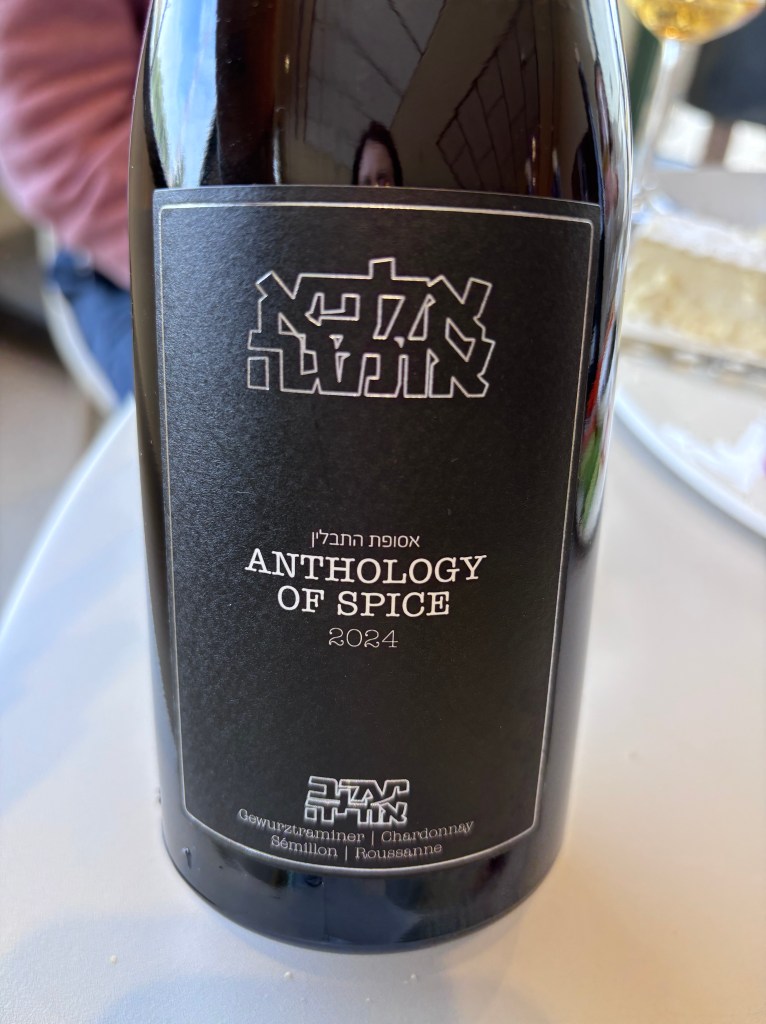
Anthology of Spice is a skin-macerated white blend made from
55% Gewürztraminer, 25% Viognier, 15% Chardonnay, and 5% Roussanne.
Unoaked and medium-bodied, it delivers lychee, white fruit, and warm spices — but nothing shouts. The wine unfolds slowly, with restraint and balance, allowing complexity to emerge without excess.
Ya’acov Oryah, Queen of Hearts, 2024
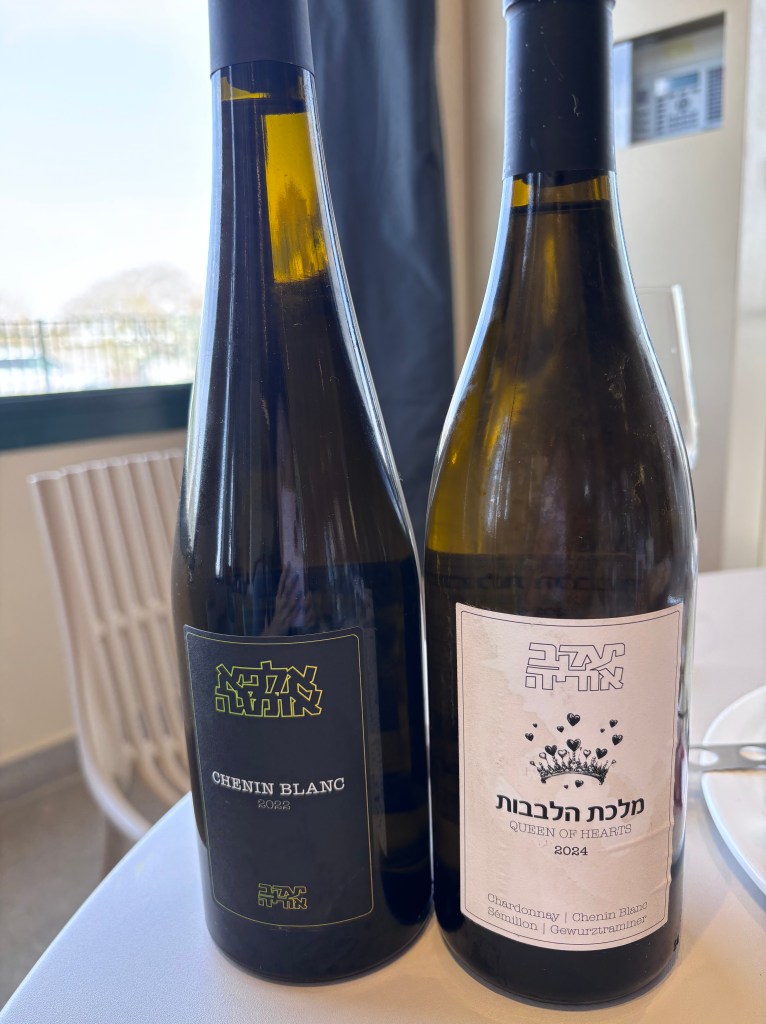
A blend of Chardonnay, Semillon, Chenin Blanc, and Gewürztraminer. Imagine three men in tailored business suits giving big boy energy. And among them, Gewürztraminer dances, enough to shift the energy. That’s the crown.
ME series
The ME (Multiple Expressions) series was one of the most eye-opening parts of the visit. Ya’acov explains that making wine in a hot climate like the Negev is like “a short blanket.” Harvest early and you keep freshness and elegance, but flavors can feel incomplete. Wait longer and you gain richness, but alcohol rises and finesse disappears. For a long time, he believed the kind of quiet concentration found in cool-climate wines just wasn’t possible here.
In the ME series, one vineyard is harvested and vinified in many different ways—early and ripe picks, sun and shade, stainless steel, oak, carbonic fermentation, and skin contact—then blended back together.
In some cases, as many as 13 different components from the same vineyard are blended back together. I’m so glad that I brought ME Chardonnay home after 13 + tastings!
Ya’acov Oryah, ME, Viognier, 2022
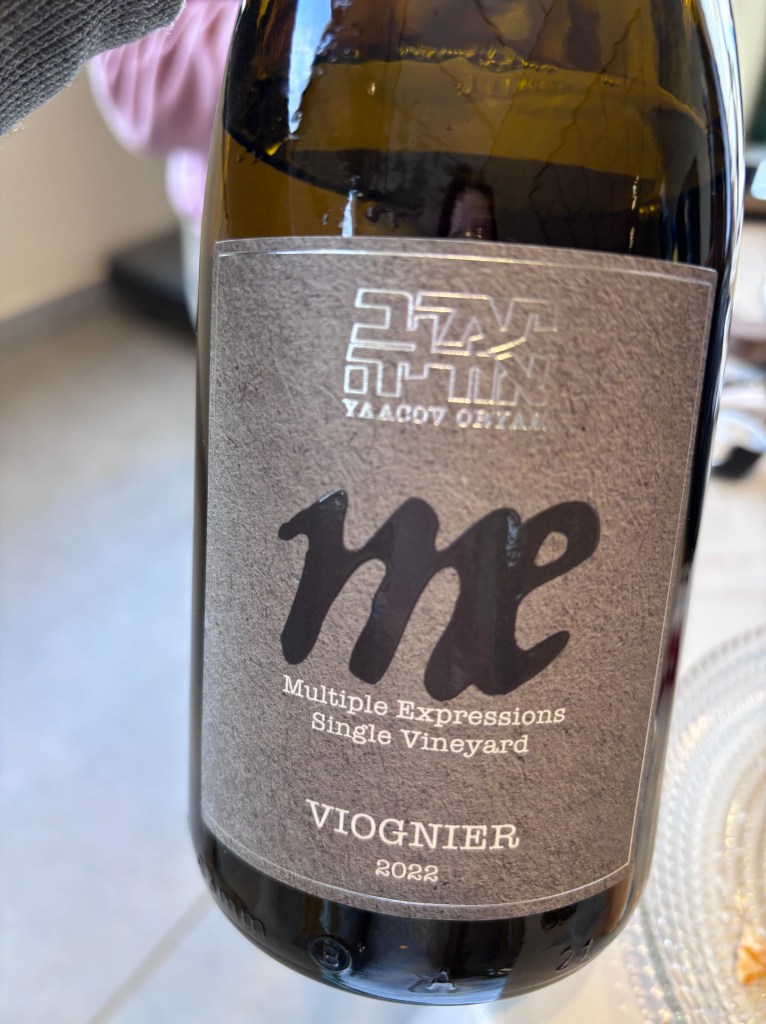
Single-vineyard Viognier from Tel Mahafi, made through multiple harvest dates and fermentation methods. Nutty, intensely aromatic, complex but never heavy. A beautiful study in extracting different expressions from the same variety.
Ya’acov Oryah, Human Touch, 2022
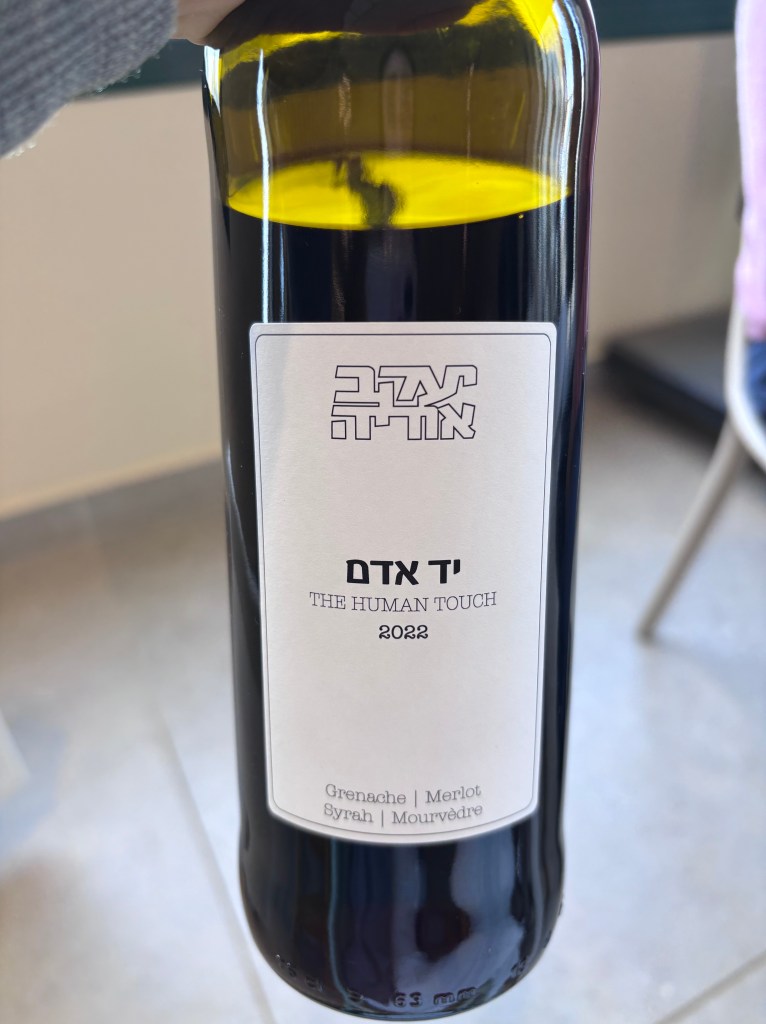
GSM with Merlot. Fresh fruit, wonderful acidity, restrained alcohol, and extremely food-friendly. Dedicated to vineyard caretakers, the human hands behind the data.
Ya’acov Oryah, The Duke Pontiff, 2023
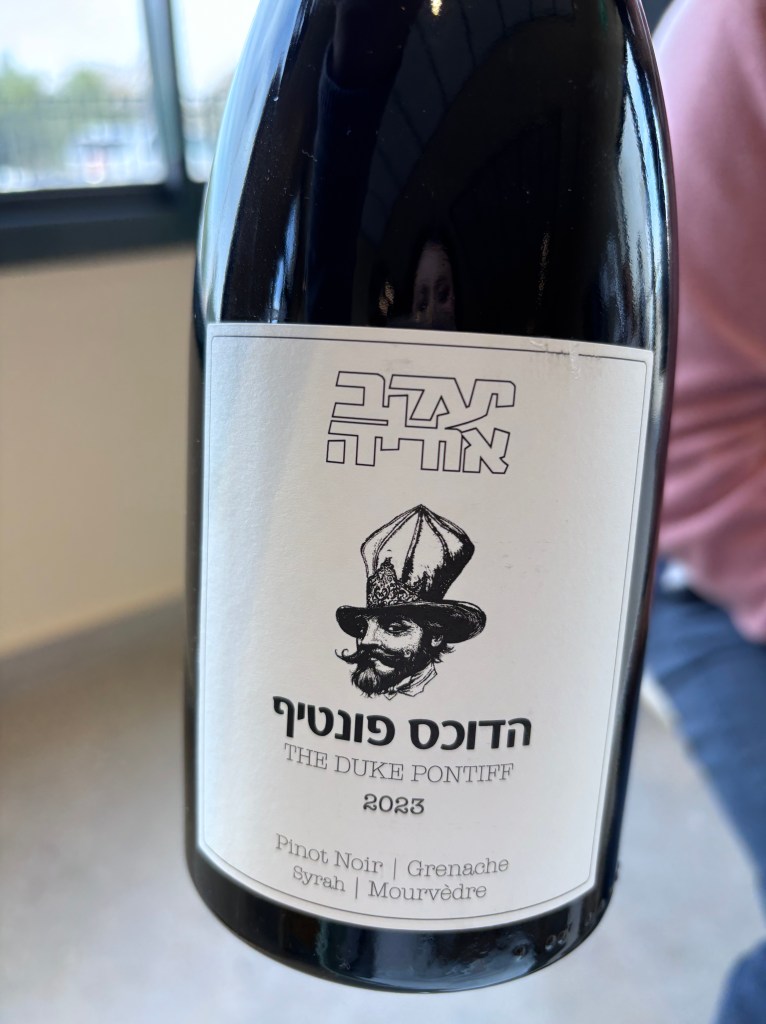
A red blend bridging two worlds: Burgundy and Châteauneuf-du-Pape. Pinot Noir meets Syrah, Grenache, and Mourvèdre in a wine that is medium-bodied, lifted by bright acidity, with notes of sour cherries and savory depth.
Pontiff is another word for the Pope, so the name carries a playful layer of wordplay on top of the historical inspiration. Ya’acov jokingly asked me if I remembered the “Duke Pontiff” from history class. I admitted I didn’t. He nodded gravely, said the Duke was a very important figure … then laughed and admitted he completely made it up.
Ya’acov Oryah, A Dream of Espamia, 2022
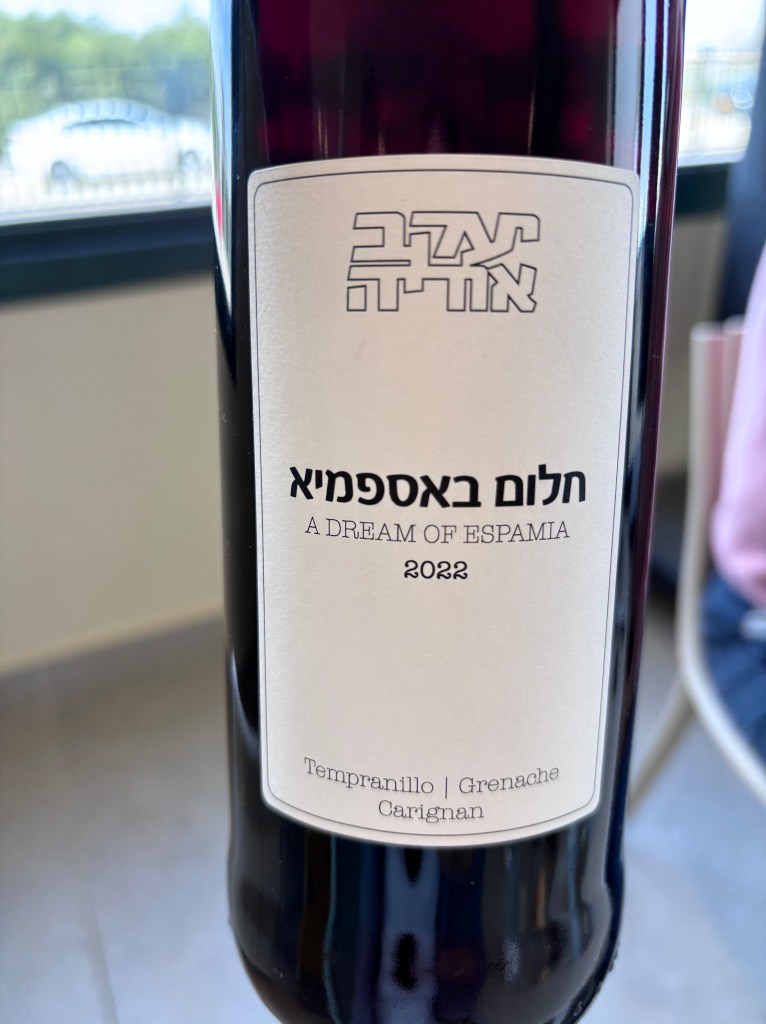
Tempranillo, Carignan, and Grenache—a Rioja-inspired blend interpreted through an Israeli lens.
Ya’acov Oryah, Alpha Omega, G, Gewürztraminer, Late Harvest, 2022
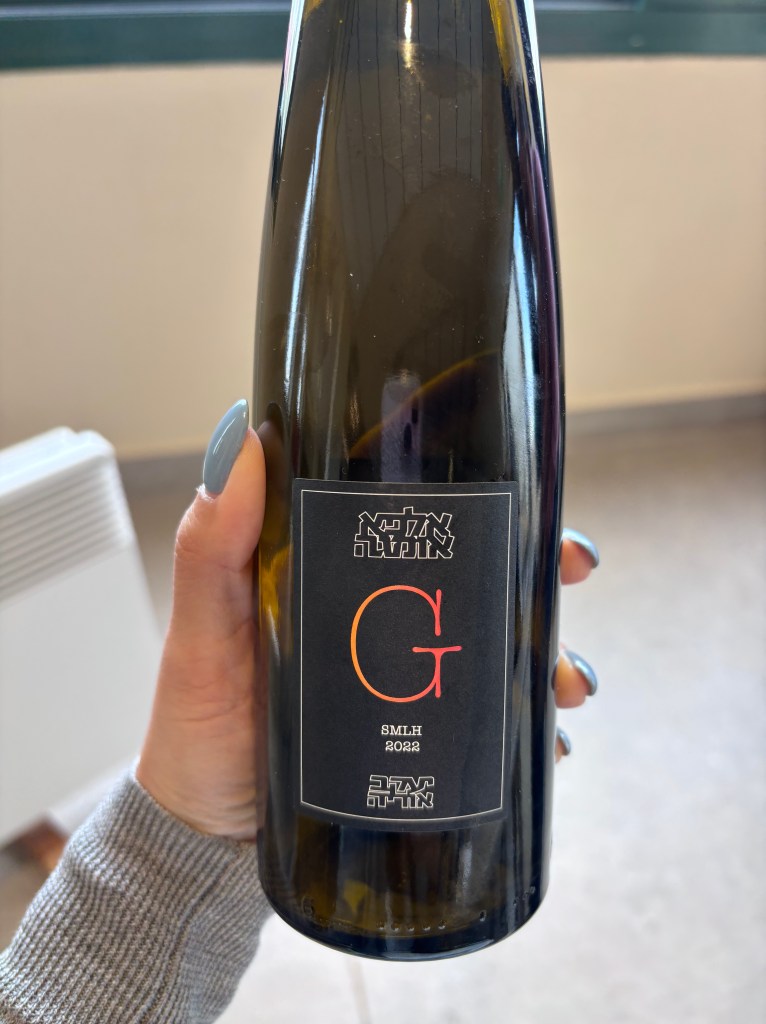
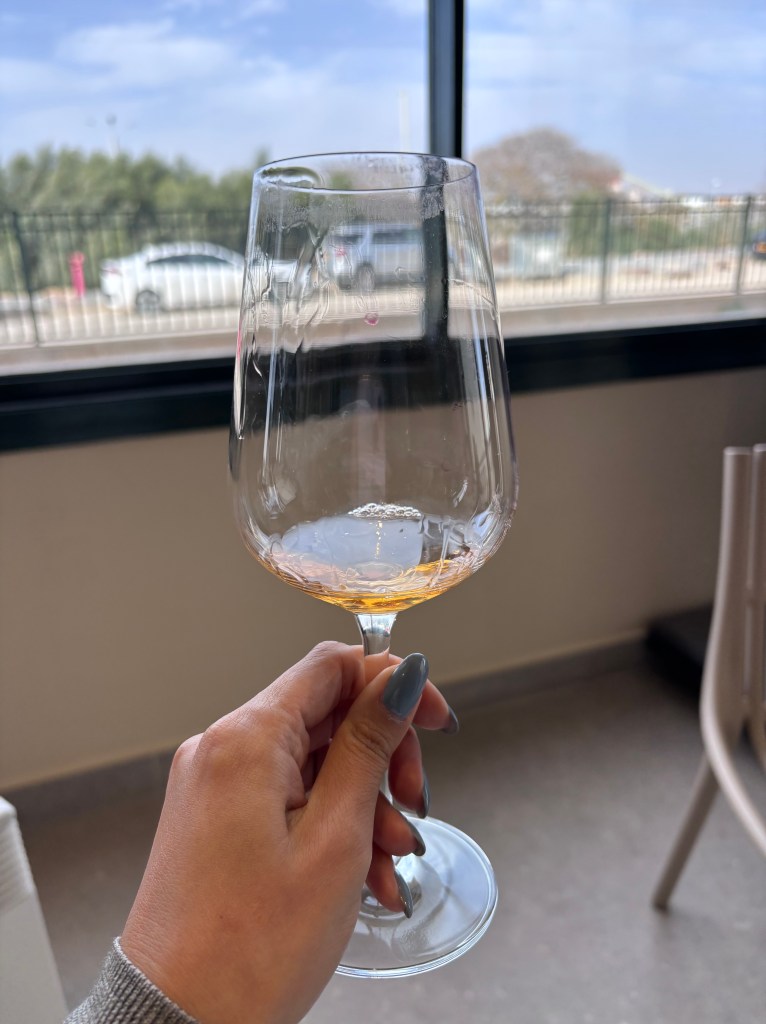
Sweet, skin-fermented, aromatic, and expressive. Gewürztraminer in a completely different register. Deep, honeyed, and sun-soaked, a dessert wine I didn’t know this variety could become.
Winery Information
Address: 108 Zvi Bornstein St., Yeruham
Kosher: Not Mevushal, OU, Tartikover Rav, Badatz Beit Yosef
Visits: By appointment
Hours: Sunday – Thursday, 10:00–16:00, Friday 10:00-15:00
To book: Call or WhatsApp 054-7635451
Hyun Park is a WSET Level II wine enthusiast who grew up within South Korea’s vibrant culinary landscape. Her love for wine grew significantly while living in Germany, where she visited wineries in Pfalz, Mosel, Nahe, and Rheingau. Now living in Israel, she actively explores the country’s diverse wine regions and evolving wine culture. As a non-Jewish, non-Israeli observer, Hyun brings a fresh, international lens to Israel’s wine world. She also shares reviews of wines and boutique producers on Instagram at @hyunshinebites.
 Kosher Food and Drink
Leave a comment