Let me begin with a confession: I love to smoke food. When we moved into a new house, the first thing I bought was a smoker. I smoke something for practically every Shabbos and holiday. I was infamous for throwing raging cookouts with massive amounts of smoked meats where I used to live.
Here in Texas, of course, BBQ is practically an art form unto itself. Unlike in Maryland, smoking meat isn’t a quirk, it’s a lifestyle. But as much as there is art to smoking, the equipment you do it on plays a huge role.
I started off my smoking journey with a cheaper propane gas smoker (Camp Chef Smoke Vault). Gas smokers work, especially in conjunction with a smoke tube, but you tend to run into temperature control problems since the smoke has to come from something burning – which means it’s dumping somewhat inconsistent heat into the chamber in addition to the gas heat. All in all, I don’t recommend them.
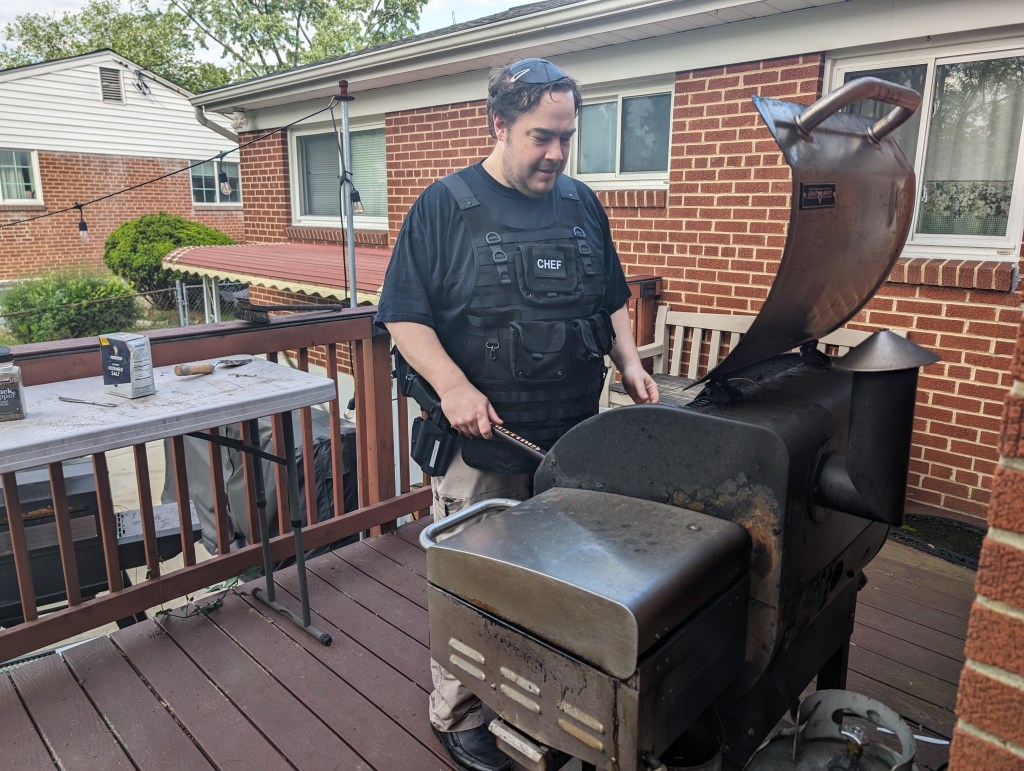
I switched over to a pellet smoker (Camp Chef Woodwind 24), and I used that for a number of years. Pellet smokers get heat and smoke from the same fuel source – wood pellets – but are more prone to environmental and mechanical issues (clogged augurs) as well as pellet bridging. They also burn so efficiently that the smoke flavor in the food is subtle. Cleaning them can also be something of a chore. But I made a lot of good food on my Camp Chef Woodwind, and still fondly remember it.
I’ve written about my hybrid pellet-electric GE Indoor Smoker. It’s not perfect, but as a situational tool, it’s exceptional.
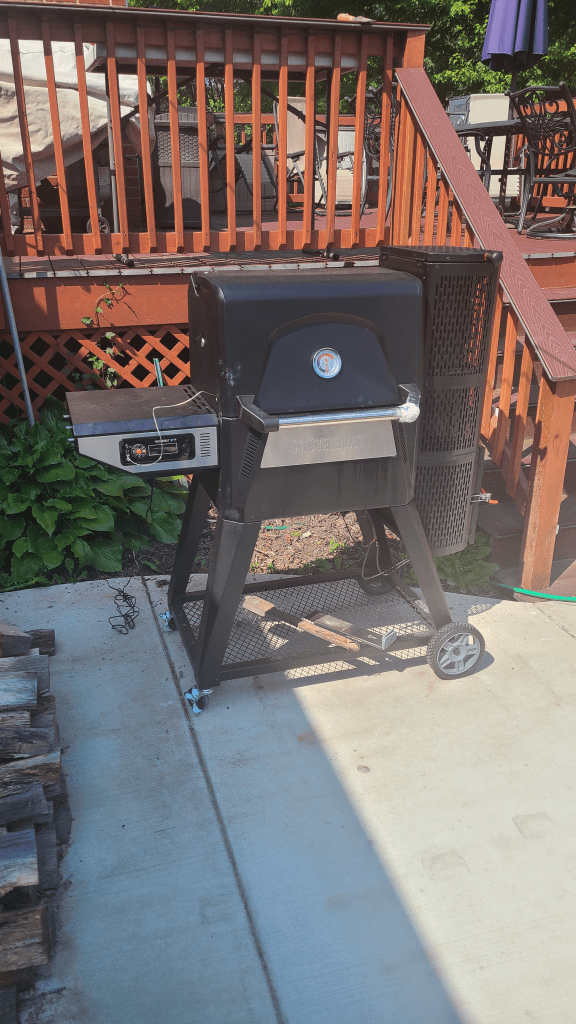
But I’ve really started to move towards gravity-fed charcoal smokers now. These use a charcoal stack (fed by gravity), with chunks of wood interspersed. Good charcoal is always available, and wood chunks are easy to source. I won a Masterbuilt 560 at a Shoresh raffle, and used it to augment my pellet smoker. I eventually grew so enamored with it that it became my primary smoker. There’s just much less that can go wrong; as long as your grease management is on point, you’re solid.
When we moved to our new place in Houston, work owed me a seven year tenure present – and a big steel smoker was exactly what I needed. Gravity-fed charcoal (GfC) smokers have an interesting price point gap where they’re easy to find between $500-$1500, and then you’re into the $3000-$3500 range to move into the next tier. One of the few really good options in the middle is the Old Country Gravity Fed Smoker (OCGFS). I got mine for ~$1750.
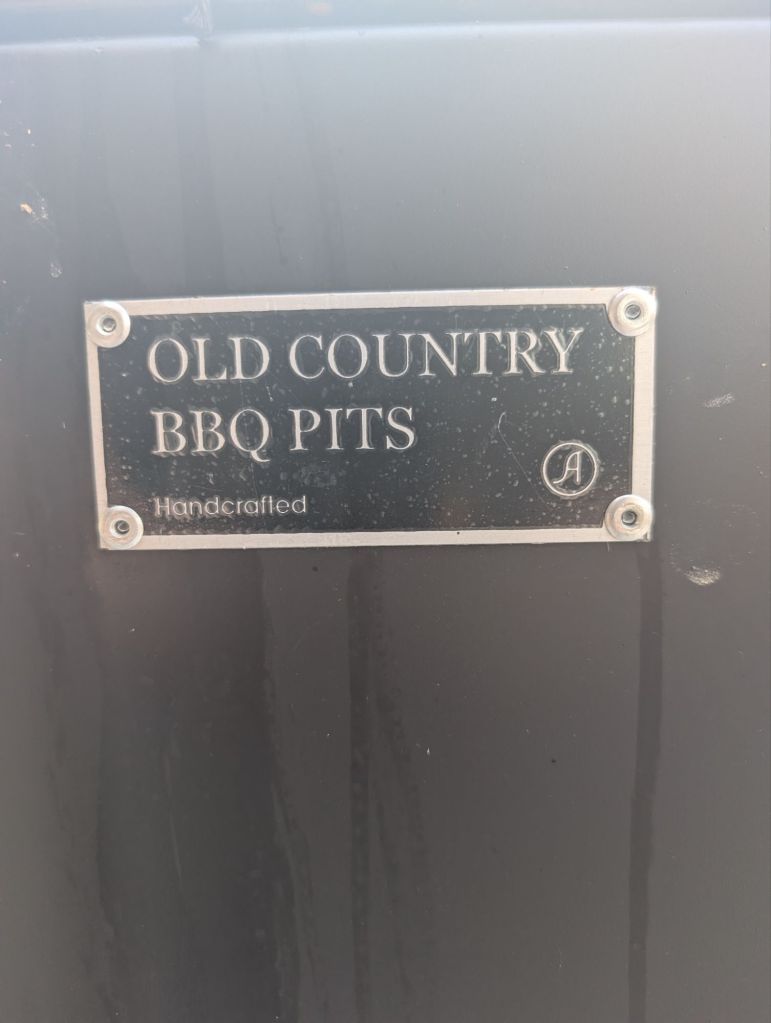
Old Country BBQ Pits has been around since 1999, and makes a wide variety of items, including offsets, over-unders, and even just plain-old grills. The OCGFS is the only GfC smoker in the line-up from what I can see, and it’s widely available in outdoors stores and online.
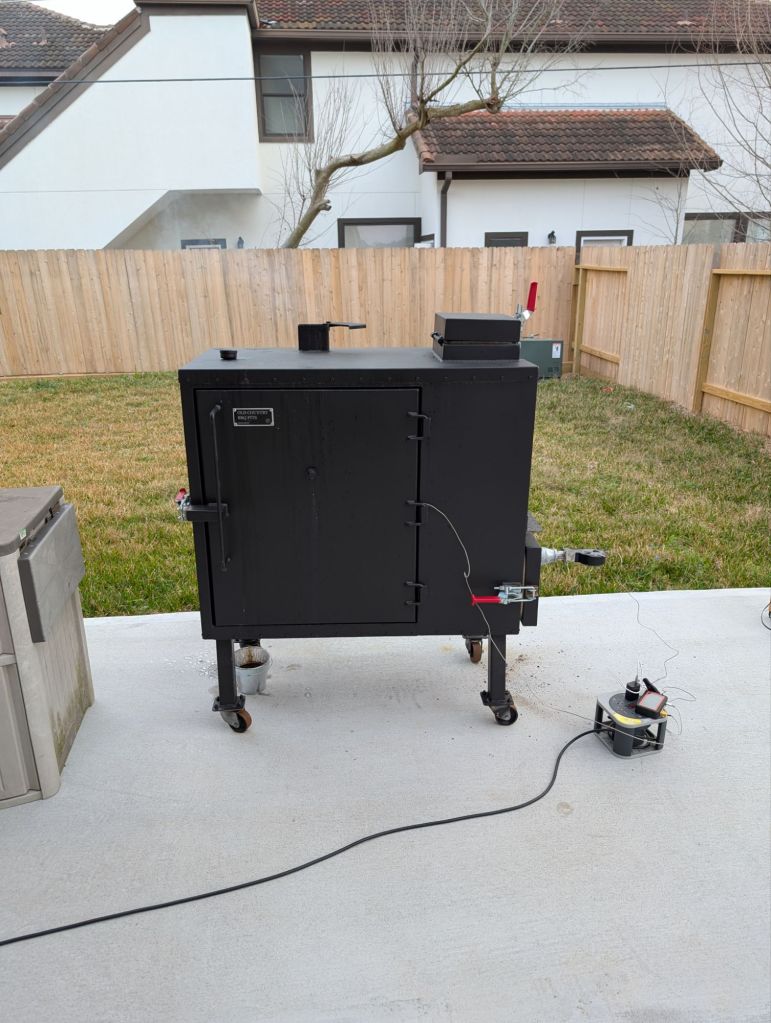
The design of the OCGFS seems pretty solid. It’s about 300lbs of steel, with casters for moving it. It’s divided into roughly two chambers; there’s the charcoal stack and the actual smoking chamber. You can access the charcoal stack from the top (for feeding it) and the bottom (for ash removal and lighting). There’s a suitably massive door for the smoking chamber, along with a small chimney and a grease trap pipe.
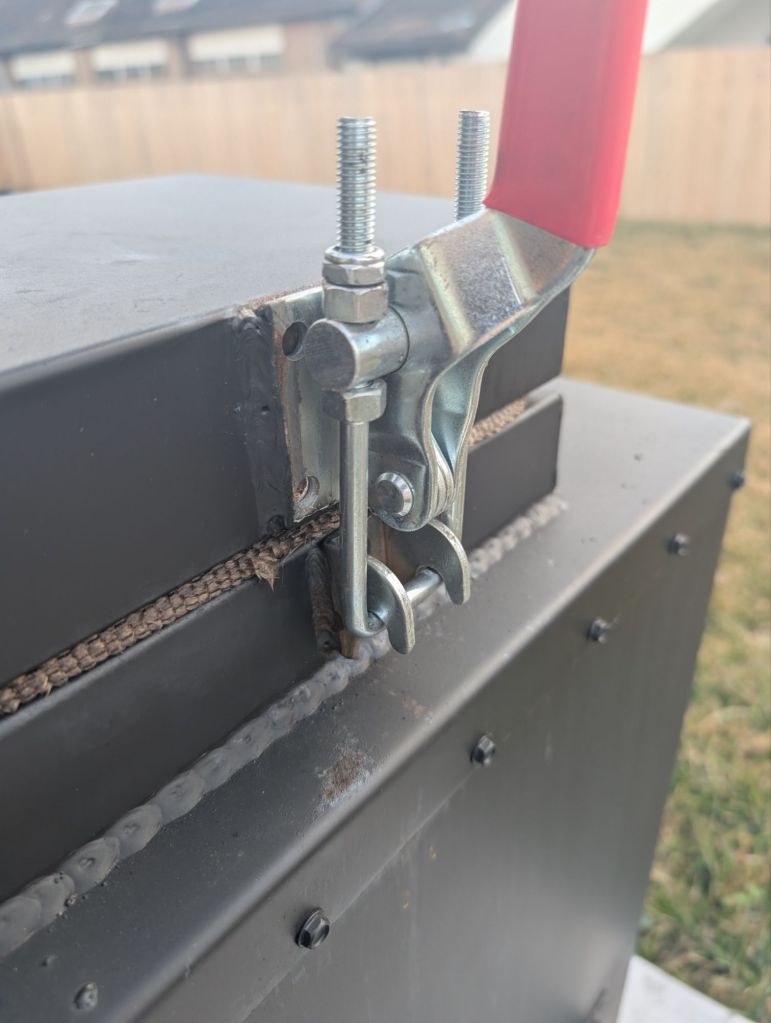
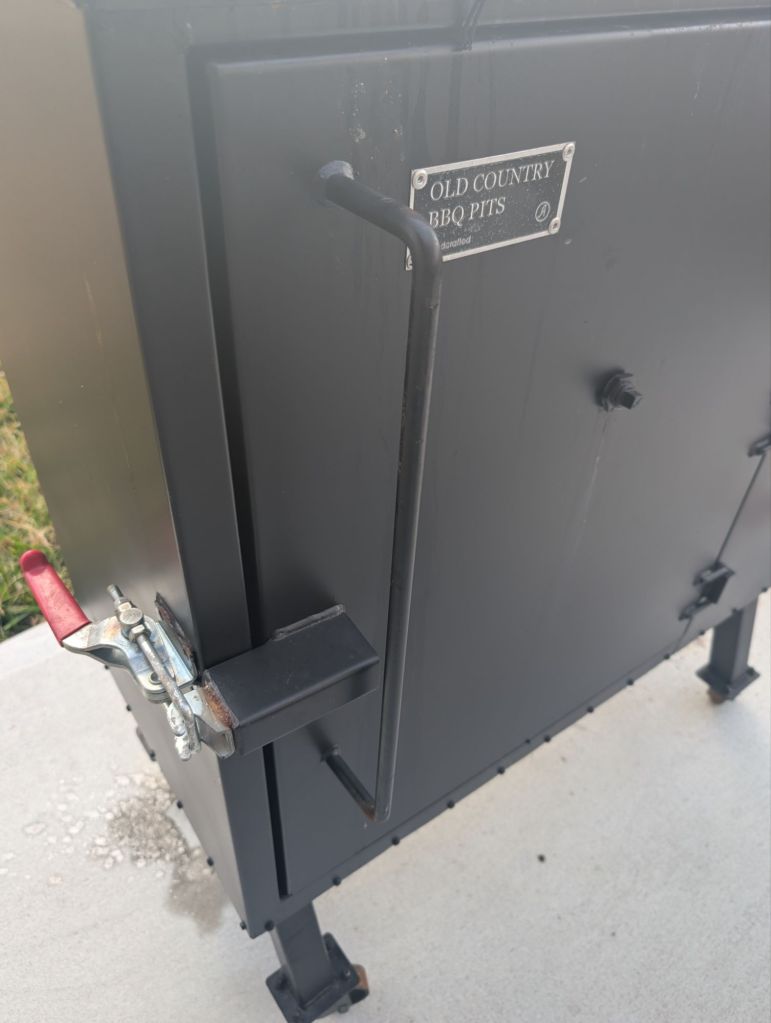
Everything on this smoker feels like a step up from the big box grade smokers I’ve previously used. The latches are massive; the steel gauge is far more substantial; the lining on the doors is present and well-sealed. You do not wonder for a second where your money went; it’s a real monster.
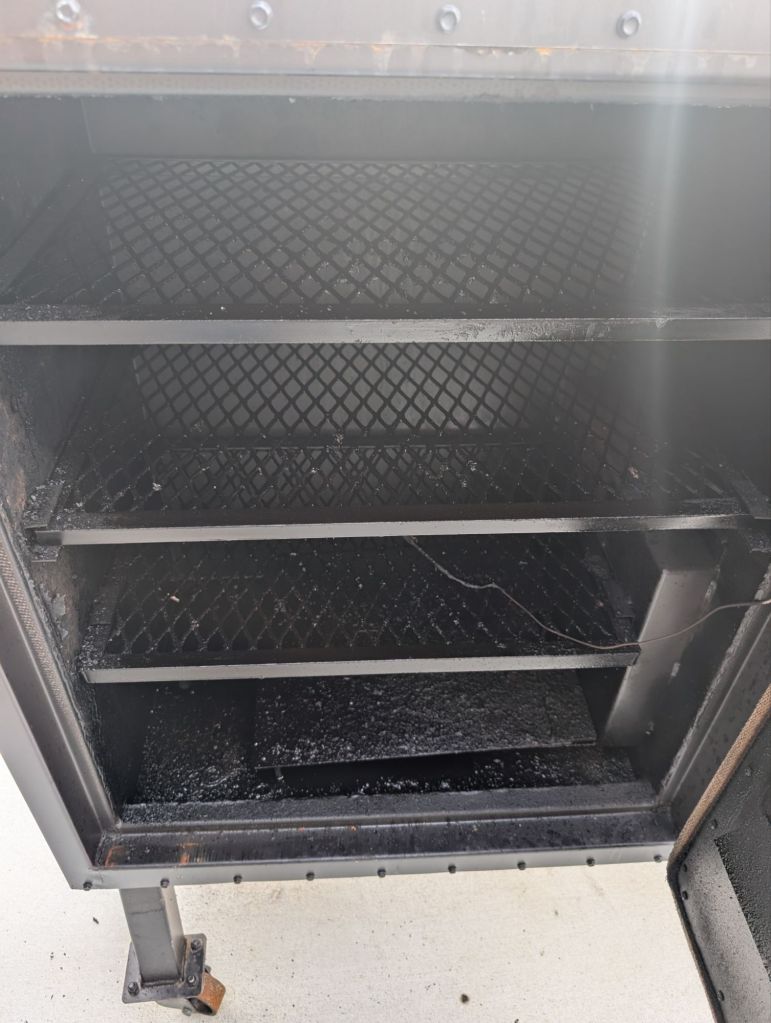
Inside of the smoking chamber, there are three grates. Two are 2ft x 1.25ft; the third on the bottom is 1.75ft x 1.25ft (needs a bit of room for the smoke and heat from the charcoal stack to get in). You can fit a ton of meat on them; I think you could easily 5 packer briskets in, and still have room for a bit of chicken for lunch. The grates are all easily removed for cleaning.
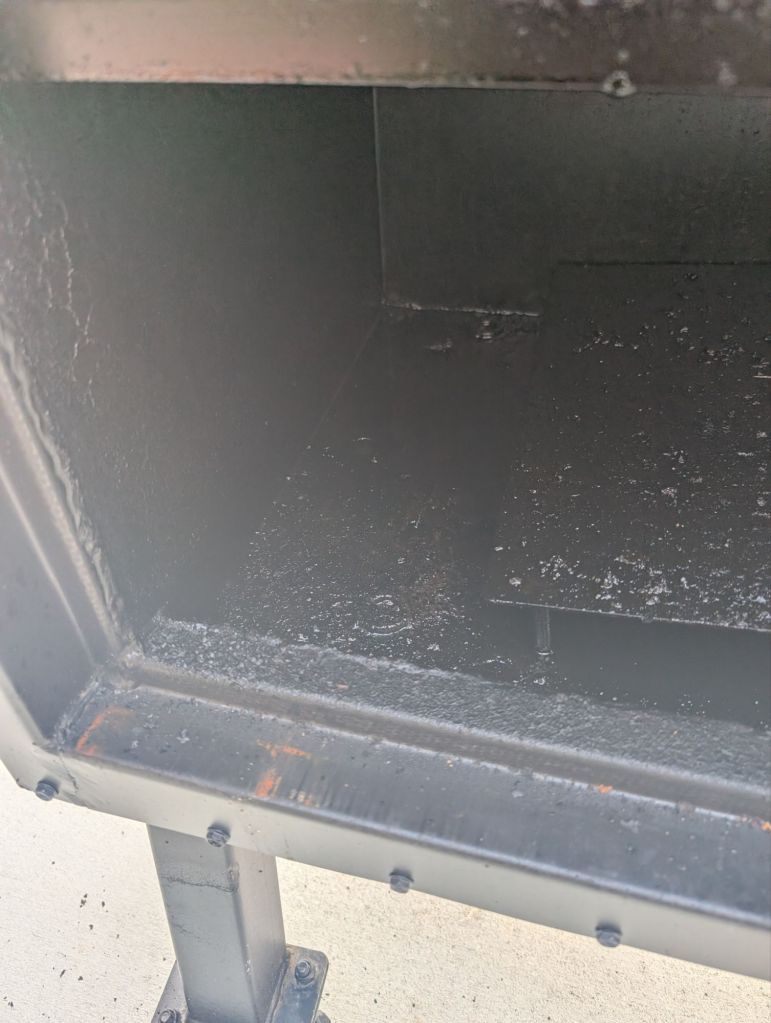
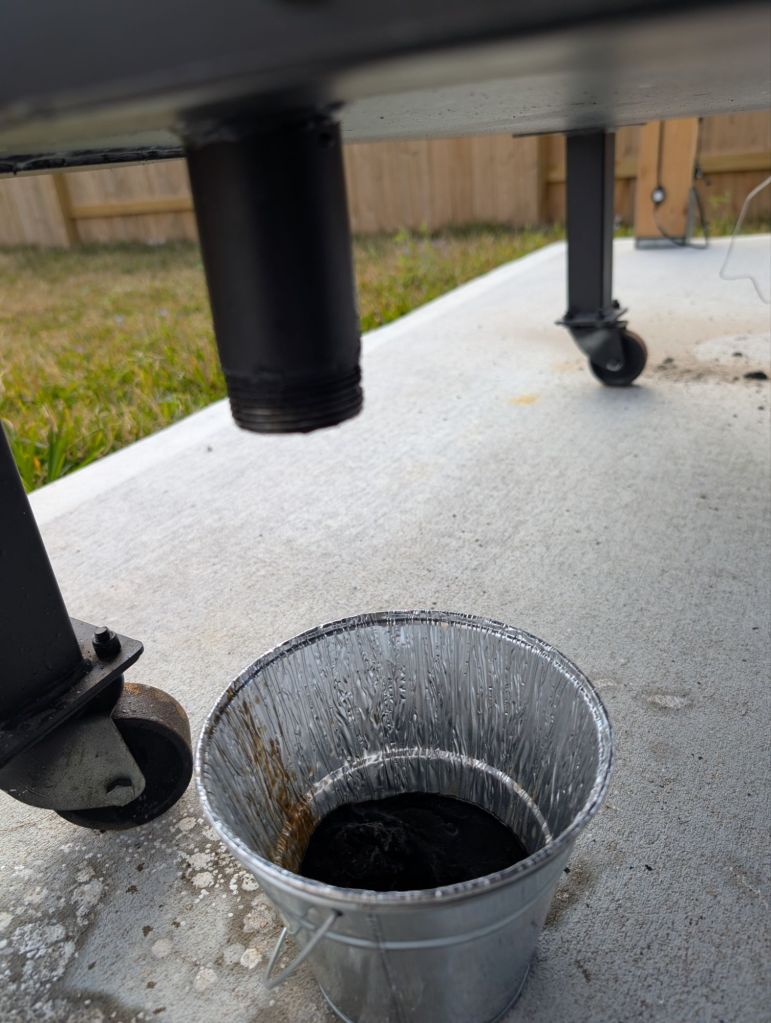
The grease management is rudimentary, but workable. It exits via a pipe. You need to put something underneath to catch it. I’d recommend some sort of weighted, lined bucket for this. There is a plate you need to adjust to make the grease divert towards the hole, so make sure it’s in place if you move your smoker. In general, the design of this one makes it a lot less likely to light itself on fire than, say, the Masterbuilt (which deliberately funnels fire into the cook chamber for high heat applications).
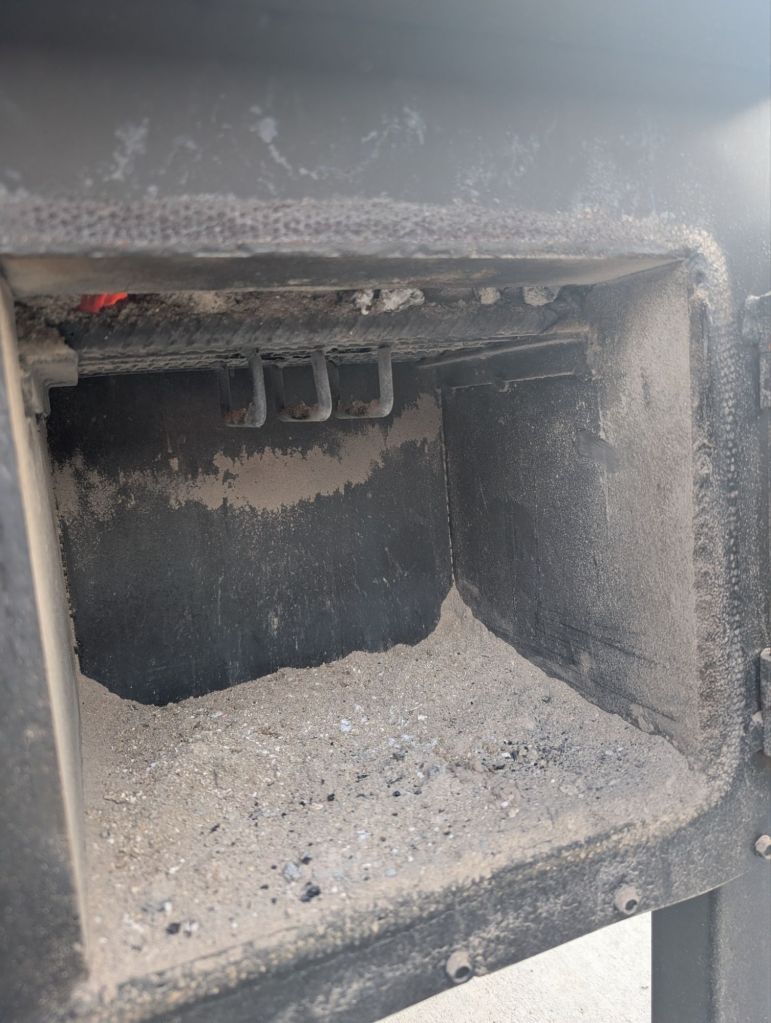
To light the smoker, you put a starter in the offset portion of the grate holding the charcoal stack and light it up. Just like any other GfC smoker, there is some art here to getting consistent fires going. You want to smack the grate so as to shake loose any ash already on the charcoal from the last smoke. You also may want to run your fan for a few minutes at 5-10% speed to get the starter burning at a good pace.
Feeding the fuel is easy enough – put in some charcoal, put a chunk of wood in, put in more charcoal until it covers the wood, and then put another wood chunk in. You don’t actually want a ton of wood in the smoker, you just need enough for some smoke. Too much wood tends to create thermal issues, which we’ll discuss in a bit. You can put about 20lbs of charcoal in the chute, which is enough to run it overnight worry-free.
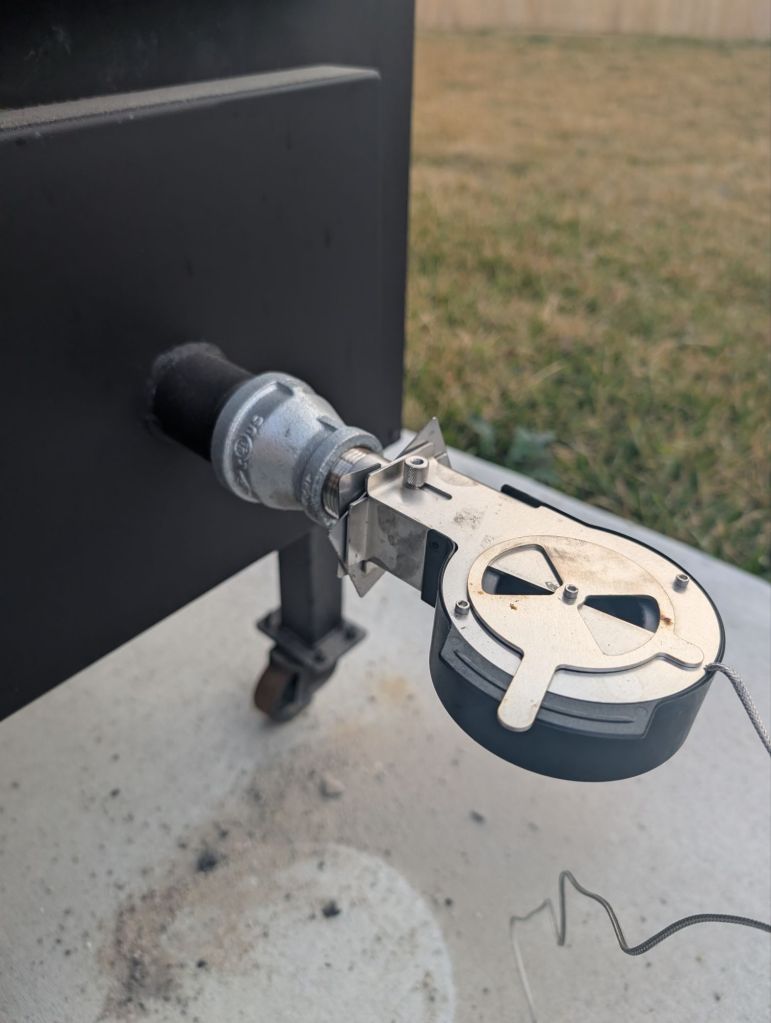
The charcoal stack door on the bottom has a ball valve you can turn to control air flow. I removed it and installed a Fireboard Drive Blower G3 instead, using the Fireboard 2 Pro I already owned. The advantage to using a fan is that it can deal with controlling the chamber temperature dynamically, rather than having to adjust the ball valve (it also gets up to temperature faster). I positioned the chamber temperature probe in the middle of the middle grate.
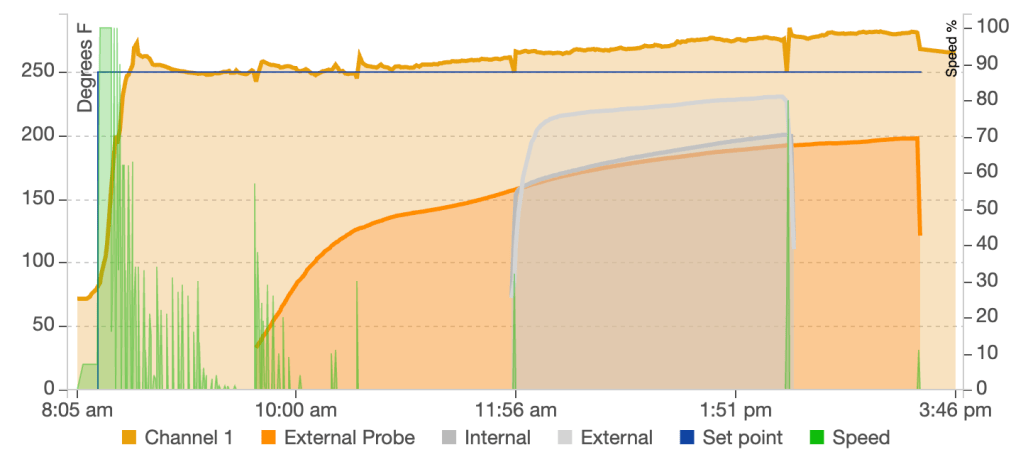
Now, let’s talk about thermal control. The OCGFS is made of relatively thick steel, and it holds heat really well. In fact, it holds heat so well that sometimes it doesn’t shed enough, even with the fan not running, and the chamber temperature keeps rising. This means you need to be a lot more careful about how much air passively enters. You can either use the ball valve for that, or if you have a fan with a cover, you can partially close the cover. I found that I had to leave my Blower G3 about halfway covered to avoid thermal runaway even in relatively cool weather. It’s not going to be enough to ruin a shorter cook, but it could be problematic on a long overnight cook. Using too much wood can also exacerbate this problem.
Speaking of using too much wood, one other issue you can run into is over-smoking food. I found, in general, that I needed to use less wood and run hotter to get clean smoke on the timeline I need it. I have seen online that some people are using extensions to their chimneys to boost efficiency, and that might be a thing I explore. For now, I try to be careful about how much wood I use, and also run at about 275f. I’m sure purists will grumble about going that hot, but if it’s good enough for Aaron Franklin, it’s good enough for me. I’ll be experimenting with lower and slower as I gain more experience, but I typically smoke on Fridays before the Sabbath, which means I can’t wait forever for the smoker to come to equilibrium at lower temperatures (starting too soon gets you thick white smoke, which isn’t optimal).
I don’t want to scare people off. There’s no such thing as a perfect smoker, and those drawbacks are very easy to work around. The OCGFS is almost plug and play when using a fan unit. I have zero concerns about letting it run with minimal monitoring, and overnight cooks should be very possible if you keep it fueled and knock the ash off the grate before you go to sleep.
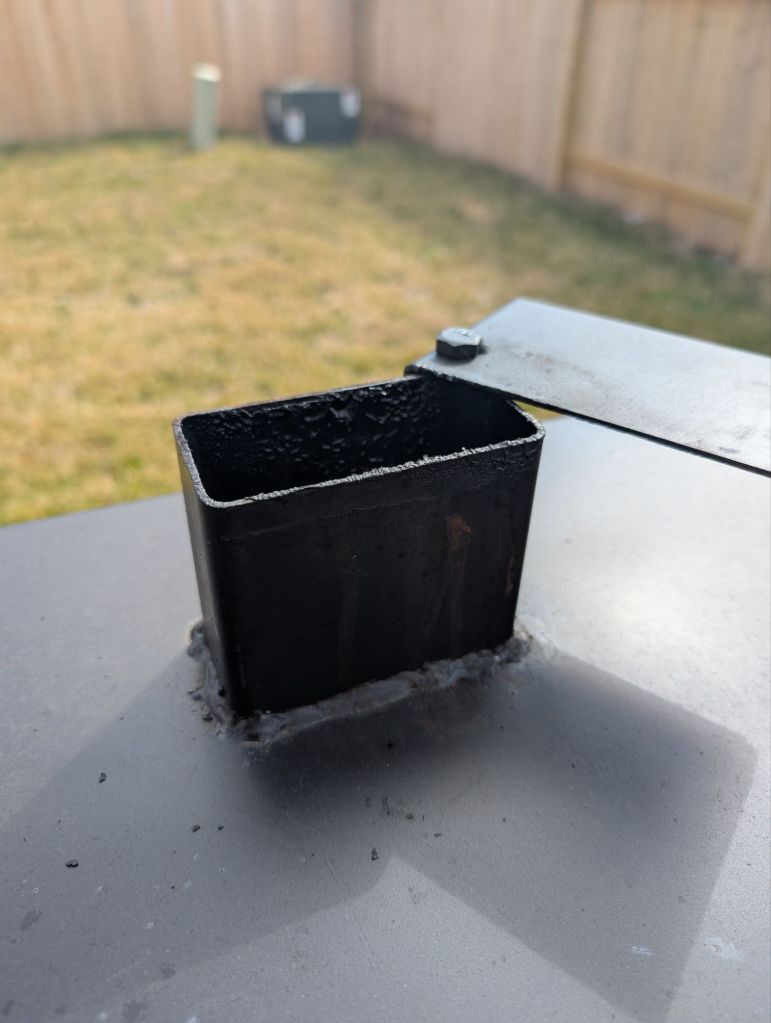
When it’s time to wind down, you just close the chimney off, turn off the fan, and shut the fan cover all the way. This chokes off the air, which then smothers the flame… eventually. My experience is that it’ll still consume a fair bit of fuel on the way out due to that crazy good heat retention – one of the few downsides to the thick, insulated charcoal stack.
Now, that’s a lot about the smoker. But the food it makes… top-notch, possibly the best you’ll get outside of using a true stick burner. The OCGFS is a rockstar when it comes to consistent temperatures and a ton of smoke, plus it is extremely easy to use. At least when I’m checking my Fireboard Pulse probe, the cook chamber temperature is also remarkably consistent throughout due to the thick steel and true offset design. This is a huge advantage over cheaper smokers, and makes food placement way less finicky. The true offset design also makes it much much less likely to light itself on fire compared to cheaper big box smokers that try to offer direct flame grilling features (I suggest buying a real grill if you want that!).
I’ve cooked brisket, ribs, turkey, lamb, chicken, and potatoes in the OCGFS over the past few months, and they’ve all come out wonderfully. The smoke is strong, but not overpowering, and conducive to creating a good bark on longer cooks. When the summer rolls around and it’s time for some evening cookouts, I have no doubt in my mind that the OCGFS will be able to support whatever my ambitions are.
In summary, if you’re ready to step up to the next tier of smoking performance under $2000, the OCGFS is a solid contender that I would highly recommend. It has high performance and enough capacity to satisfy almost any backyard scenario, and it uses a fuel mix that is very easy to obtain. There’s not really much more you could ask for!
 Kosher Food and Drink
Leave a comment