Last July at Cramim Resort & Spa, I tasted a red wine with a distinct saline note that I couldn’t forget. My partner and I called it “the salty wine.” Back then, I wasn’t able to read Hebrew and it turned out to be Nahalal red. A close friend later told me that the wines of Jezreel Winery are named after Nahalal, where she went to boarding school. It felt like a truly special connection.
Recently, Jacob Ner-David from Jezreel Valley Winery reached out to me on Instagram and that felt slightly like a winefluencer for a second.
My ride-or-die was traveling in Asia, so I waited. Finally, on a sunny Sunday morning, we drove north toward Hanaton.
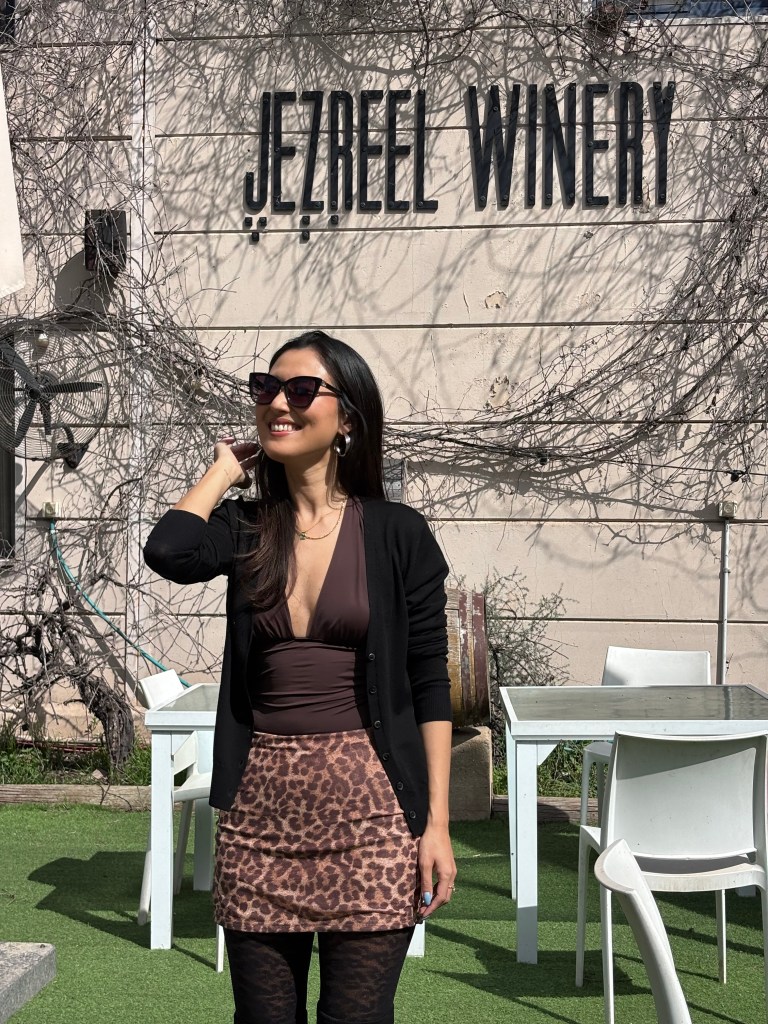
The Journey to Jezreel
About two hours from Tel Aviv/Herzliya, three from Jerusalem. The drive is pleasant as scenery opens up to soft hills, greens, and wide skies.
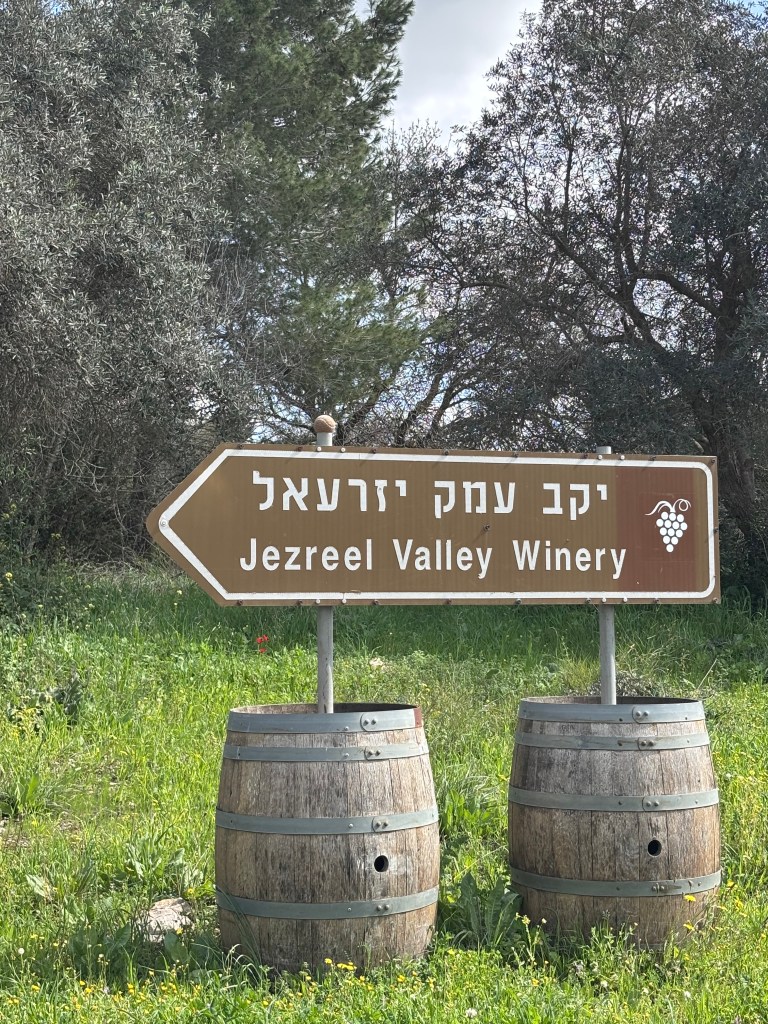
Built from Passion (and a Tractor Repair Shop)
Jezreel was founded in 2011 by winemaker Yehuda Nahar and Jacob Ner-David, a serial entrepreneur who decided to build a boutique winery in a former tractor repair shop on a kibbutz.
With the guidance of Californian consultant Ari Erle (whom I’ve also met at Bat Shlomo!) in the early years, Jezreel made a deliberate decision: focus on Carignan and Argaman.
In a market dominated by Cabernet blends, choosing these varieties was both strategic and ideological. They carved out a clear unique selling point and stayed loyal to their vision of producing wines that feel “more Israeli.”
In English, it’s Jezreel. In Hebrew, it’s “יזרעאל” — Israel. The identity is embedded in the name itself.
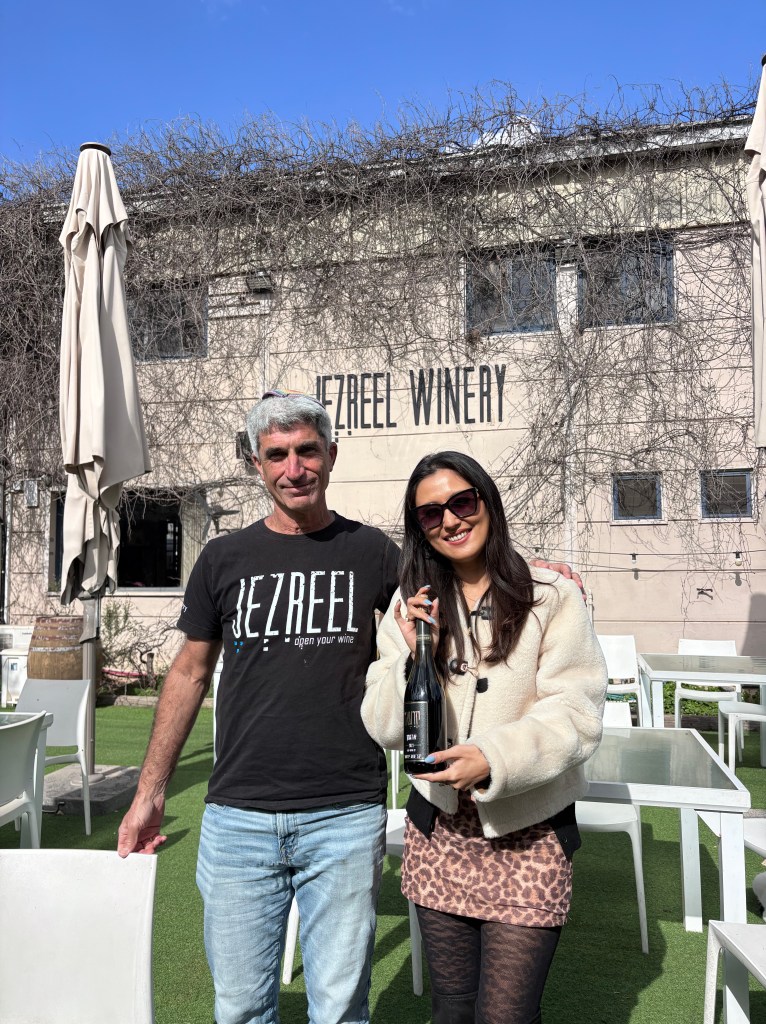
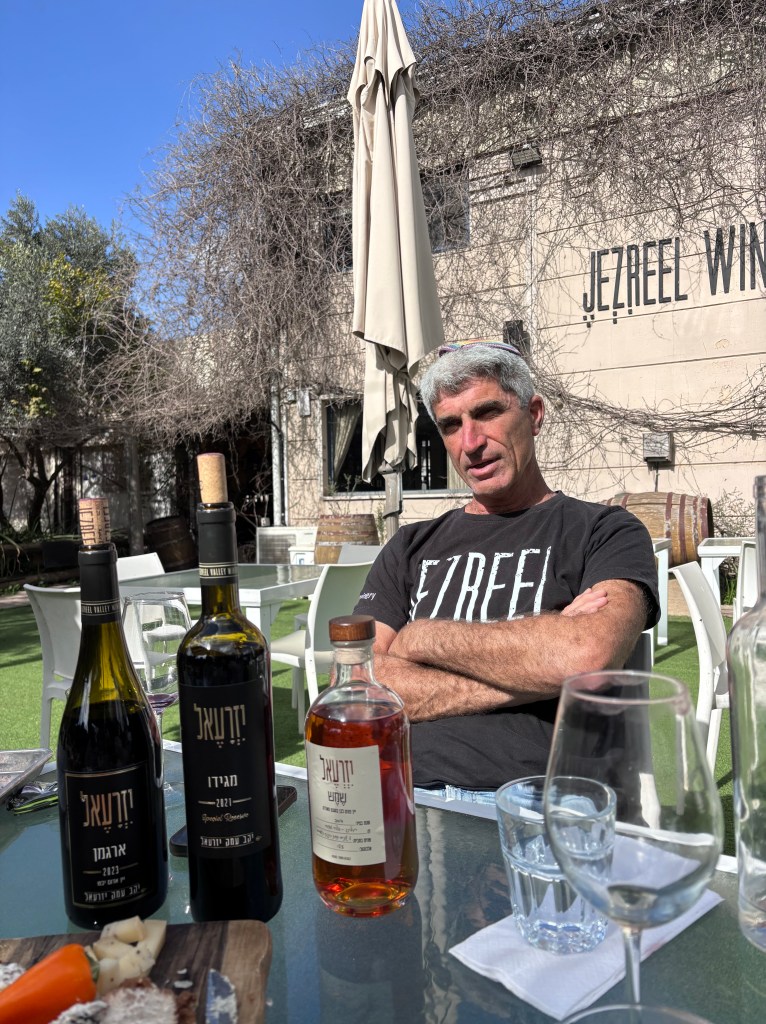
One of the most memorable parts of the visit was chatting with Jacob. He mentioned he has traveled to Korea several times and even has a friend who runs a Makgeolli bar in Seoul!
Talking about Israeli Argaman and Korean rice wine in the middle of the Jezreel Valley felt so surreal and unexpectedly personal.
Visitor Center
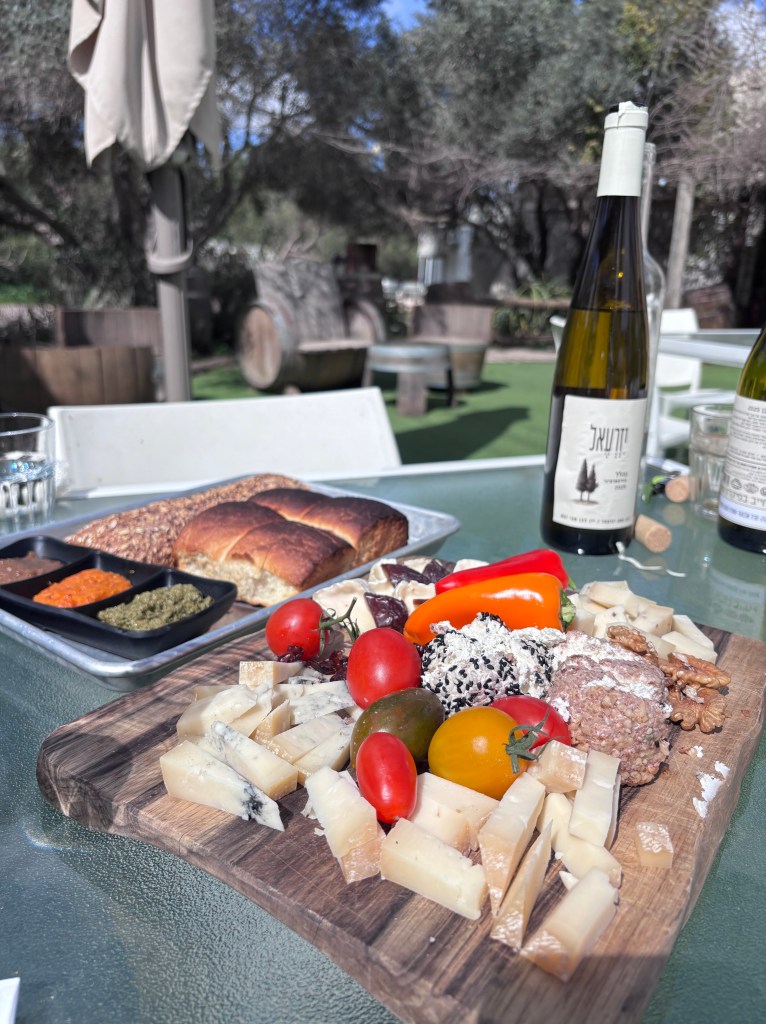
Grab a spot outside if the weather is nice, though sitting inside near the barrels has its own rustic charm. Their tasting route (₪ 129) is impressively well-rounded. You’ll try four different wines, but the real star is the pairing: a cheese platter, warm bread, and a special natural spread that really rounds out the flight.
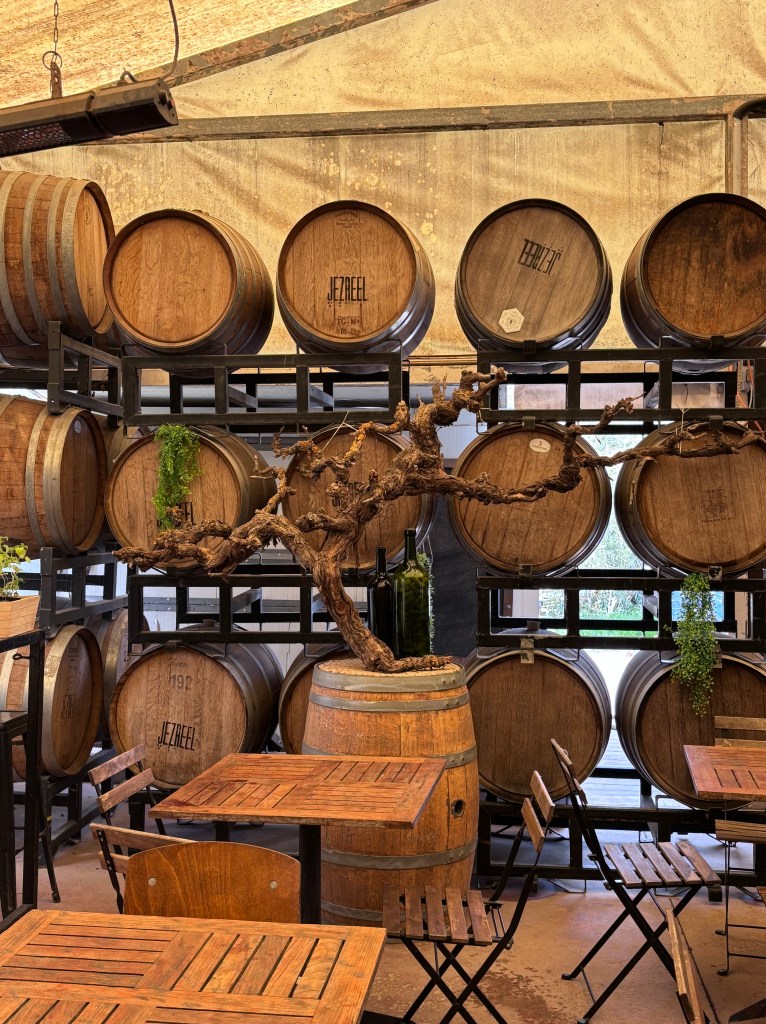
One of Jezreel’s strongest points is their pricing. In a market where prices are skyrocketing, finding quality wines like the Alfa or the Nahalal White for ₪ 85 is a breath of fresh air. It makes the winery remarkably accessible, which matters deeply at a time like this in Israel. While the flagship Argaman sits at a higher premium, the entry-level range offers great value for the level of ambition.
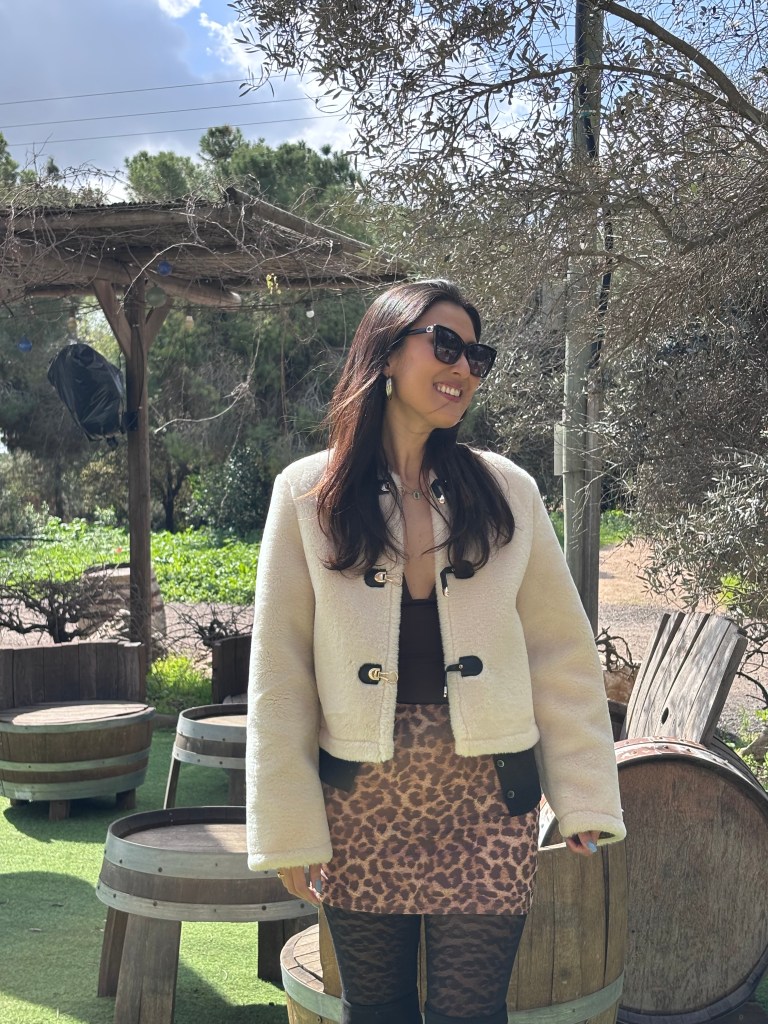
A Bit About Argaman: The “Biblical” Grape
Argaman is effectively Israel’s national grape—a cross between Portuguese Souzão and Mediterranean Carignan. Argaman is the sixth-most planted red grape variety in Israel and for years, it was hidden in cheap blends just to add color. Jezreel was a pioneer in changing that narrative, proving that Argaman is a world-class variety with a deep crimson color and a spicy soul.
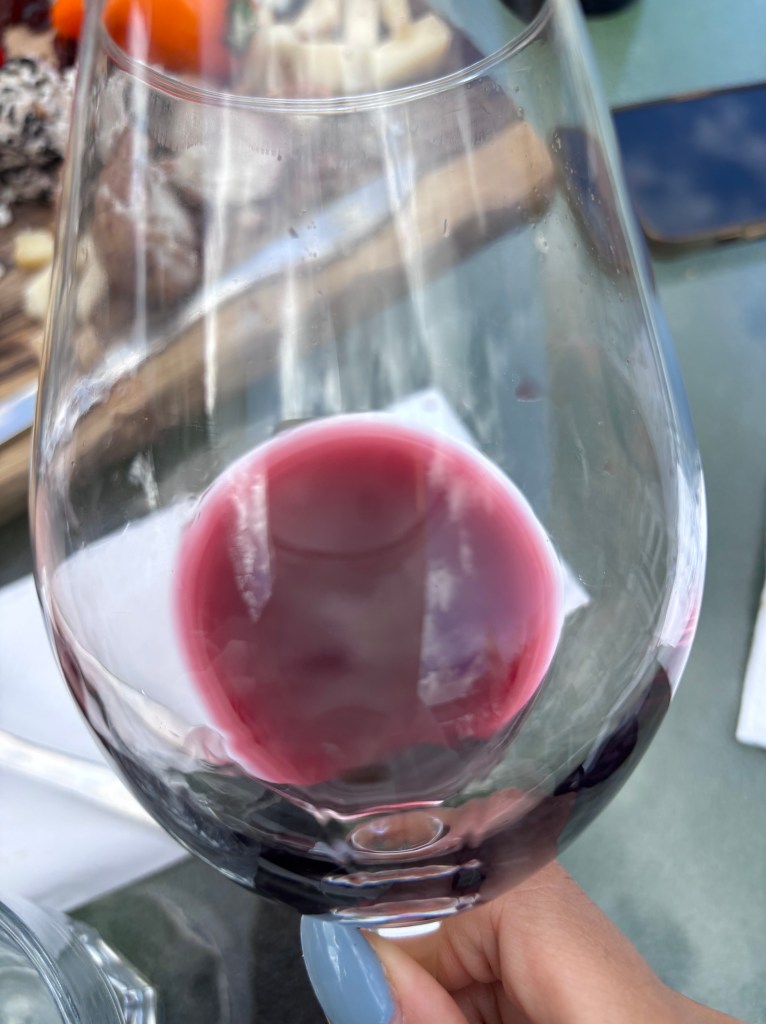
The name Argaman is biblical and means crimson or purple in Hebrew. But as the joke goes, back in the day, people could only read about the color in the Bible and they didn’t actually know what it looked like until the wine hit the glass!
Jezreel farms two primary plots, including 50-year-old bush vines at Givat Nili that provide incredible character.
The Rise of Argaman
Over time, Jezreel became known as the Argaman specialist.
A major milestone came when the Jezreel Argaman 2019 scored 93 points on jamessuckling.com — a first at that level for Argaman.
Then came something even more unexpected: listings in Michelin-starred restaurants in France.
Jacob told me a story that a group of wine lovers visited the winery, fell in love with the wines, and casually decided to import them to France to the restaurants they personally frequented. Those restaurants just happened to be Michelin-starred (so casual).
Recognition continued at the 2022 Decanter World Wine Awards — arguably the most rigorous global competition — where Argaman gained further validation.
Kosher Certification
Wine: Jezreel Valley Rabbinate, OK, Tartikov
Food: Jezreel Valley Rabbinate
Wines We Tasted
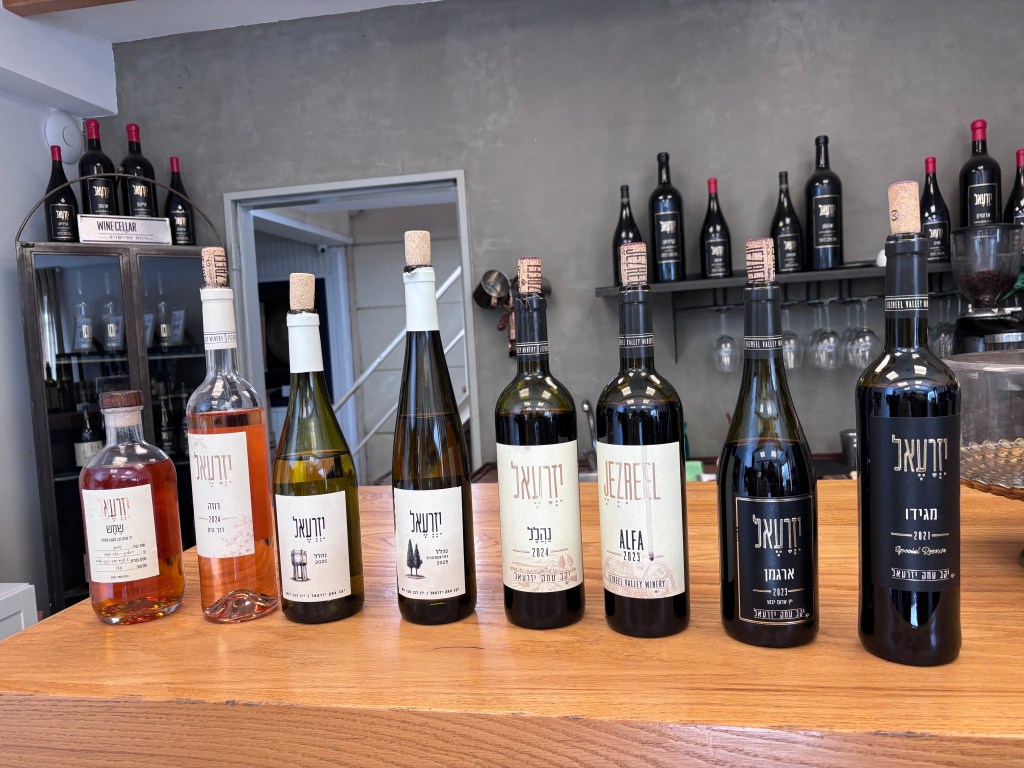
Jezreel, Nahalal White, 2025
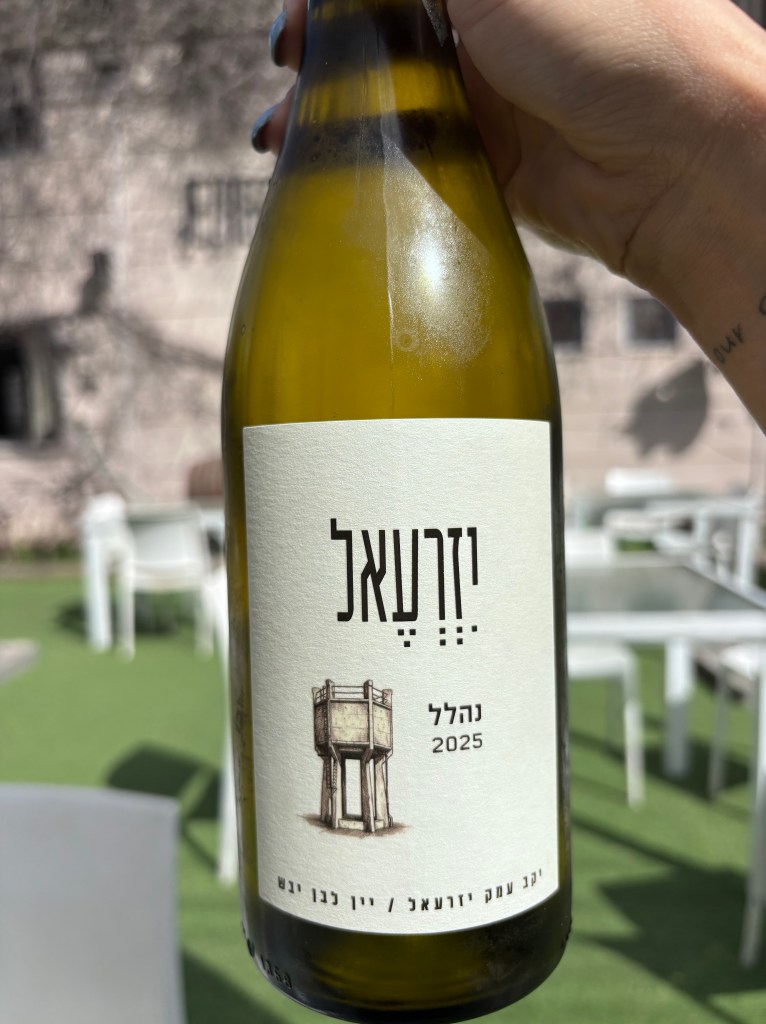
A blend of Sauvignon Blanc and Gewürztraminer. Very young, very fresh. Light, easy-drinking, almost playful. Aromatic but not overwhelming. At 11.5% ABV, it feels made for long Israeli afternoons.
Jacob admitted that adding white wine to the lineup was actually a savvy business move. Unlike the reds, white wine doesn’t usually need to sit around in barrels—it can go from the vine to the market almost immediately. He is quite the businessman!
Jezreel, Alfa, 2023
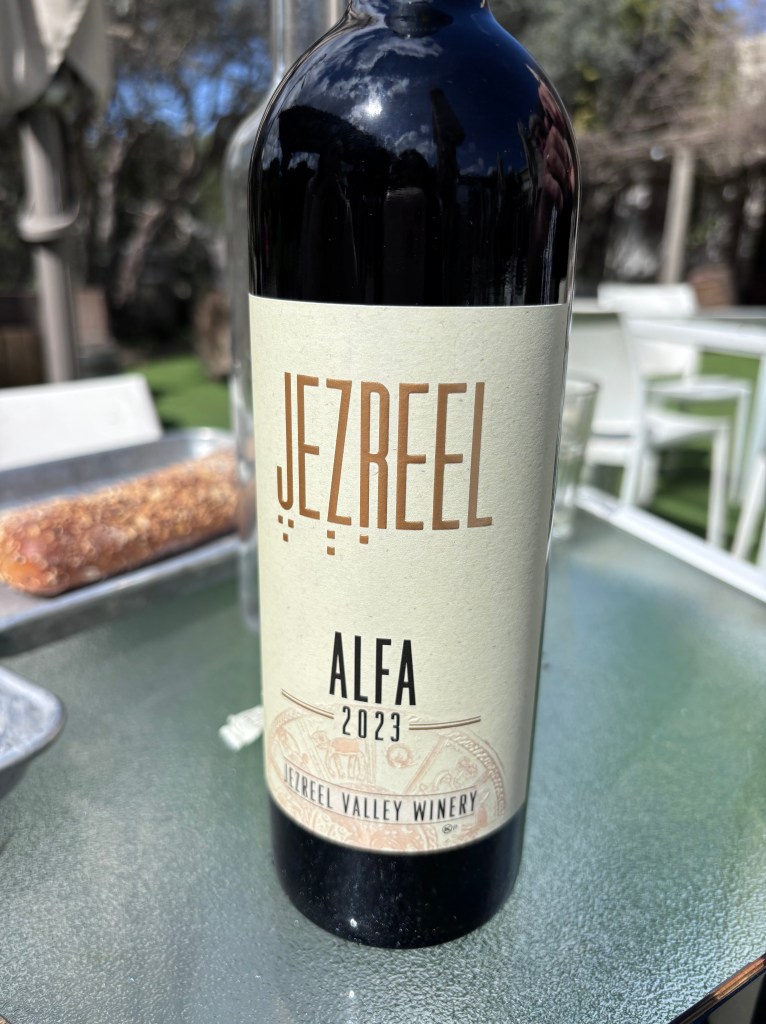
A blend of Syrah, Argaman, Cabernet Sauvignon. Aged 14 months in mostly used French oak. Dark berries, tobacco, black pepper, cloves. Long finish, but what impressed me was the balance. It didn’t feel heavy or overworked. The oak supported rather than dominated. Rich but controlled. ABV 14%
Nahalal Red, 2024
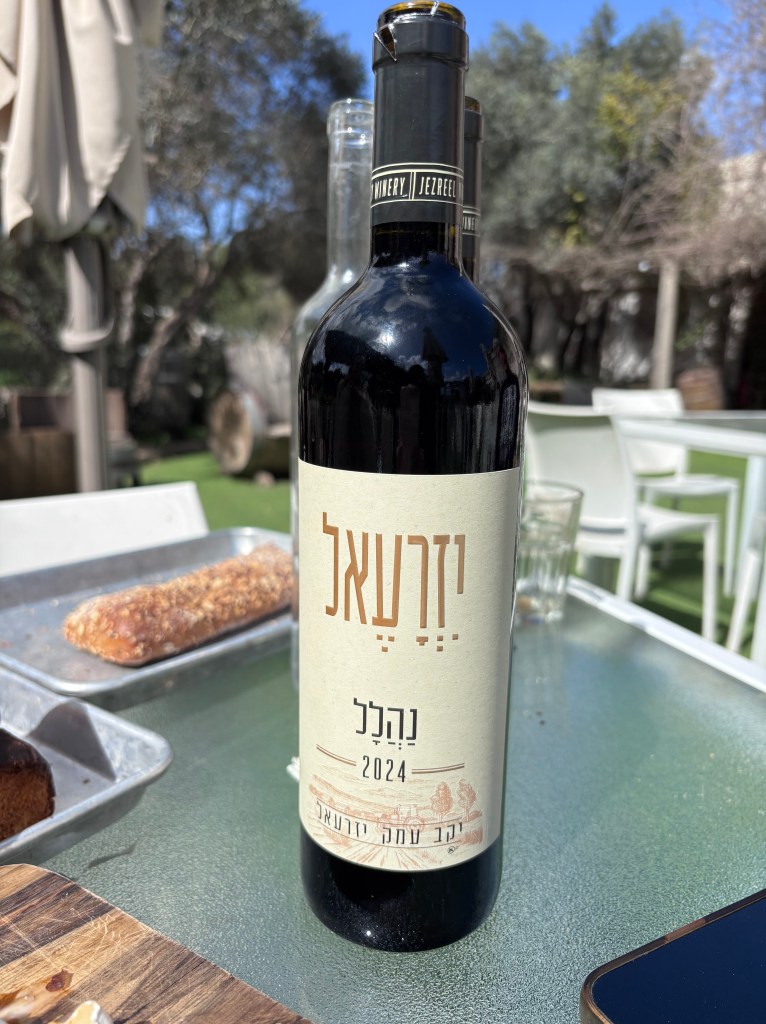
A blend of Syrah and Carignan. Red cherry and strawberry — bright and sunlit. And then that saline note again. It immediately brought me back to our staycation at Cramim. Maybe I’m biased, because a close friend of mine went to boarding school in Nahalal, so even the name feels personal.
Reggie Solomon from Wine Enthusiast rated it 92 points and called it “a hug in a bottle.” I understand that. It’s generous and warm. ABV 14.8%
Jezreel, Megido, 2021
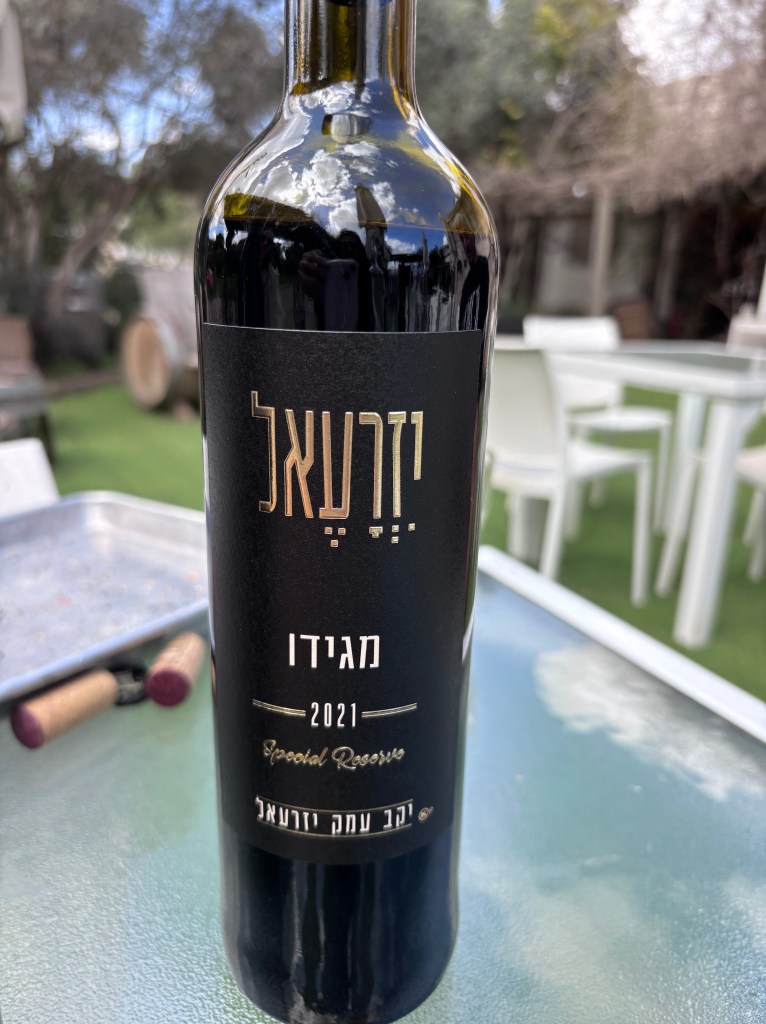
A blend of Syrah and Cab. Hand-harvested plots, fermented and aged separately for 14 months in French oak. Spicy, earthy, aromatic. Berries and strawberries on the nose. Soft tannins, medium body, refreshing acidity. Structured but very drinkable. It has depth without being too heavy.
Jezreel, Argaman, 2023
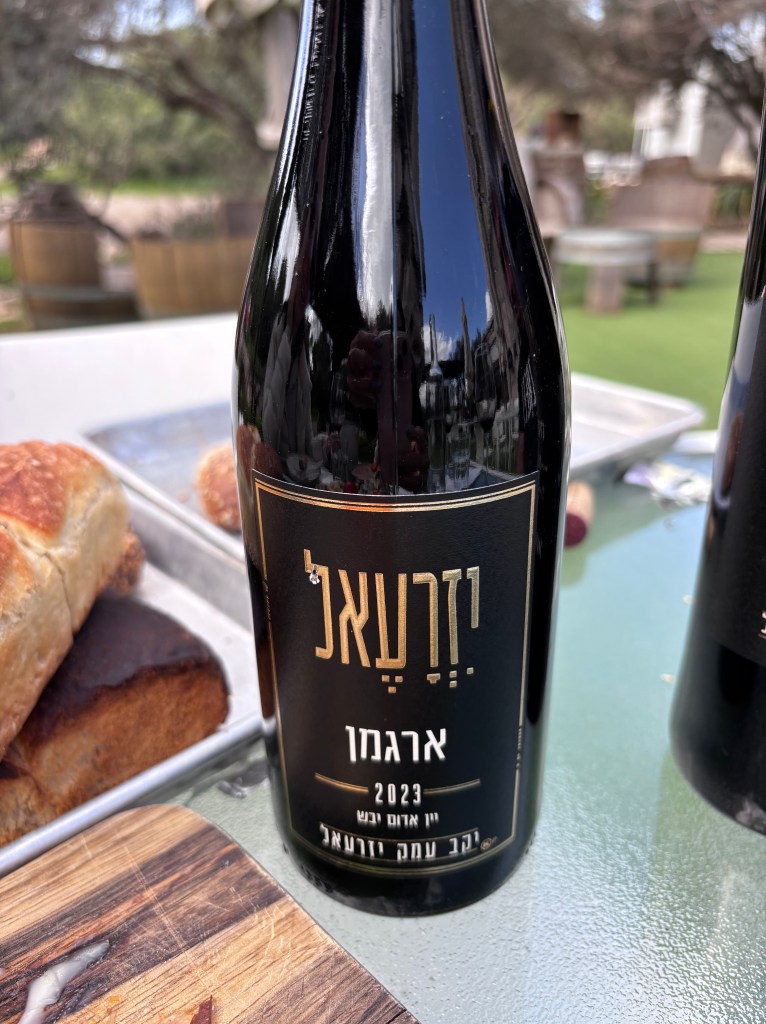
Cassis and blackberry, spicy and earthy notes. Soft tannins again, and I think that it is something Jezreel seems to manage very well. Medium-bodied but rich in flavor, with refreshing acidity carrying it through.
Argaman can sometimes feel rustic or overly powerful. Here, it felt composed. Confident. Truly Israeli — not trying to imitate anywhere else.
Shemesh (“Sun”) – limited edition
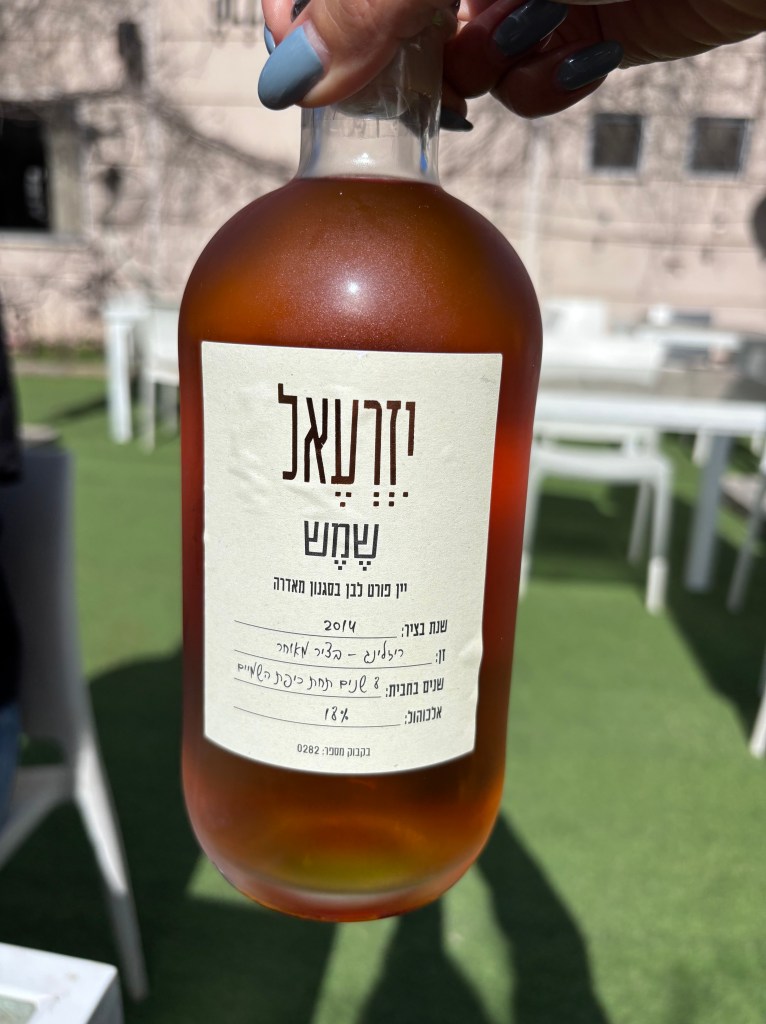
One of the most fascinating bottles we tasted was the Shemesh — meaning “sun” in Hebrew.
Originally Riesling, the wine was left exposed to the sun for eight years. The intense heat and oxidation transformed it into something almost sherry or port-like in character — concentrated, oxidative, layered.
Jacob explained that the alcohol level had become extremely high due to concentration, and because the winery doesn’t hold a license for fortified spirits, they adjusted it by blending the wine with Gewürztraminer. The result is unconventional and bold — not a classic category wine, but something experimental and uniquely Jezreel.
Winery Information
Address: Kibbutz Hanaton, Jezreel Valley
Kosher: Jezreel Valley Rabbinate, OK Kosher, Tartikov
Visits: By appointment
Hours: Sunday – Friday, 10:00–15:00
To book: click here
Hyun Park is a WSET Level II wine enthusiast who grew up within South Korea’s vibrant culinary landscape. Her love for wine grew significantly while living in Germany, where she visited wineries in Pfalz, Mosel, Nahe, and Rheingau. Now living in Israel, she actively explores the country’s diverse wine regions and evolving wine culture. As a non-Jewish, non-Israeli observer, Hyun brings a fresh, international lens to Israel’s wine world. She also shares reviews of wines and boutique producers on Instagram at @hyunshinebites.
 Kosher Food and Drink
Leave a comment