I love Judaism. Sadly, some of the traditions and practices, particularly as it pertains to kosher food, have gotten lost over the centuries. It’s an unfortunate reality of the Jewish journey. But when I find knowledgeable, learned individuals who are willing to challenge conventional wisdom – that, my dear friends, is when I perk up.
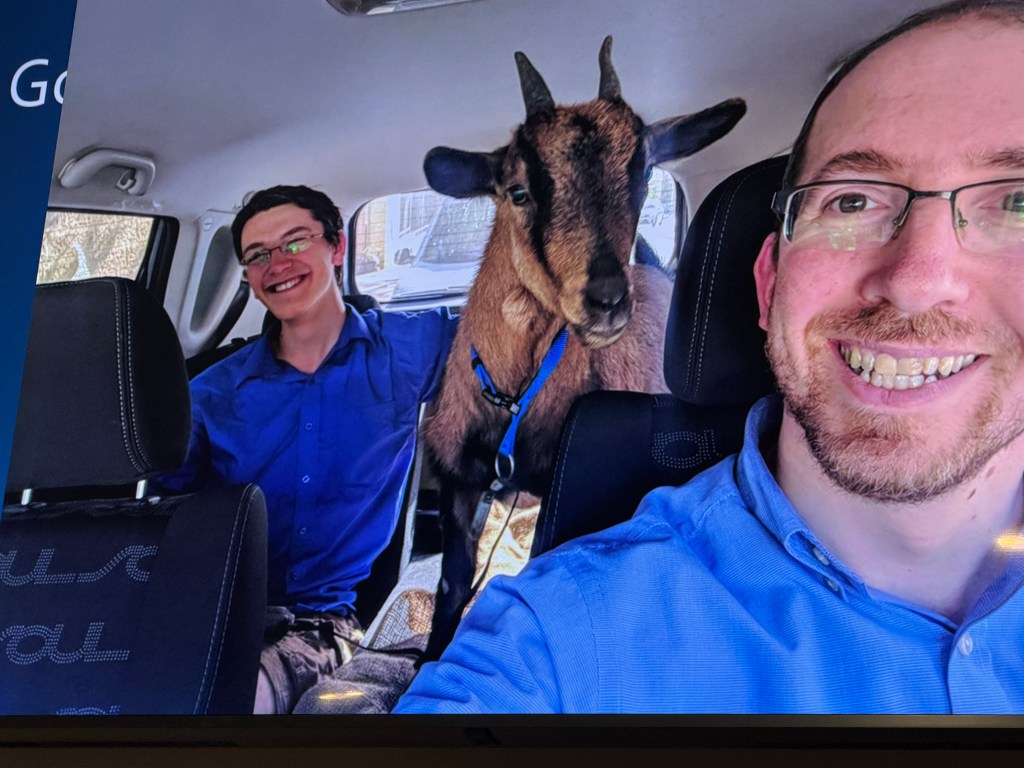
Rabbi Dr. Natan Slifkin is one such person. I knew he was going to be awesome when I met him 21 years ago and he had come out with his first book about animals and Judaism. He was subsequently put in cherem (a Rabbinical ban). Slifkin has since written numerous other books. He is incredibly well-versed on Torah knowledge, specifically on the animal kingdom and its deep connection to Judaism and Jewish history. I highly recommend you consider doing a deep dive into his writings which are fascinating.
Rabbi Slifkin opened up the highly successful and immensely educational Biblical Museum of Natural History in 2014 in Beit Shemesh, Israel. I have been there at least seven times already and I learn something new each time. Often times I have myths debunked, clarity upon misreadings of Hebrew words which conventional opinions have been based around, and as it pertains to this writing, I learn the truth about animals once thought to be kosher or not kosher. He cites verifiable and clear sources and I love every minute of it.
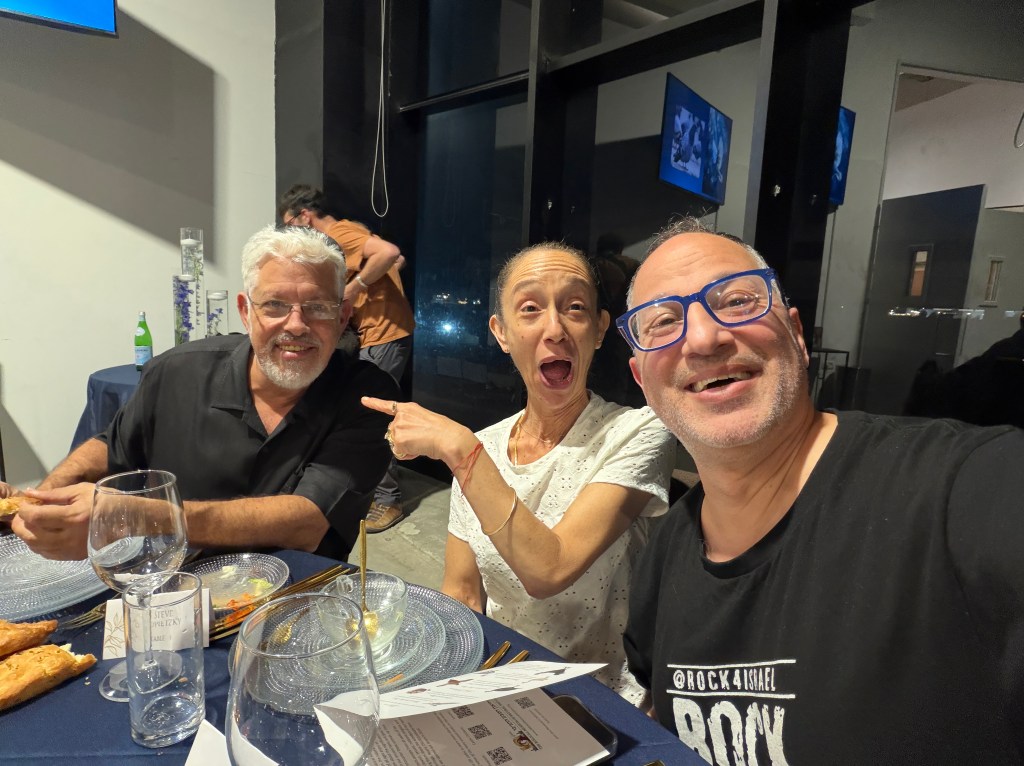
And so, we lead up to the museum’s annual fundraising dinner which consists of many animals, insects, and fish that are either hard to find and/or animals once thought not kosher which are. In short, a dinner of unique and curious offerings. And we get to eat them!
This year I was gifted an admission to this sold out dinner for my birthday. It did not disappoint! Let’s review, shall we?
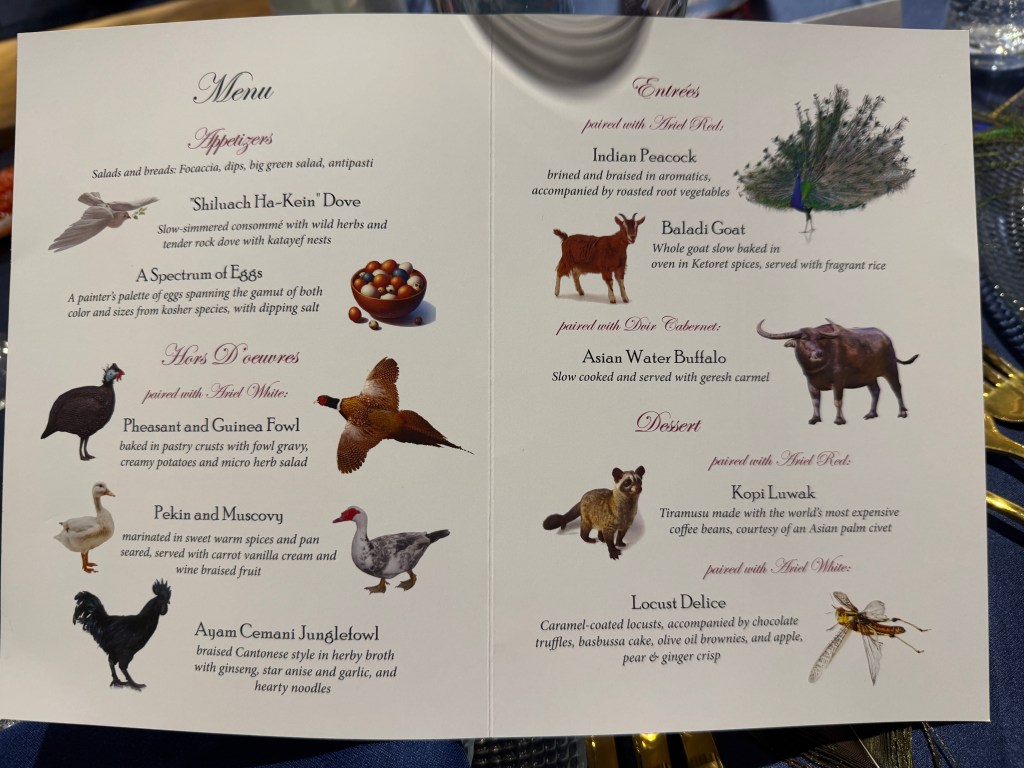
This year the dinner was called The Biblical Feast of Exotic Kosher Curiosities and took place at the museum. The menu was not released ahead of time. Slifkin, in his posts and updates, indicated there would be peacock. That would have been enough for me. I never even knew peacock was kosher. In fact, there is more written tradition that peacocks are kosher than either chicken or turkey. The Talmud speaks of peacocks being eaten numerous times. While chicken is mentioned in Talmud, it is not mentioned in Tanakh. Turkeys are not discussed in either Talmud or Tanakh.
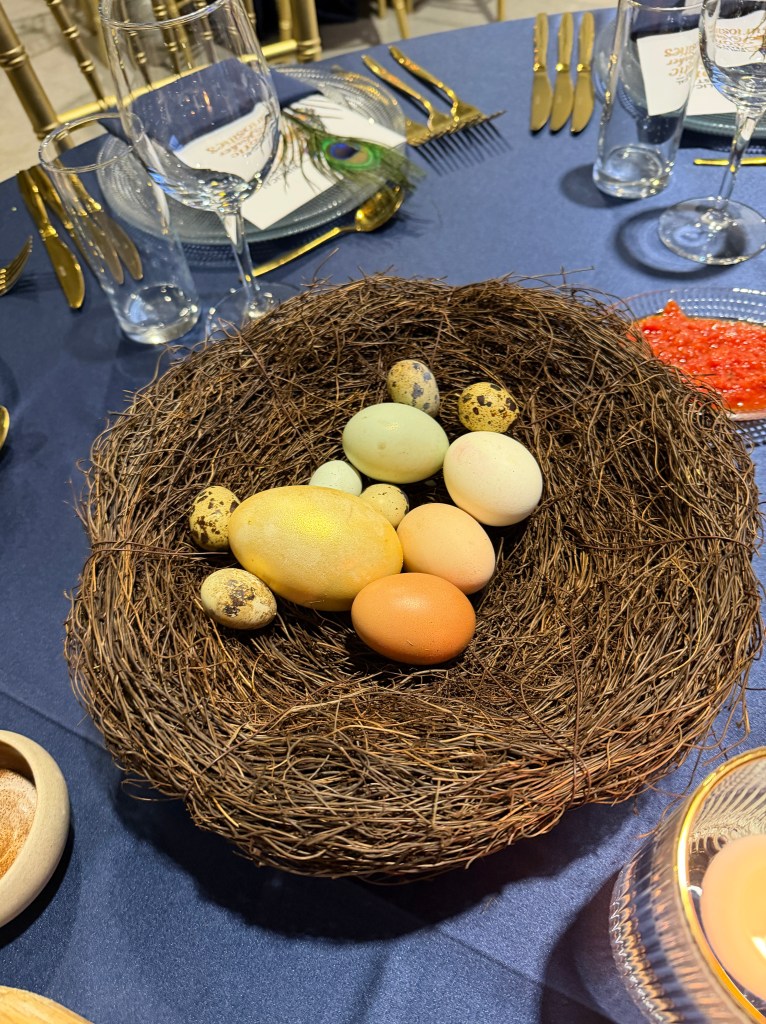
When you walk in the museum you get to take pictures with a bunch of huge snakes which you can wrap around your neck. Cute photo ops. Heading upstairs to dinner, each table was beautifully set but notably had a bird’s nest on each table with many different types of hard boiled eggs from various fowl. I partook of the biggest egg in the nest which was colored gold. It turned out to be a goose egg. It tasted like a hard boiled egg but the yolk was a bit richer than an average chicken yolk. It was cool to eat.
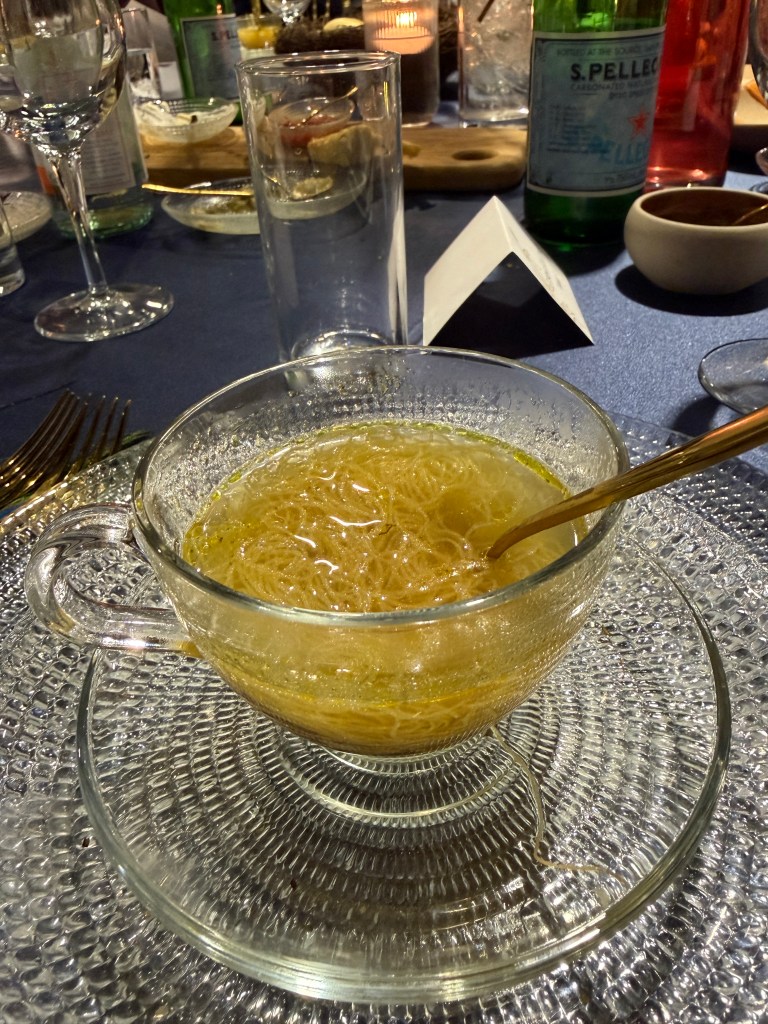
Next we were served the “Dove soup,” which was delicious. It was similar to chicken soup but there was an enjoyable difference. We learned that dove and pigeon are exactly the same bird. The white dove was bred to look prettier dating back to antiquity. When dealing with kings and emperors, presenting an unattractive pigeon was not as impressive as a beautifully bred white dove. The soup was very tasty and frankly, dove consommé sounds a lot better than pigeon consommé.
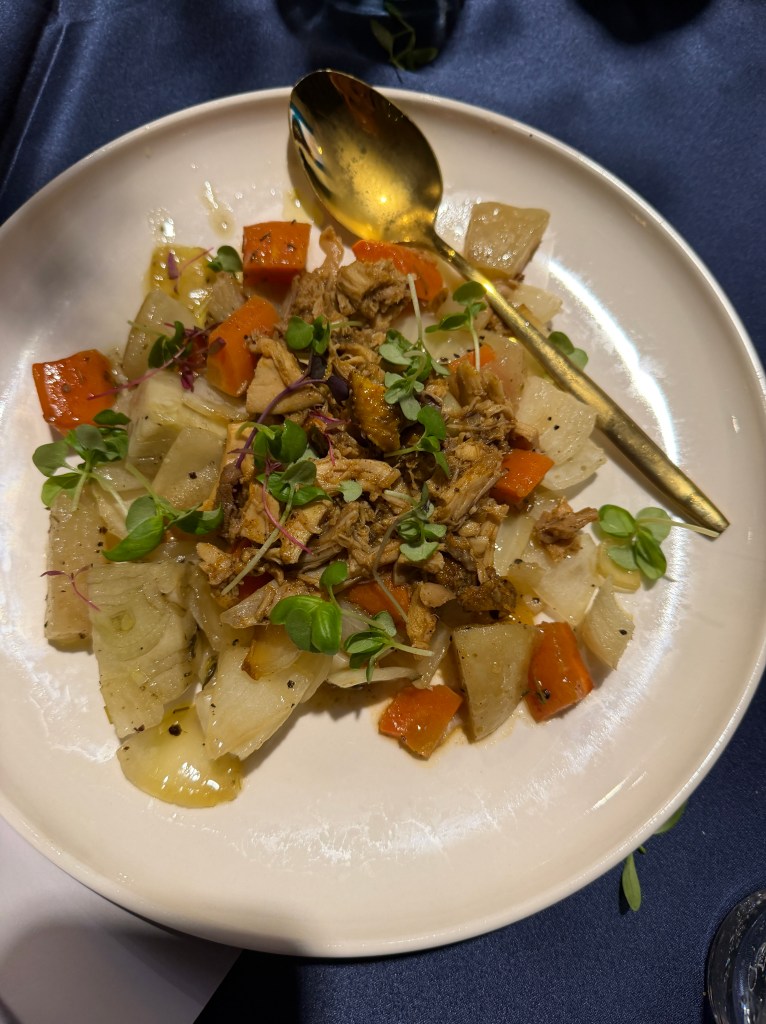
The next course was the “Pheasant and Guinea Fowl.” They were super tasty with a chicken texture, and the old “tastes like chicken” line was very apropos here. However, it still had a distinction from chicken and the pastry that they came in was great.
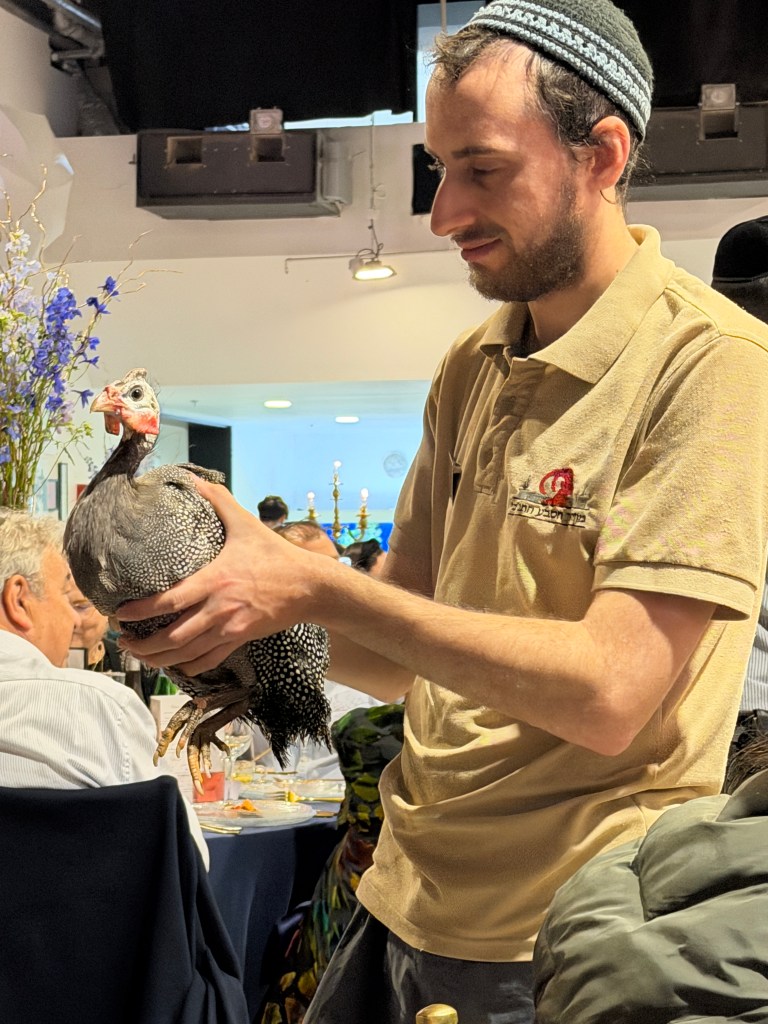
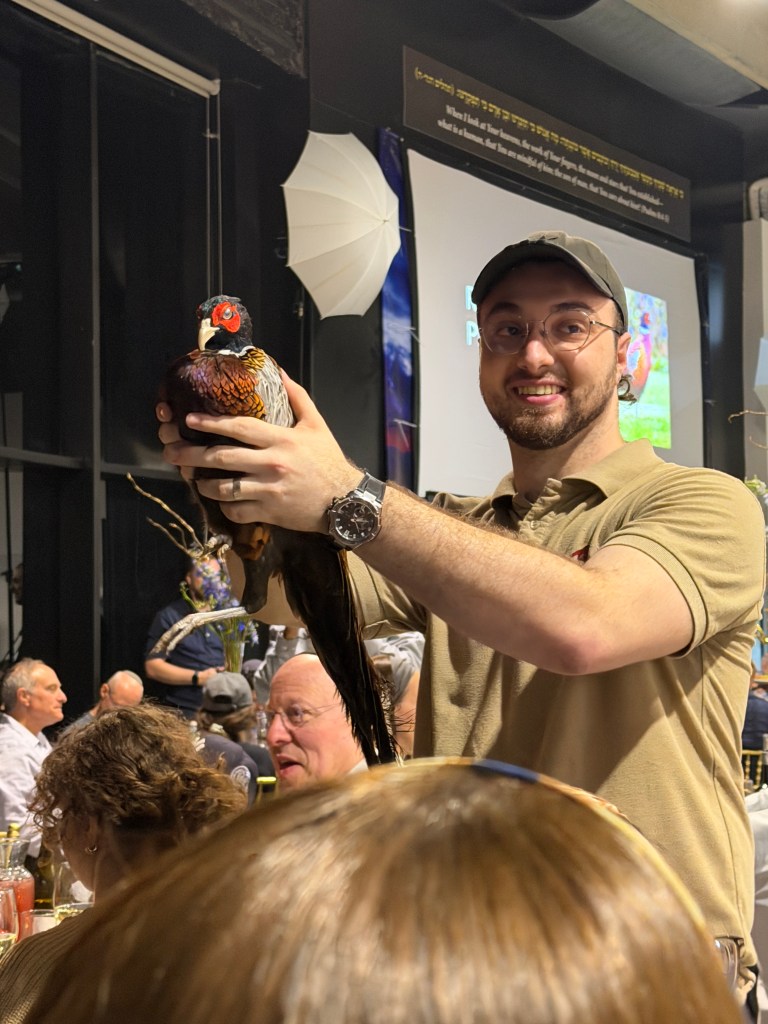

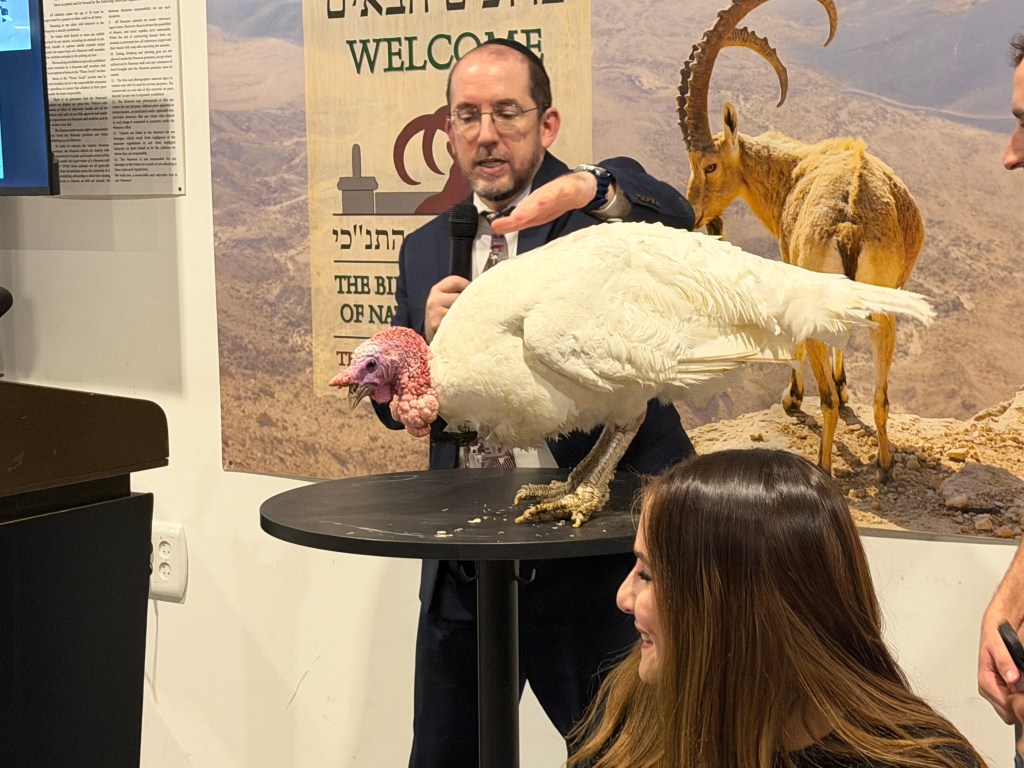
Before each course Slifkin spoke to us about what we were about to eat, the misconceptions about what we were about to eat, and why we are allowed to eat it. One of the things that was pointed out was that we’ve always been told that keeping the laws of kosher is a chok (no stated reason in the Torah) but there actually is a reason given. The Jewish people were told that they had to be holy by being separate and that is the reason for kosher as well. We can’t just eat what we want. There are terms and conditions to being holy and those parameters have been laid out in the Torah.
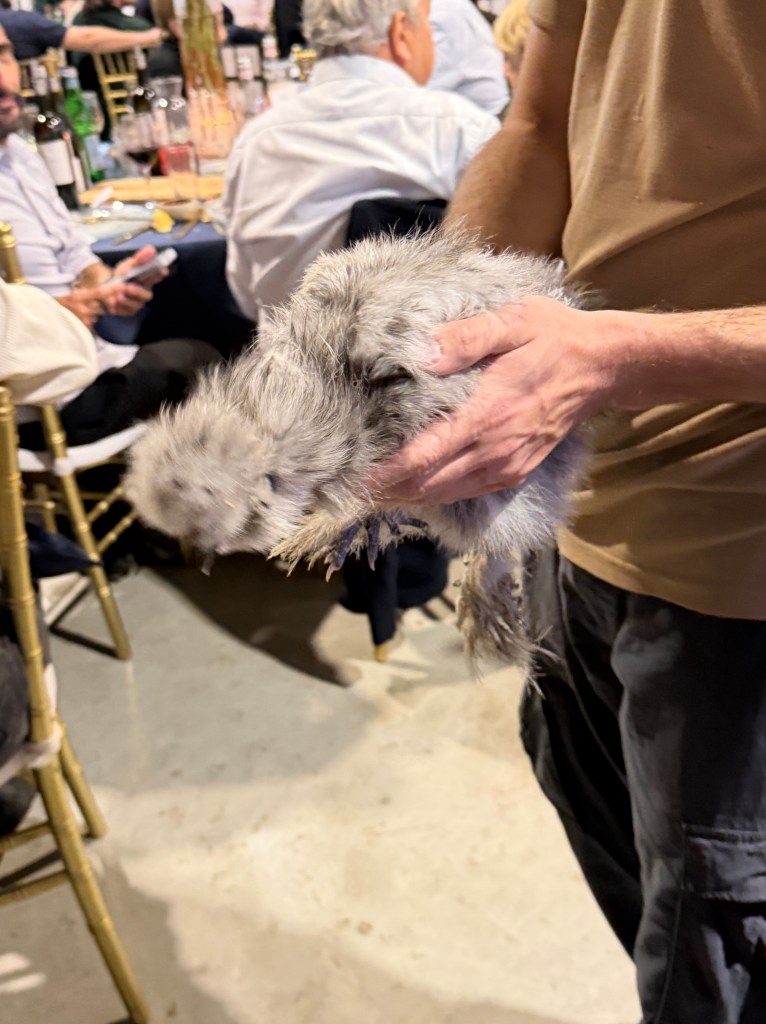
Next course was the Pekin and Muskovy. I’d never heard of these birds before but they are in the duck family and very tasty. Combined with the sweeter wine-braised fruits included on the plate, this dish made for an amazing balance of flavor. We surmised it was either baked apples or pears.
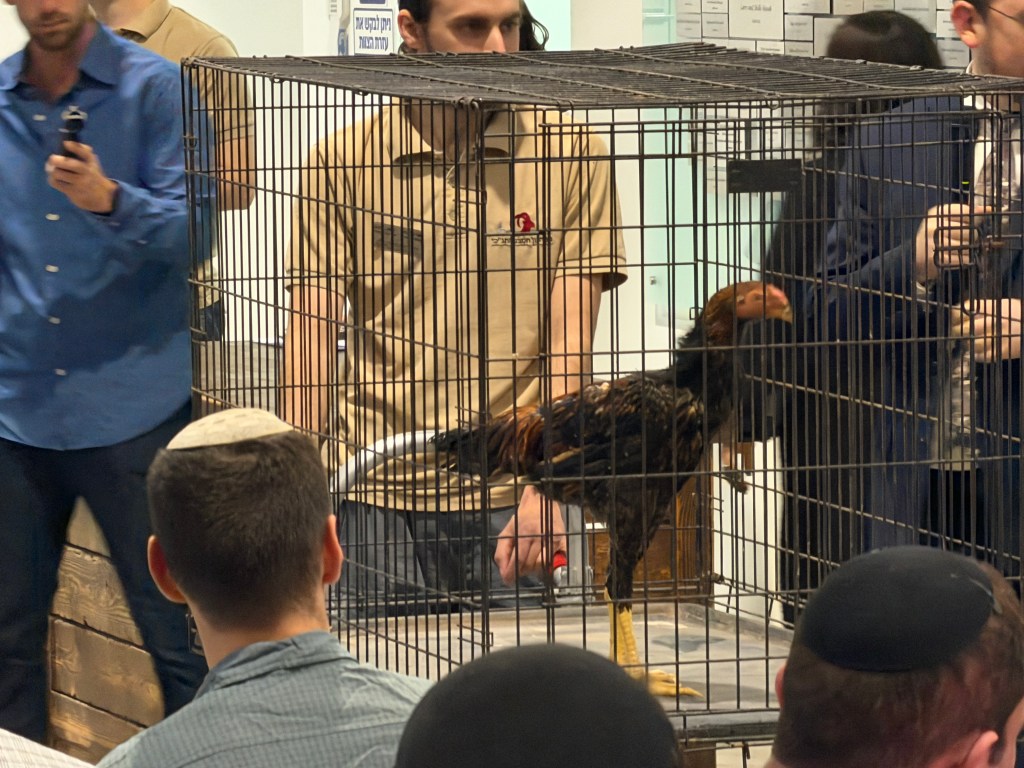
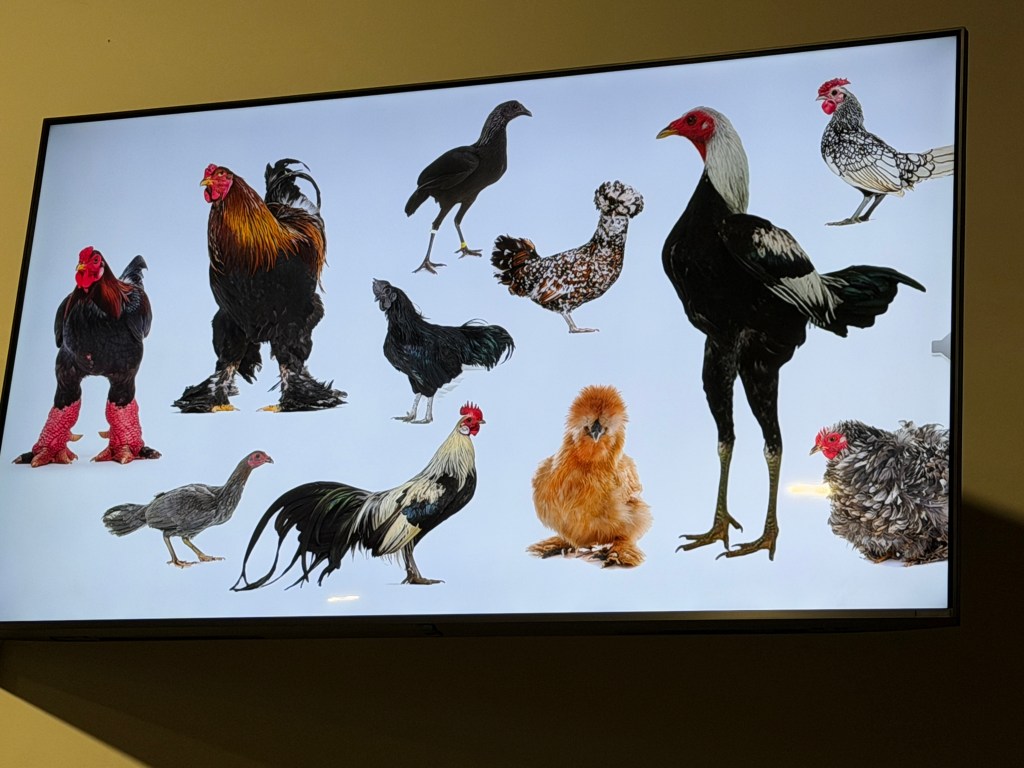
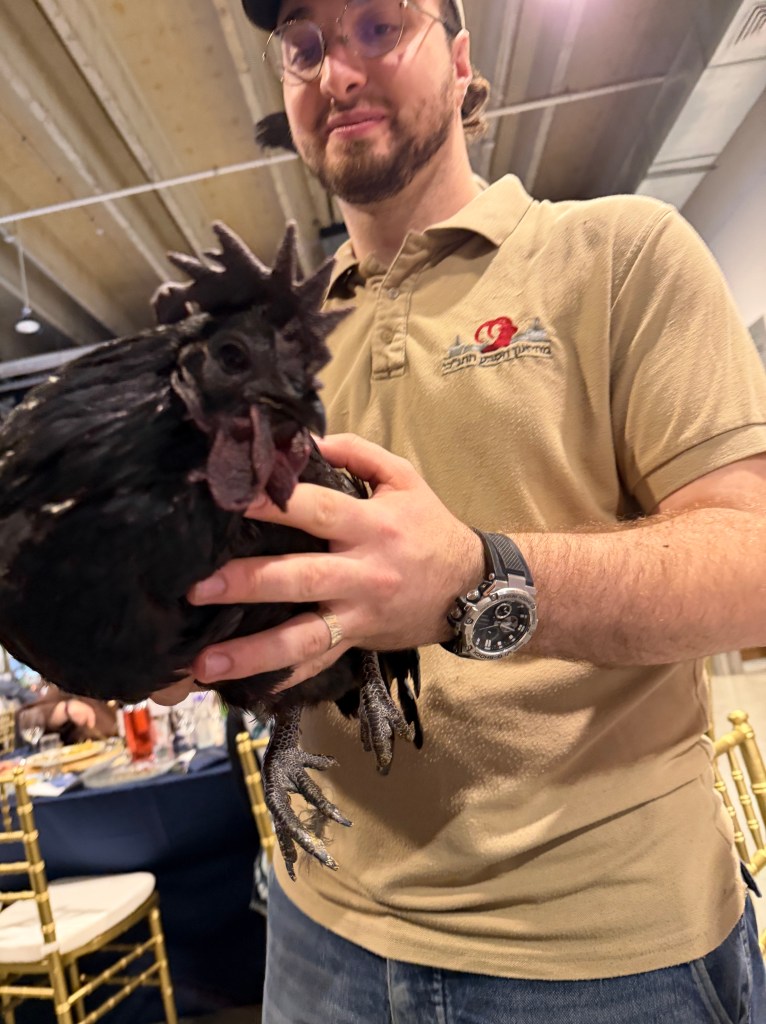
Next came a bird which blew me away. It has an interesting history as it was given to royalty in China and thought to have healing and magical powers. It is called the Ayam Cemani junglefowl. The Ayam Cemani looks like a hen or rooster but is totally black and not only is it black on the outside but is completely black on the inside. Its bones are black and its meat is black. It was fascinating and its taste was unique, again similar to chicken but with a deeper, earthier taste. It was wild to eat an all black chicken and something I’ve never had before. Tasty.
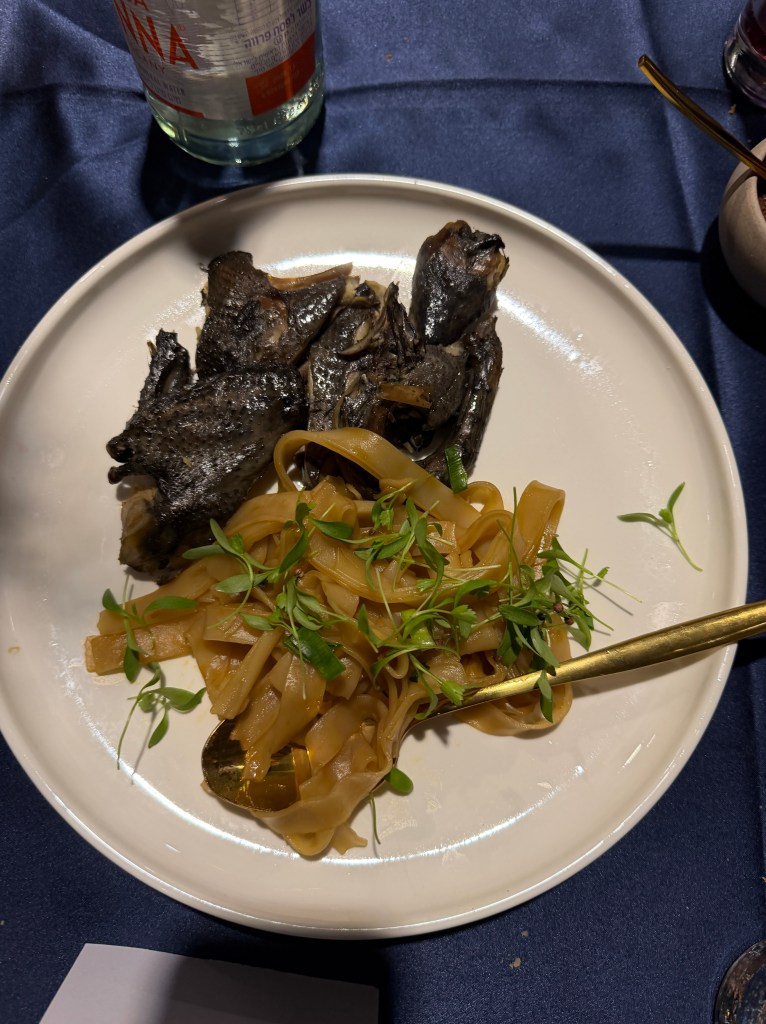
Next the peacock came out. The peacock is a beautiful, majestic bird and was prepared so magnificently. First, Slifkin explained the bird’s history and the tradition of peacock in Jewish history. The Talmud speaks about eating peacock. It’s totally kosher. Chazal (the Sages) ate peacock and it was served in Moroccan Jewish weddings as recent as the early 1900’s. Peacock has more of a mesorah (Jewish tradition) than turkey. He showed that in old Talmudic drawings, the peacock is clearly referenced while other birds are not as easily recognizable.
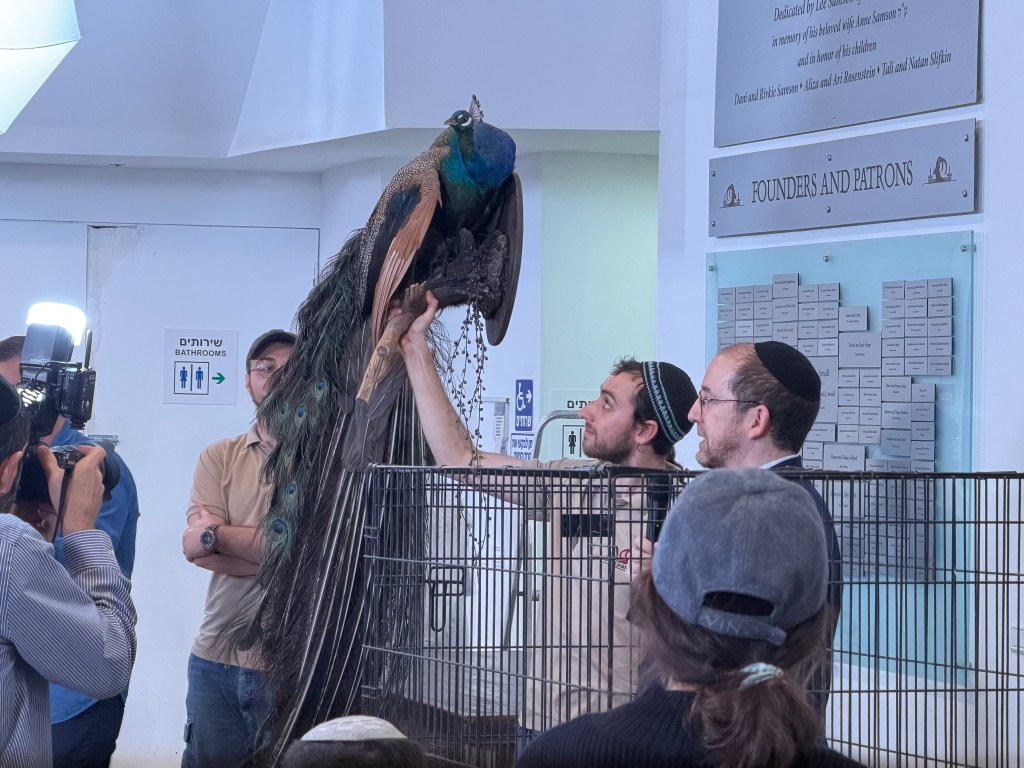
Peacocks are expensive birds which may explain why they are not eaten more regularly. Peacock was primarily reserved for kings, and while they are not rare, they actually lead a much better life than chickens as they are not caged and cooped up. And I can now say they are much tastier as well.
Slifkin added that stork is not kosher, although historically it has been eaten as it may have been mistaken for swan, which is kosher. He also noted that there are, in fact, kosher criteria for birds as well. There are three physical attributes while they may also not be birds of prey.
- They need to have an extra toe that points away from the other toes, an extra talon.
- A mechanism, similar to an animal that chews its cud, which is called a “crop” or “craw,” which is a pouch near the throat for storing food.
- A gizzard lining that easily peels away.
A goose, for example, does not have a crop but is not considered a bird of prey. Geese have tradition in Jewish history and therefore is considered kosher. We can also enjoy its eggs as I did.
We learned that chickens and turkey weren’t even around in Biblical or Talmudic times and that they are just domesticated junglefowl from China. It’s always China, isn’t it? Neither have any tradition or reference in the Torah and Talmud.
Click here for Part 2 of the “Biblical Feast of Exotic Kosher Curiosities.”
 Kosher Food and Drink
Leave a comment