Editor’s Note: This is a continuation of Part 1, which can be read here.
By now, we were all starting to feel full. The bread was kicking in. The dove soup. The three fowl courses and oh, did I mention the wines? Yes, the wines were from an Israeli winery called La Forêt Blanche, and were paired with each course.
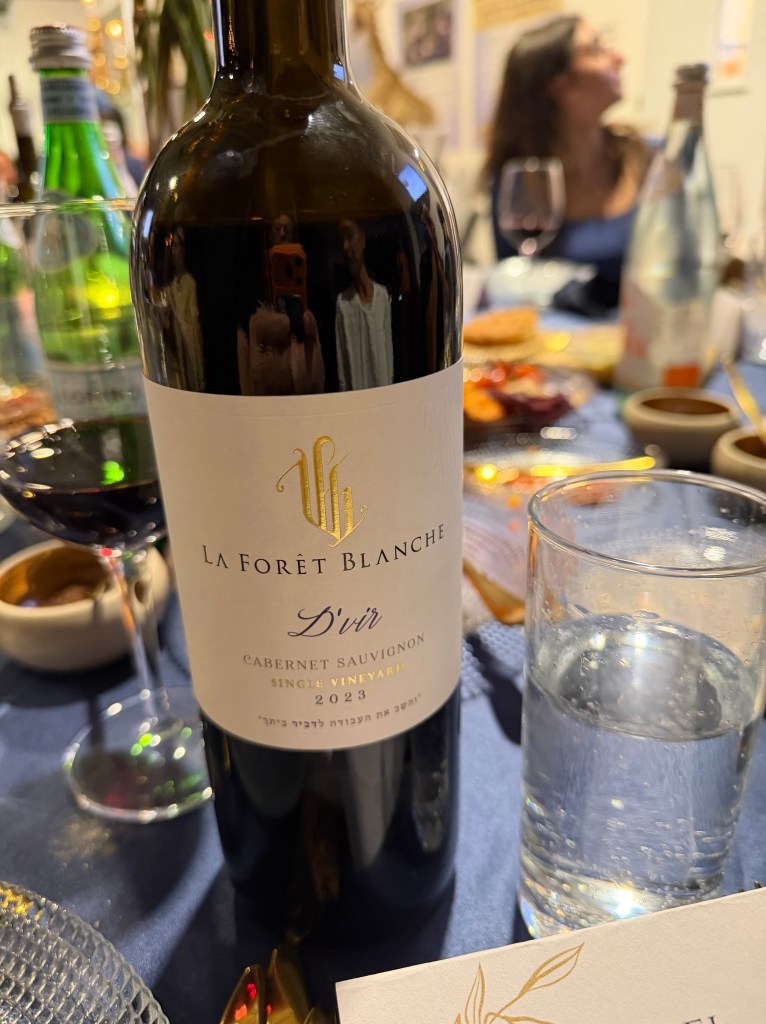
But we must soldier on. After all, it was not only my birthday present but also a once-in-a-lifetime experience which anyone who knows me knows I never pass up. So on we go …
Whatever number course this was, it started with a brief description and history, but really was pretty straight forward. The theme to 2001: A Space Odyssey kicked in and I knew this was gonna be great.
Up until this point, before each course was served, the corresponding live animal was presented to touch, hold, and feel what you were about to eat. This created an emotional connection, and an understanding that this is how animals get on to your plate. As opposed to the standard practice of just picking meat or fowl up from the supermarket shelf, the ability to see and feel the actual animal creates a newfound respect for it and a deeper connection and appreciation for your meal.
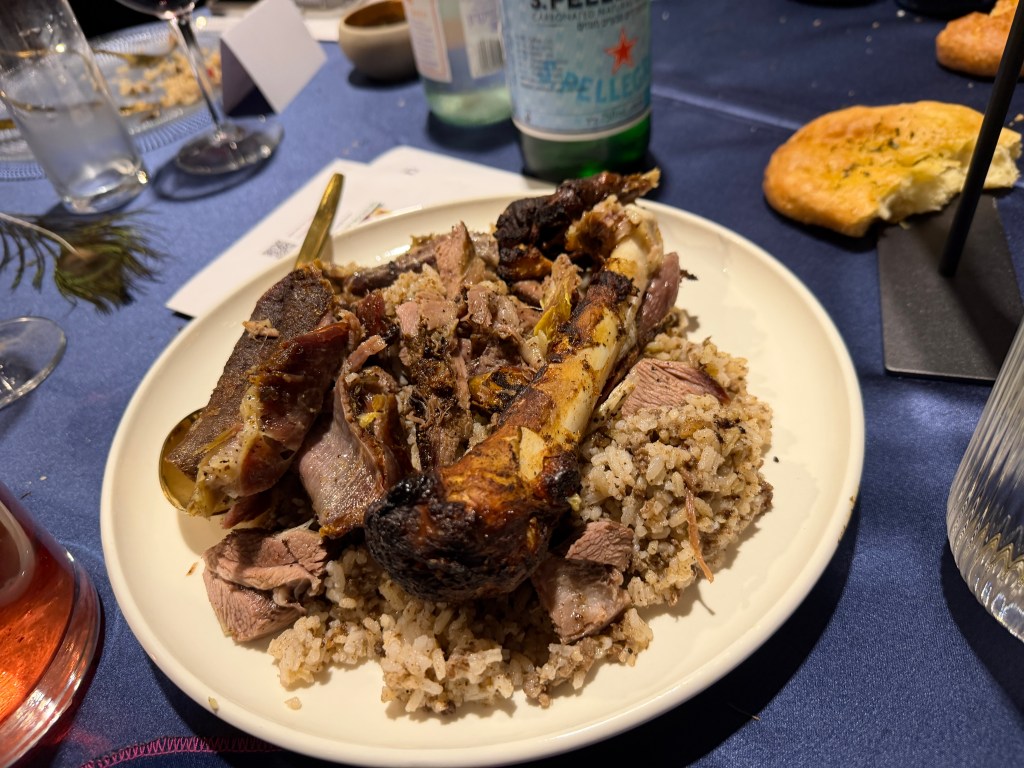
So when this beautifully cooked full goat was brought out on a platter, I shed a tear out of reverence and excitement, as I’ve never had goat before, other than its milk or cheese. It was so flavorful. Cooked perfectly, and the burst of spices on the palate was spectacular. The outside was crispy like a lamb that’s been slow cooked for many hours. The meat was soft and tender, tasty, meaty and flavorful. This is what goat sacrifices in the Temple must have tasted like. Simply irresistible!
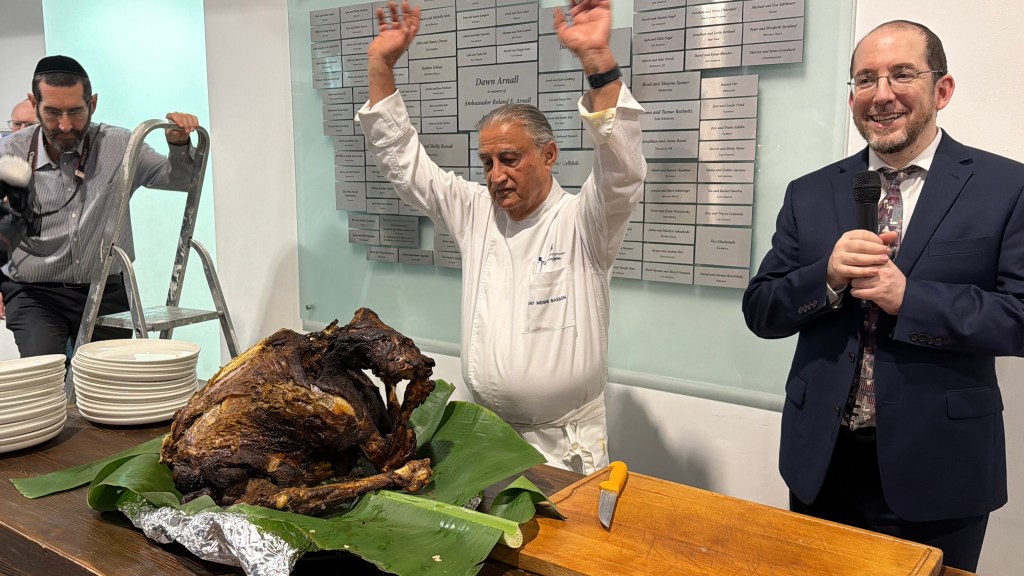
This next course was prefaced with a discussion about certain animals, like venison (deer), and how kosher venison is very hard to find. He went through an explanation as to why, which is outside the scope of this article.
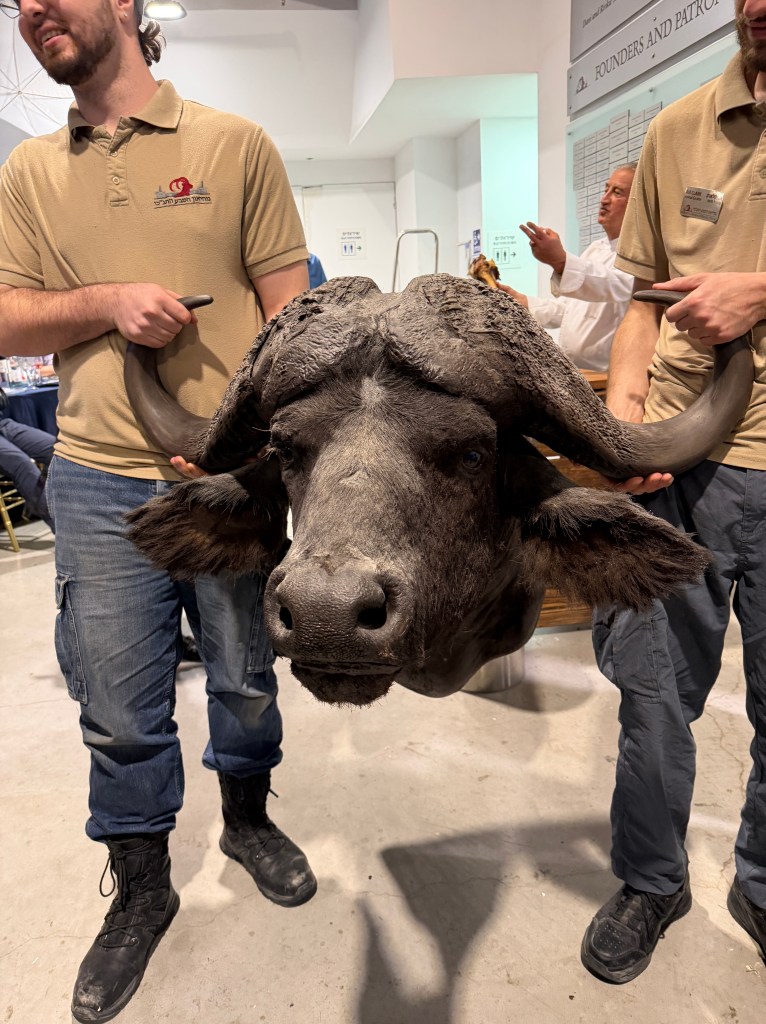
Suddenly, the build-up music began and the assistants brought out the humongous head of a taxidermied Asian Water Buffalo! Slifkin explained that the American buffalo is also known as bison and while they are both in the same family, there are differences.
- Where they live, with one in the U.S. and the other in Asia/Europe/Africa.
- Bison is generally more domesticated whereas buffalo generally more free, and violent.
- Buffalo are generally larger than bison.
As it pertains to kosher, the Talmud asks if water buffalo is a wild animal or a domestic animal. It was decided by later Talmudic authorities that buffalo is considered a domestic animal and therefore kosher, in addition to its kosher signs for meat (split hooves and rumination/chews it cud).
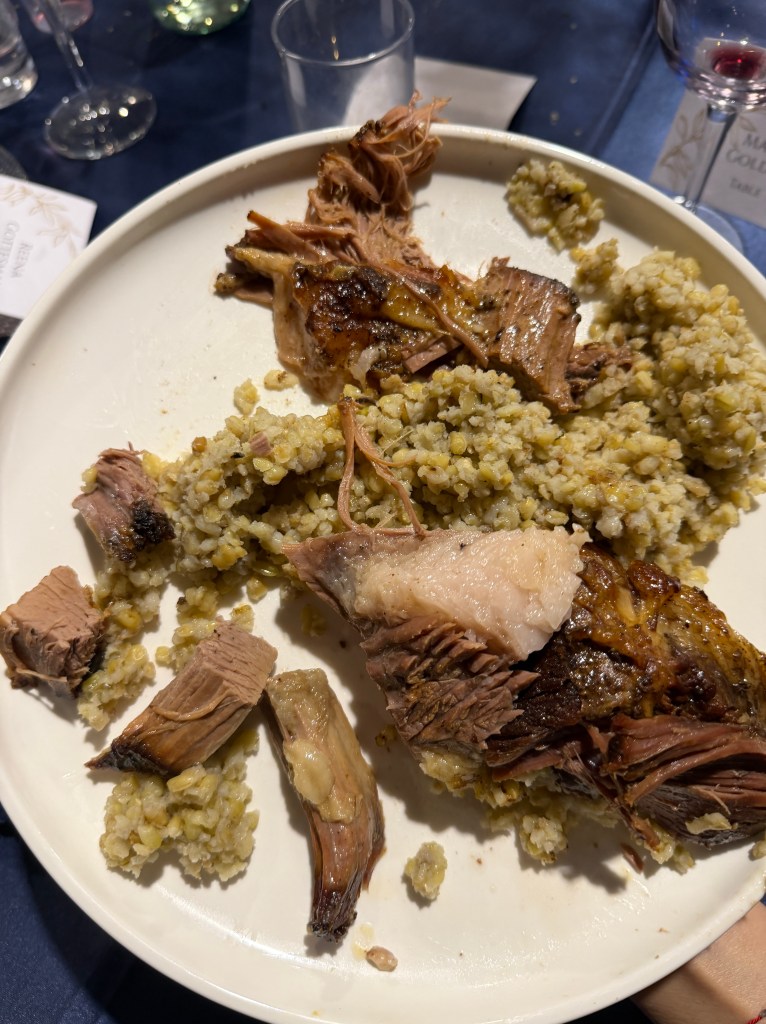
The meat was exceptional! Tender. Cooked to perfection. It is most definitely meat. Akin to “burnt ends” of beef brisket but just a bit denser, meatier, richer and juicier. It was slow cooked and didn’t need much else. I’ve had bison before. I’ve never had buffalo. This was a huge hit! Perfection!
Now it was time for dessert. There was a slide show. By now I’m in a daze and didn’t retain the information in the video explaining about the Asian palm civet that poops out what’s known as “Kopi Luwak” or “civet coffee.” It’s an exotic animal, whose poop contained the dessert, which is the coffee bean that creates the most expensive coffee in the world. It consists of digested coffee cherries which were eaten by the civet before it ends up in its waste. The poop is collected, washed, and processed, and used for exotic coffee. Look it up. It’s fascinating. (Further reading on the kashruth of civet coffee.)
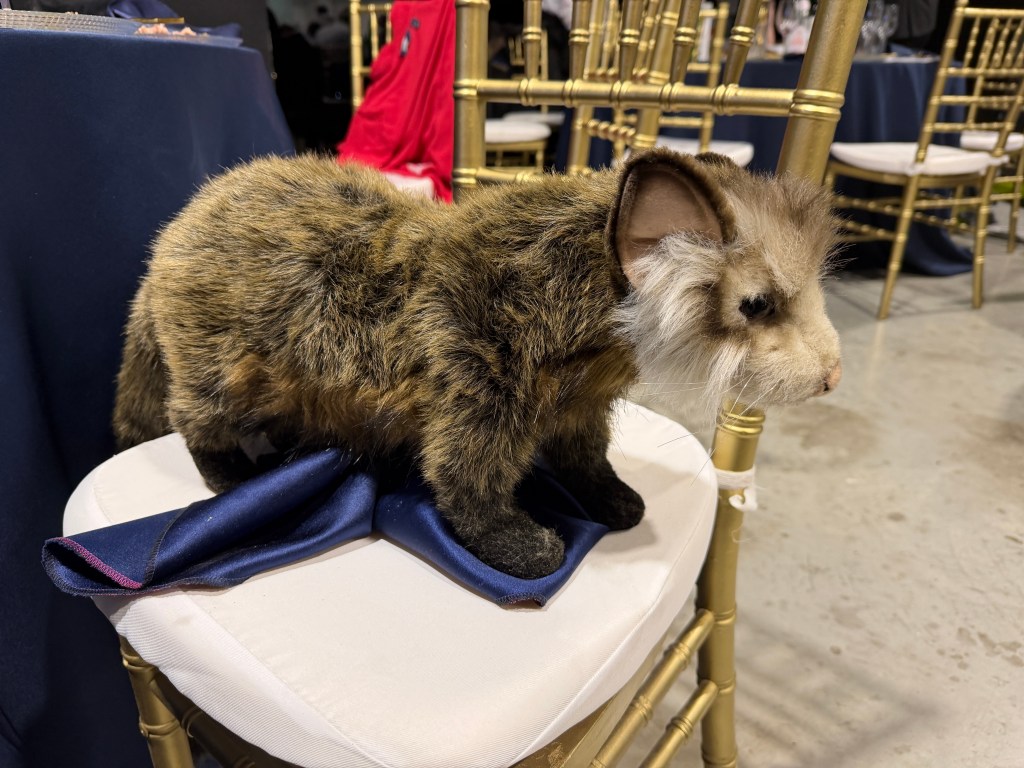
The kicker about the Civet is that it is not a kosher animal. One is not allowed to eat any part of a non kosher animal. So how we can enjoy coffee derived from this animal’s poop? The answer is that the poop is classified like honey from bees. Bees aren’t kosher either but as we all know, we eat honey. Same essential reason.
The tiramisu, made from the Kopi Luwak coffee, was very tasty and I would absolutely have it again. I’m not a coffee drinker (I’m an avid tea drinker) and it didn’t have a stereotypical coffee taste. A perfect dessert for me.
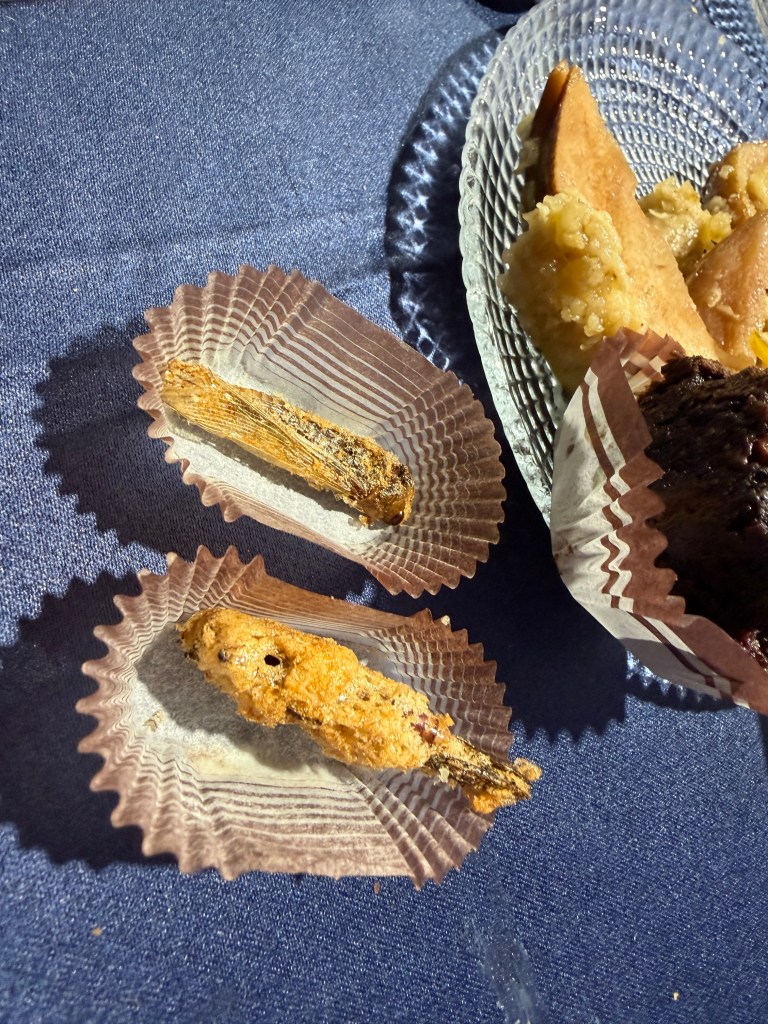
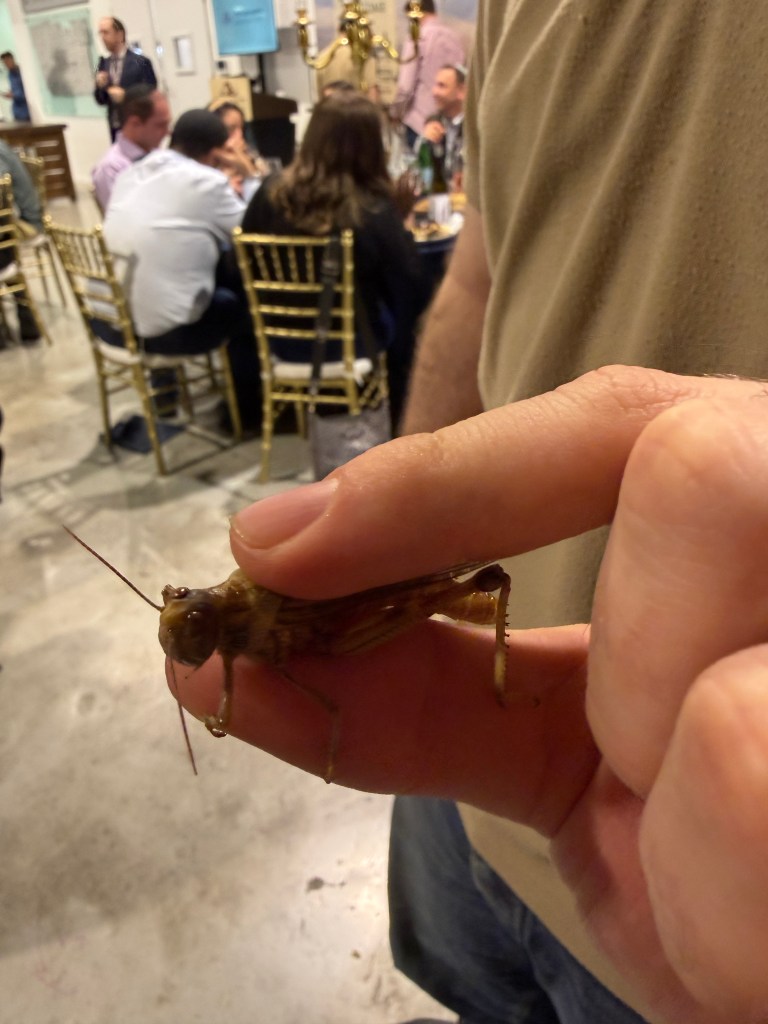
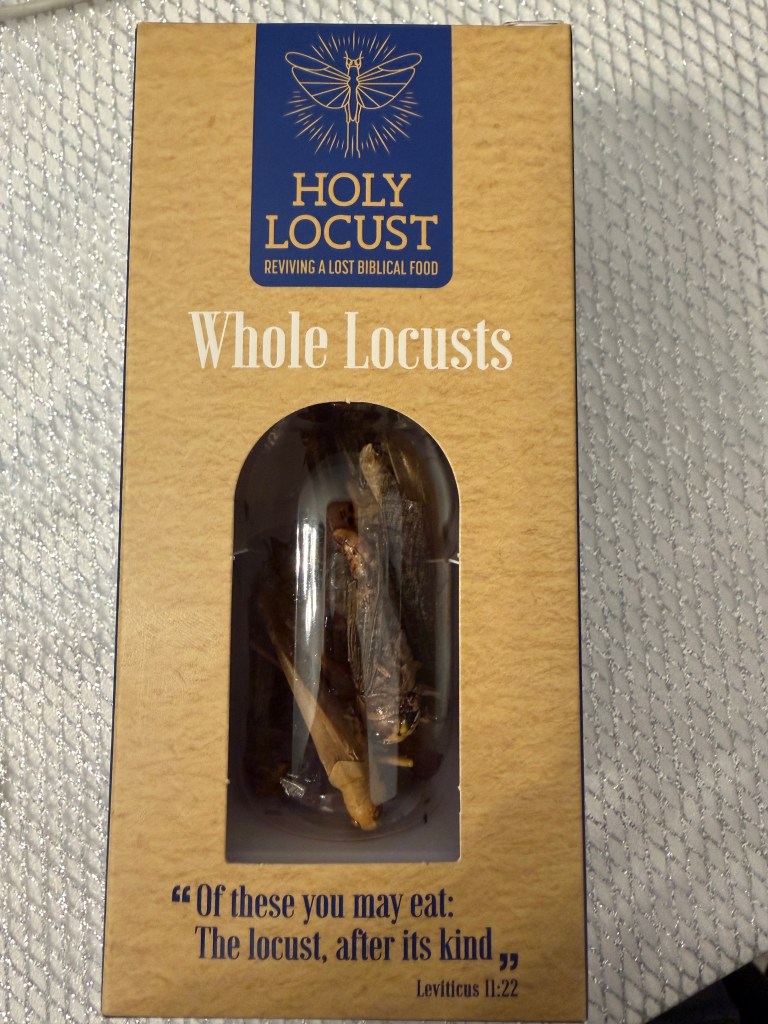
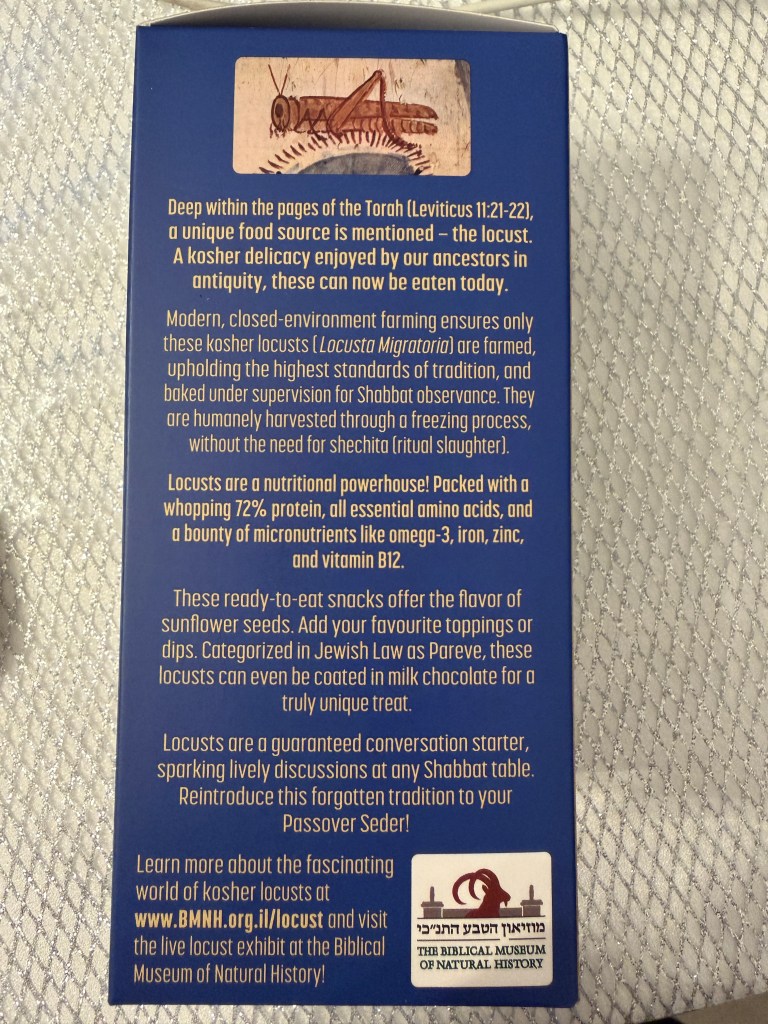
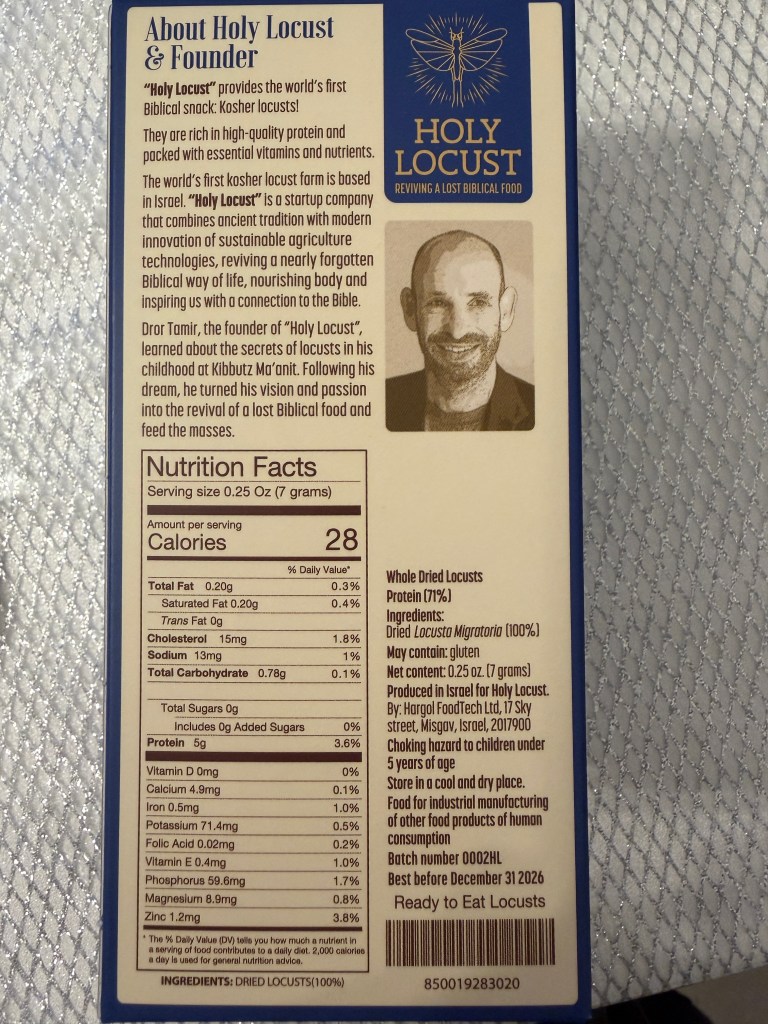
Finally, the greatest curiosity for me was the locusts. I’ve never eaten a locust. I never understood how locusts were kosher, as a Jew isn’t allowed to eat insects. First, Slifkin discussed how many foods we enjoy, or don’t enjoy, are more learned than anything. Foods we find disgusting, like locusts or Marmite (his example, which he loves) are learned. If you grew up with it you wouldn’t know better. It’s cultural. Think non Jews and gefilte fish.
In many areas locust swarms eat up an environment’s vegetation. All you have left are dead locusts. So either you die, because you have no food, or you have high protein locusts. And so it was.
As it pertains to kosher, apparently there are certain types of locusts that are kosher and spoken about in the Torah and therefore permitted. As such, I was able to enjoy. With that said, these locusts were covered in a flavored crispy something. I can see why people would eat them. They’re like air popped popcorn shaped like locusts. The taste is earthy, crunchy and dry. Not flavorful but not offensive either. Just something you might eat while you’re not thinking about eating an insect. Maybe while watching a football game. Maybe you dip them in cheese sauce or melted chocolate. Get creative should you choose but they definitely need a little something.
That concludes this review of this fantastic, truly one of a kind, exotic, curious dinner feast. I hope you enjoyed. Even more, I hope you learned something and thank you for sticking around this long.
One final important note. Everything written here is either my opinion or from the notes I took. Do not take anything, especially the kosher laws, ideas or concepts, I presented here as fact. While I believe what I wrote to be correct, I may be off on some things that may make a difference. Please ask your local rabbi and do your due diligence. There was a Kosher Supervisor (mashigiach) on site, and I trust Rabbi Natan Slifkin, implicitly, in the food and the kosher laws he presents. I would eat anything he presents. You may hold by a different opinion and as such, should just enjoy my review for what it is. Just a review.
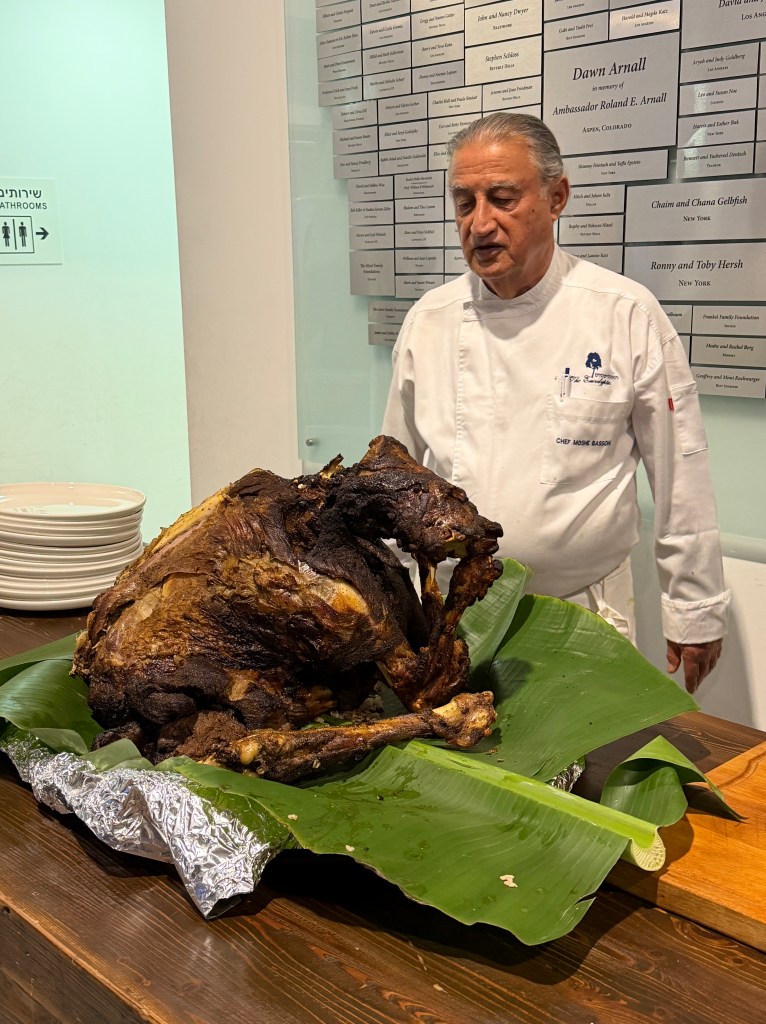
I would also like to commend the chef, Moshe Basson, owner of the famous Eucalyptus Restaurant, in the Artists’ Colony, just outside the Old City walls in Jerusalem. The food at his restaurant is fantastic and his preparations of the food at this event was nothing short of spectacular.
Thank you. Make a blessing. Eat and enjoy.
All love! Etan G
 Kosher Food and Drink
Leave a comment